|
|
|
🚀 The AI Trend Oracle Report
AI Search Is Becoming AI Selection Infrastructure
The shift from rankings to recommendations has started. |
|
Something changed over the last two weeks.
Not suddenly. Not dramatically.
But noticeably.
Google AI Mode became more visible. More businesses started feeling the difference between appearing in search results and being selected in AI-generated answers. And more practitioners started realizing that AI search is not behaving like traditional SEO in ways they cannot quite articulate yet.
The category is shifting in real time.
And the framing most businesses are using to understand it is still about a year behind where the actual problem is forming. |
|
 |
|
|
|
|
|
🚨 This Week’s Market Intelligence |
|
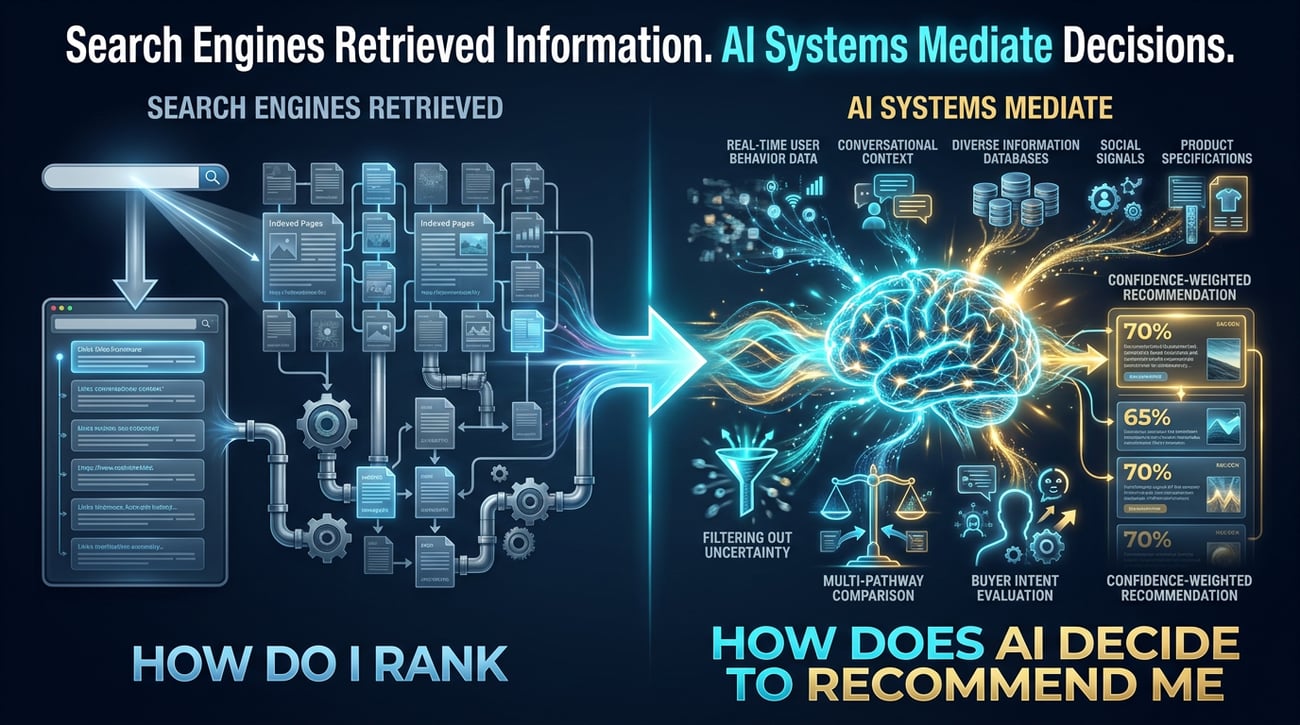
Search Engines Retrieved. AI Systems Mediate.
There is a framing shift happening that most businesses have not fully processed yet.
Search engines were retrieval systems. You optimized for retrieval. You ranked. You got found.
AI systems are becoming something different. They are increasingly decision mediators. They do not just surface information.They synthesize it, filter uncertainty, compare options, and increasingly make recommendations that buyers act on before ever visiting a website.
That changes the problem entirely.
The question is no longer only: how do I rank?
The question is becoming: how does AI decide whether to recommend me?
And those require completely different answers. |
|
|
🔍 What’s Actually Happening |
|
The Visibility Problem Just Got More Complex
With Google AI Mode becoming more prominent, the AI visibility problem now spans multiple distinct surfaces simultaneously.
Google AI Overviews.
Google AI Mode.
ChatGPT.
Perplexity.
Claude.
Gemini.
Each surface has different retrieval patterns, different recommendation behavior, and different signals that influence selection.
A brand can be visible on one surface and completely absent on another. Mentioned on one and actively recommended on another. Cited accurately on one and misrepresented on another.
Most businesses are still measuring AI visibility as a single number. It is increasingly a multi-surface, multi-behavior problem that requires a different kind of intelligence to navigate. |
|
|
📉 Featured Insight |
|
Introducing Recommendation Persistence
There is a concept worth naming right now before the category converges on its own language for it.
We are calling it Recommendation Persistence.
Here is what it means.
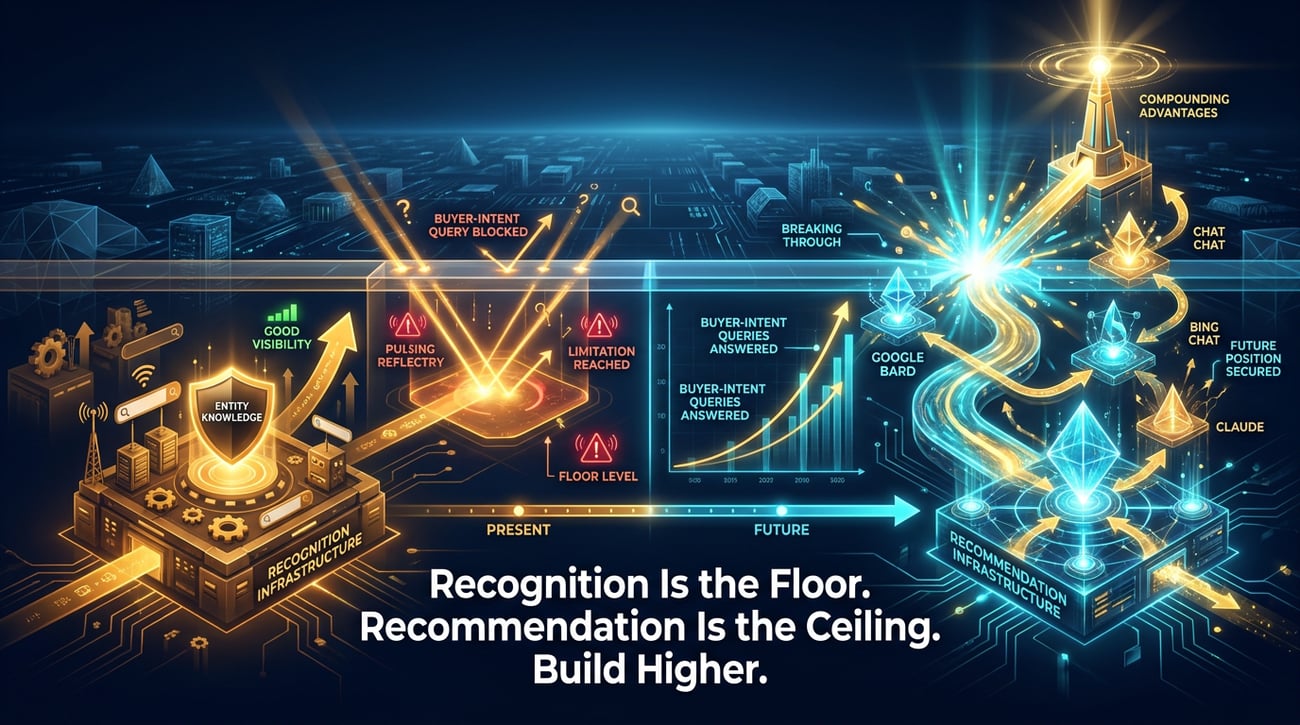
Some brands appear in AI-generated answers occasionally. Others appear persistently across repeated buyer-intent prompts, across multiple AI surfaces, across different contextual framings of the same question.
That persistence is not random.
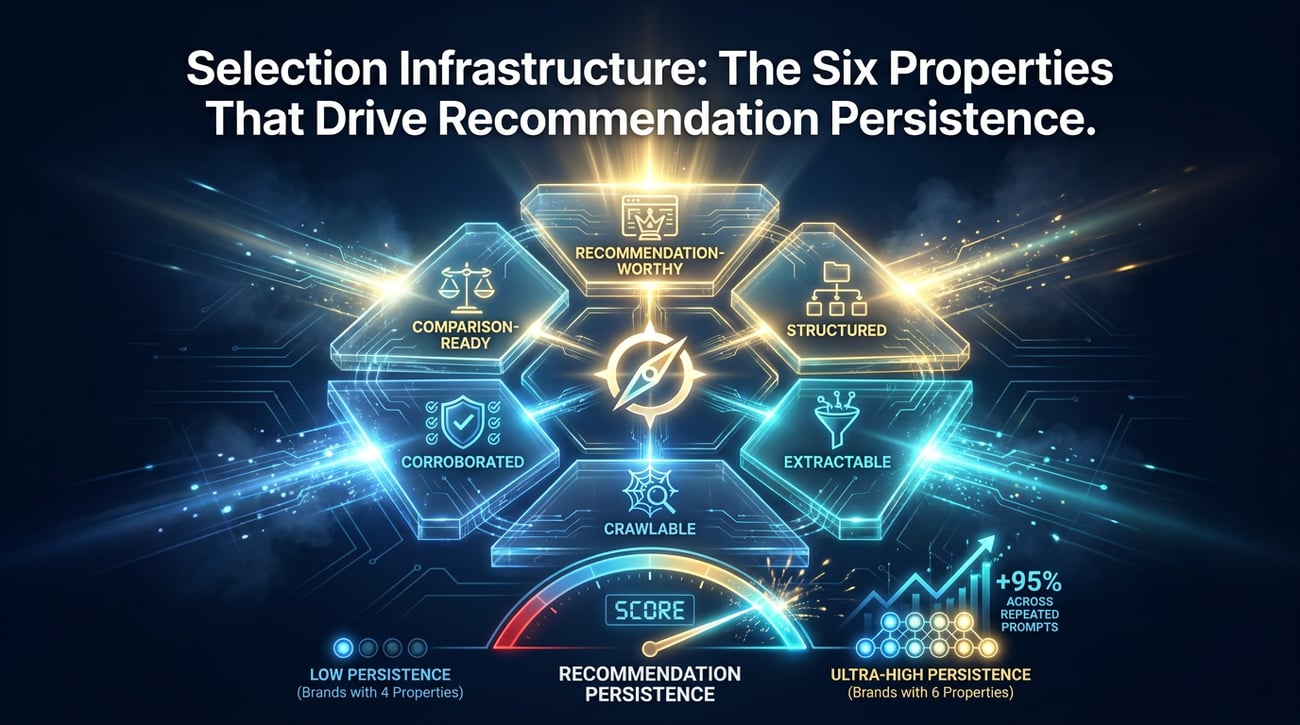
It is the result of what we are calling Selection Infrastructure.
The underlying signal architecture that makes a brand consistently retrievable, accurately describable, confidently comparable, and repeatedly recommendable across AI systems.
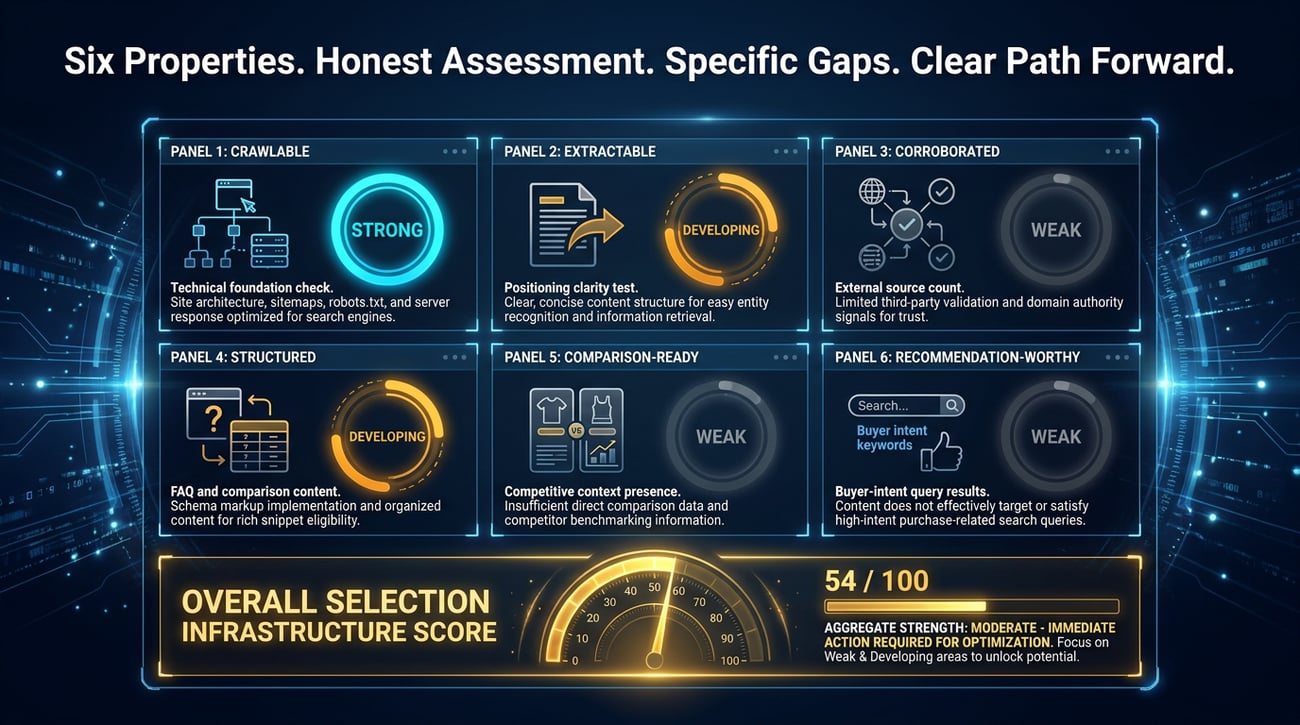
Selection Infrastructure has six properties:
· Crawlable: AI systems can access and process your brand information without friction.
· Extractable: Your positioning, category, and differentiation can be pulled cleanly from your content.
· Corroborated: Multiple trusted external sources validate and reinforce the same narrative about your brand.
· Structured: Your information is organized in ways that reduce AI uncertainty about what you are and who you serve.
· Comparison-ready: Your brand appears naturally in the competitive contexts where buyers are evaluating options.
· Recommendation-worthy: AI systems have enough confidence in your brand to include it when the stakes of a buyer decision are highest.
Most brands score reasonably on the first two. Very few have deliberately built the last four. And the last four are increasingly where selection actually happens. |
|
|
🧠 This Week’s Strategic Lens |
|
The Shift From GEO to Recommendation Intelligence
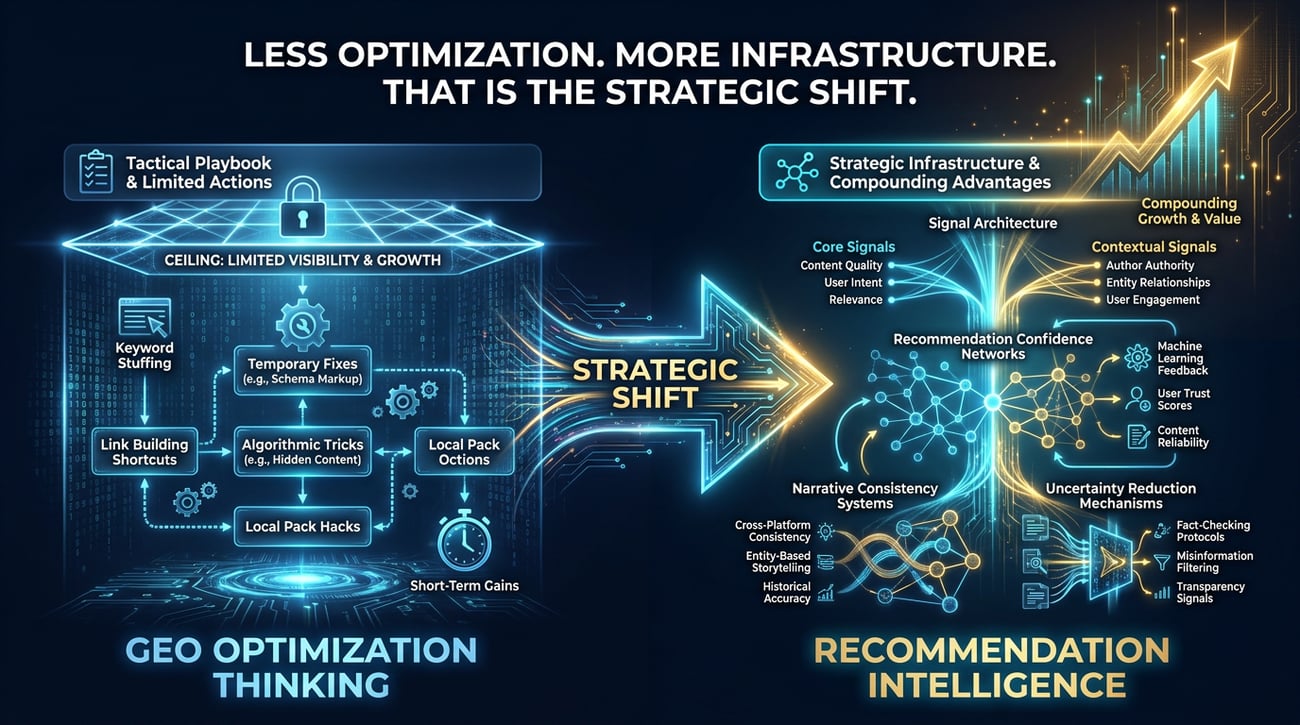
There is a label that has been gaining traction: GEO. Generative Engine Optimization. It is useful shorthand for an emerging category. But I think it risks creating the same mistake SEO created for a while.
Making businesses believe there is a set of optimization tactics to perform rather than a system of infrastructure to build. The brands that will have durable AI visibility are not the ones that found the best GEO tactics. They are the ones that built recommendation infrastructure that makes AI systems consistently confident choosing them.
That is a fundamentally different orientation.
Less about optimization.
More about infrastructure.
Less about tactics.
More about signal architecture.
And the businesses that understand that distinction now will be significantly ahead of the ones that figure it out in twelve to eighteen months. |
|
|
|
👨💻 Founder’s Note |
|
What Surprised Me About AI Systems
When I started running deeper scans across multiple AI systems something specific surprised me. It was not that AI systems retrieved differently from search engines. I expected that.
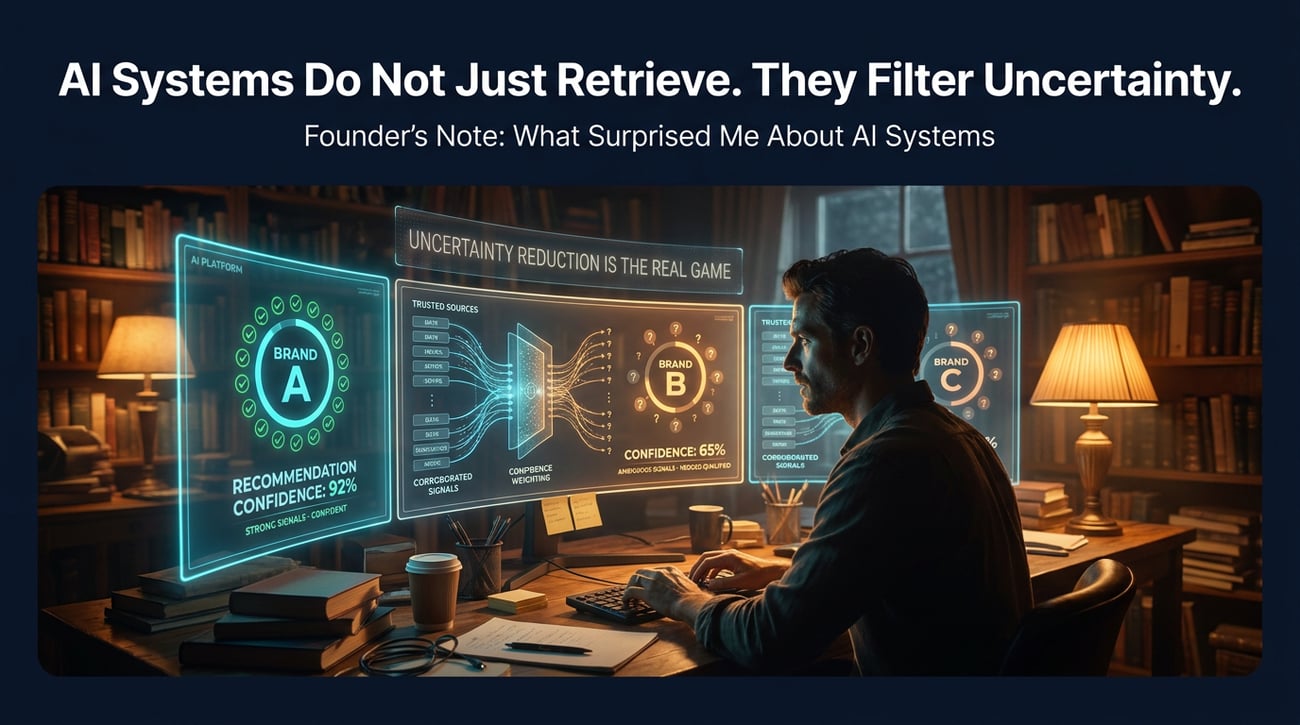
What surprised me was how actively AI systems filter uncertainty. They are not neutral retrievers. They are confidence-weighted recommenders.
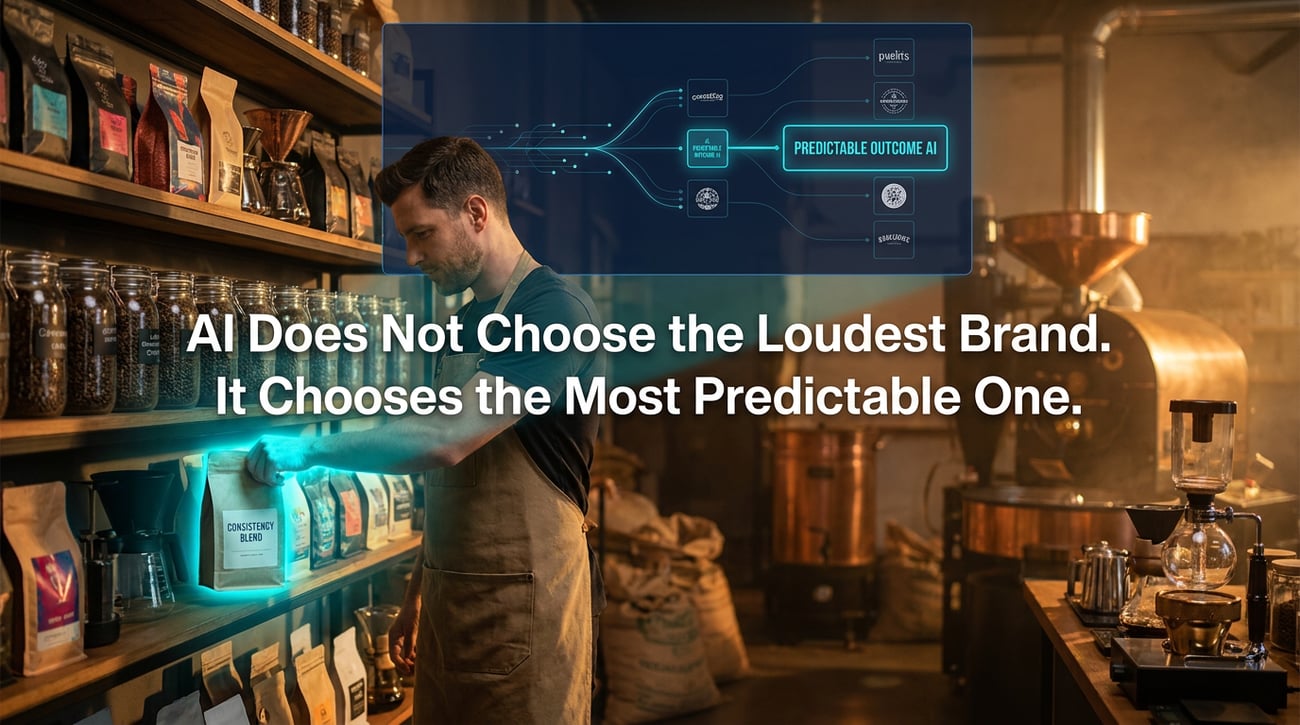
When AI encounters a brand with strong corroborated signals across trusted sources, it recommends with confidence. When it encounters a brand with ambiguous or inconsistent signals, it hedges. It qualifies. It defaults to brands it trusts more. That uncertainty-filtering behavior is why recommendation persistence matters so much.
The brands AI recommends consistently are not necessarily the most optimized. They are the brands AI has the least uncertainty about. That realization changed how I think about everything we are building at Axis Suite.
Not just visibility measurement.
Uncertainty reduction infrastructure for AI-mediated decisions.
– Dana Billingsley
Founder, Axis Suite |
|
|
🛠 PRACTICAL SECTION |
|
The Selection Infrastructure Audit
This week assess where your brand stands across the six properties of Selection Infrastructure. Rate each one honestly on a simple scale of strong, developing, or weak.
Crawlable: Can AI systems access and process your brand information without friction? Check your technical foundations. Schema markup. Site structure. Page accessibility.
Extractable: Can AI pull your positioning, category, and differentiation cleanly from your content? Test by asking AI to describe your business. Is the description specific or generic?
Corroborated: Do multiple trusted external sources validate your brand narrative? Count the number of external sources that describe you accurately and specifically.
Structured: Is your information organized to reduce AI uncertainty? Do you have clear FAQ content, comparison pages, and category-specific explanations?
Comparison-ready: Does your brand appear in competitive evaluation contexts? Ask AI to compare you to your main competitor. Are you present and well-represented?
Recommendation-worthy: Does AI include you in buyer-intent recommendations? Run the Discovery Gap test from last week. Ask AI who to hire for your category without mentioning your brand.
Any property rated weak is a specific gap in your Selection Infrastructure. And a specific gap in your Selection Infrastructure is a specific reason AI systems are defaulting to competitors instead of you.
👉 Start diagnosing your Selection Infrastructure here: Axis Suite |
|
|
☕ AI, Selection Infrastructure, and the Barista Who Never Has to Think |
|
|
Your Weekly Dose of Caffeinated Wisdom
There is a moment in a great coffee shop when the barista stops having to decide anything. Not because the options disappeared. Because the infrastructure became so reliable that decisions automated themselves.
The right beans arrive on the same day from the same source.
The grind setting does not change unless something breaks.
The temperature never varies because the equipment is calibrated.
Nobody is optimizing every morning.
The system just runs.
And the output is consistently excellent because the infrastructure underneath it is consistently right.
That is the shift happening in AI recommendation right now. The brands that show up persistently are not the ones manually optimizing every week. They are the ones that built infrastructure reliable enough that AI systems stopped hesitating about them.
No uncertainty to filter.
No ambiguity to resolve.
Just a confident recommendation because the signals have been consistent long enough to be trusted.
Optimization is what you do before the infrastructure exists.
Infrastructure is what makes optimization eventually unnecessary.
Stay steady. ☕ |
|
|
🔔 CLOSING SIGNAL |
|
The Future Battleground Is Not Rankings Alone
The future competitive battleground in AI discovery is not who ranks highest. It is whether AI systems repeatedly select, trust, compare accurately, and recommend your business during decision moments.
That is where Axis Suite is focused.
Not just tracking whether you appear. Building the intelligence layer that helps you understand and improve every dimension of how AI systems evaluate and recommend your brand. |
|
|
|
|
🛠 Coming Next Week
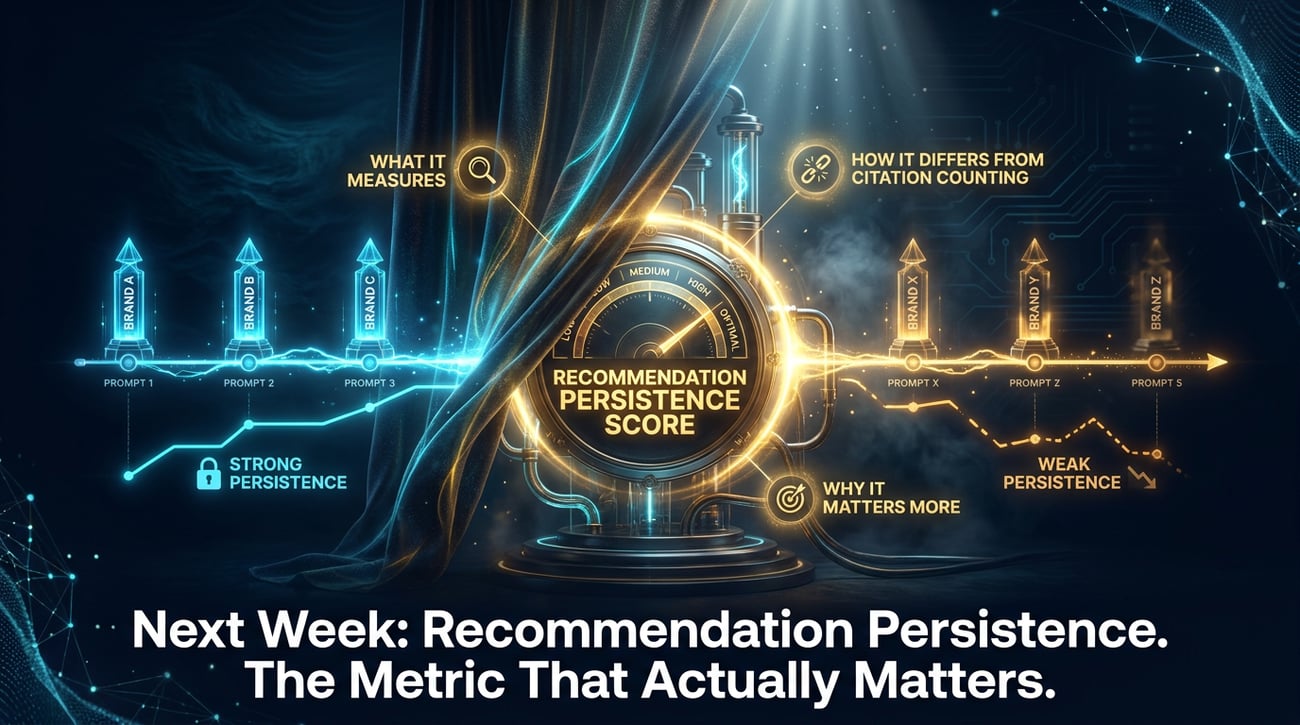
Next week we go deeper into Recommendation Persistence.
What it measures.
How it differs from citation counting.
And why it may become one of the most important metrics in AI-mediated discovery over the next twelve months.
|
 |
|
|
|
|
🚀🤖✨📊🎨
The Axis Suite
AI Recommendation Intelligence. AI Narrative Defense. Agentic Visibility Infrastructure. |
|
Axis Suite helps companies become the brand AI systems recommend, cite, compare accurately, and defend across AI Search, answer engines, and agentic commerce.
👉 Axis Suite
📬 Thank you for being part of this.
Here's to staying visible, staying understood, and becoming the obvious choice.
Stay caffeinated, stay inspired. See you next week! ☕
From the trenches,
The Axis Suite Team 💪
|
|
|
 |
|
© 2026 TrendAxis, LLC™. All rights reserved.
Disclaimer: Affiliate links may be included |
|
|