|
|
|
🚀 The AI Trend Oracle Report
Why Does AI Trust Your Competitor More Than You? |
|
AI Recommendation Just Became Commercially Consequential
Something shifted this month that makes all of this much more concrete.
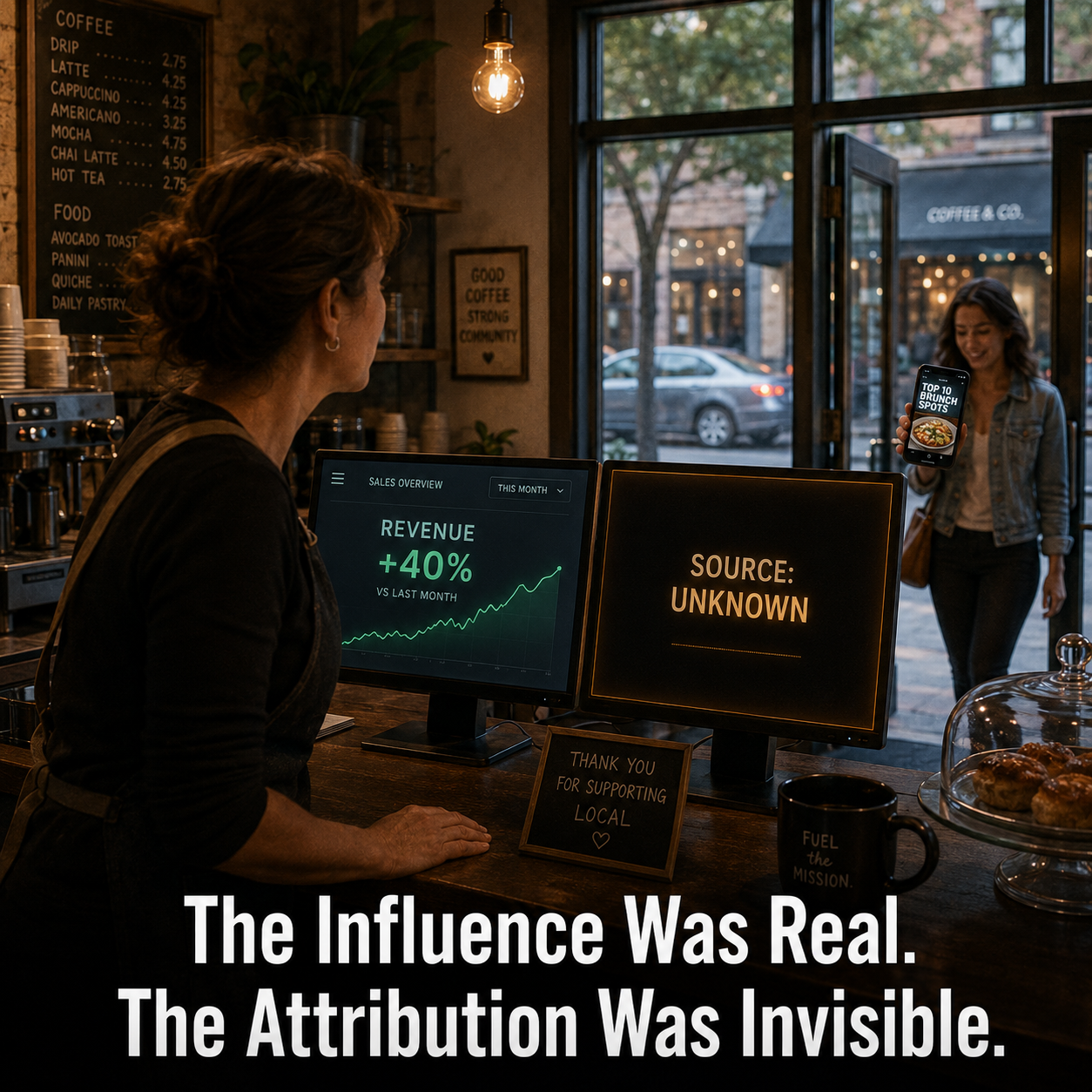
Reuters reported that generative AI is expected to influence roughly $8 billion in sales this year. Adobe Analytics data showed that AI-referred visits generate 41% more revenue per visit than traditional channels. Retailers are actively adapting to AI-driven shopping traffic and wrestling with a new problem: they want to be selected by AI, but they also do not want AI platforms to own the entire customer relationship.
Meanwhile, OpenAI's shopping experience now uses conversational context, buyer preferences, constraints, and even Memory (when enabled) to narrow and compare products. Google is building its own agentic commerce infrastructure through Universal Cart and UCP.
And here is the part that should get your attention: marketers are already experimenting with advertising designed to influence AI agents themselves. Not the humans using the agents. The agents doing the recommending.
That raises an entirely different set of questions. Not just "what does AI recommend" but "what influenced that recommendation and can it be trusted."
That is where the conversation is heading. And it is exactly where Axis Suite sits. |
|
 |
|
|
|
|
|
🚨 Market Intelligence |
|
AI Recommendation Just Became Commercially Consequential
Something shifted this month that makes all of this much more concrete.
Reuters reported that generative AI is expected to influence roughly $8 billion in sales this year. Adobe Analytics data showed that AI-referred visits generate 41% more revenue per visit than traditional channels. Retailers are actively adapting to AI-driven shopping traffic and wrestling with a new problem: they want to be selected by AI, but they also do not want AI platforms to own the entire customer relationship.
Meanwhile, OpenAI's shopping experience now uses conversational context, buyer preferences, constraints, and even Memory (when enabled) to narrow and compare products. Google is building its own agentic commerce infrastructure through Universal Cart and UCP.
And here is the part that should get your attention: marketers are already experimenting with advertising designed to influence AI agents themselves. Not the humans using the agents. The agents doing the recommending.
That raises an entirely different set of questions. Not just "what does AI recommend" but "what influenced that recommendation and can it be trusted."
That is where the conversation is heading. And it is exactly where Axis Suite sits. |
|
|
🔍 Featured Insight |
|
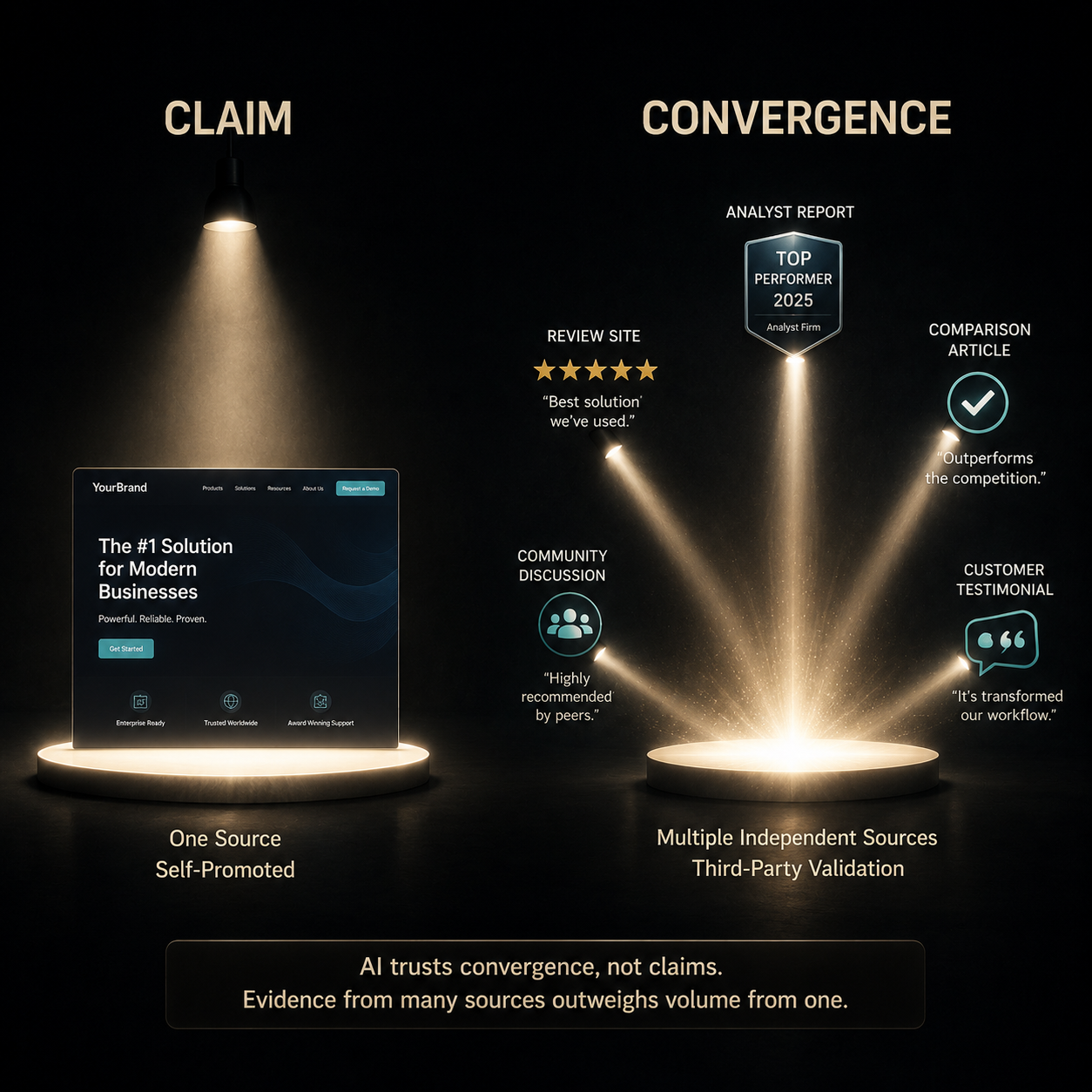
AI Does Not Trust Claims. It Trusts Convergence.
When AI recommends your competitor instead of you, the instinct is to ask "how do we get mentioned more." That is the wrong first question.
The right first question: what evidence does AI have about them that it does not have about us?
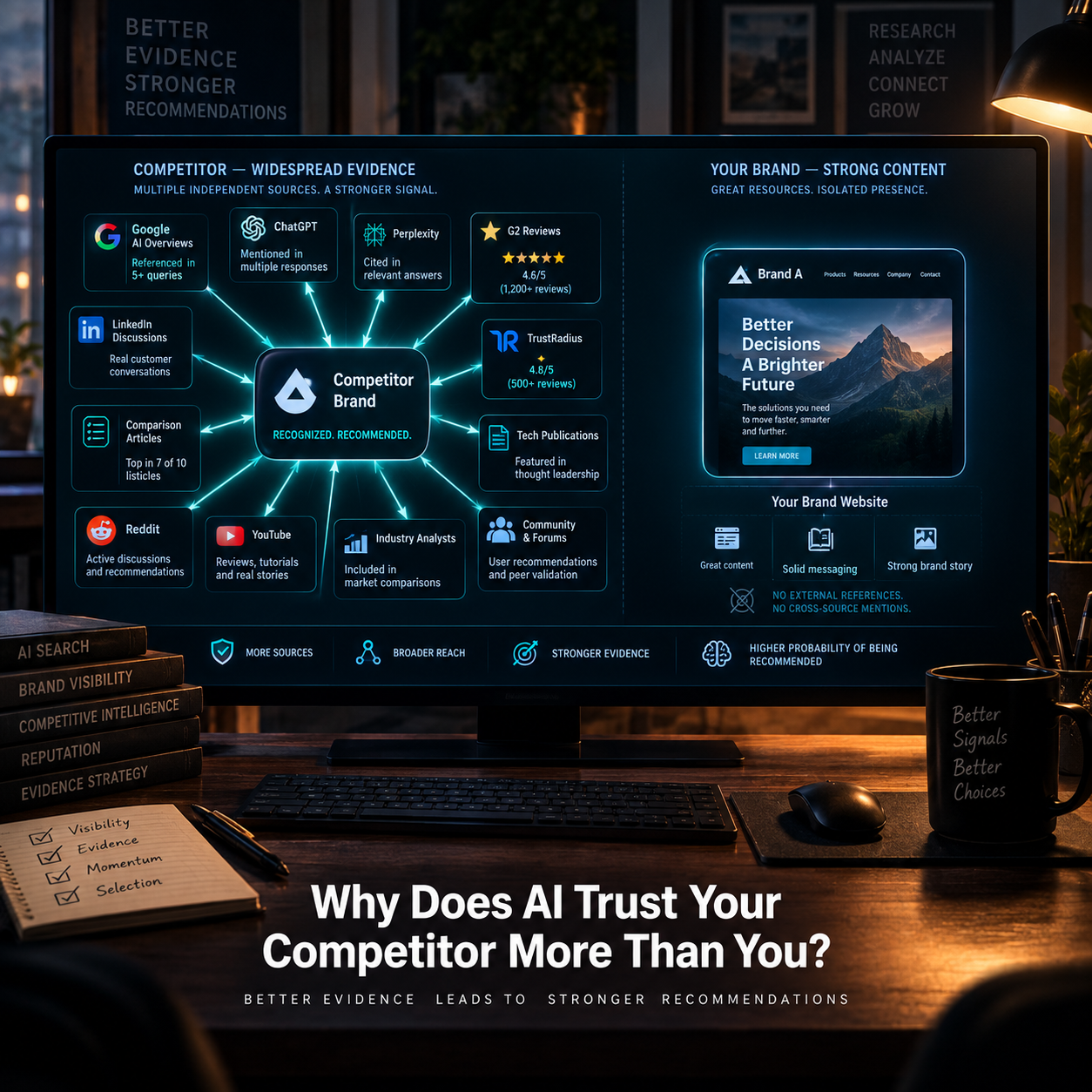
In most cases, the answer is not that the competitor has better content. It is that the competitor has more convergent evidence from independent sources.
One source says they are excellent. That is a signal. Their website, G2 reviews, analyst mentions, comparison articles, community discussions, and customer testimonials all independently point toward the same conclusion. That is convergence.
AI does not count mentions. It reads patterns. And convergent evidence from multiple independent source types is a much stronger pattern than any single piece of content, no matter how well-written.
I keep seeing this same dynamic in competitive diagnostics. The brand that loses is usually not the one with worse content. It is the one with fewer independent sources confirming the same story. The competitor has a broader evidence footprint, not a better website. |
|
|
📉 The Competitive Diagnosis |
|
Four Areas to Investigate.
When AI recommends your competitor instead of you, here is what to investigate before you react.
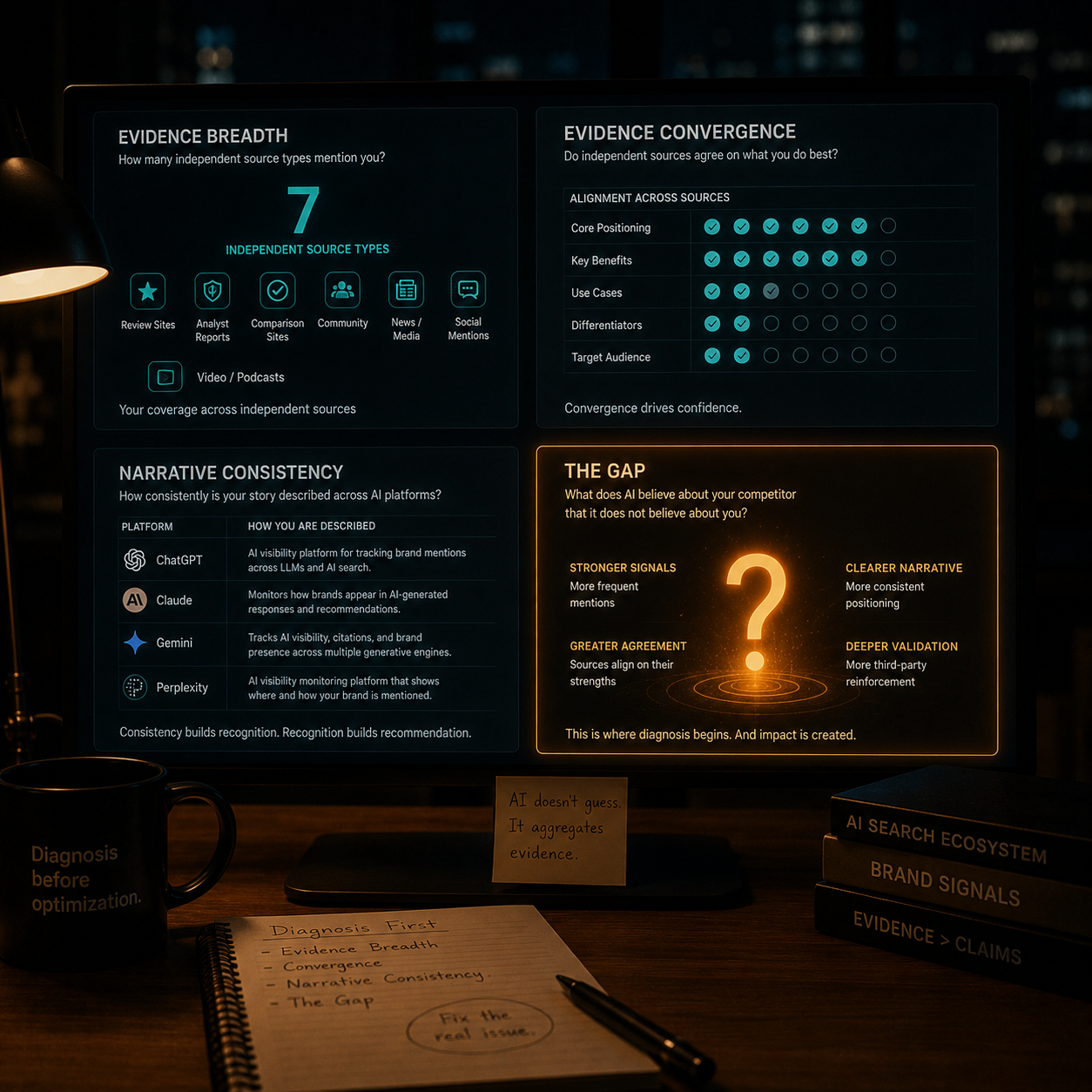
How does AI describe them? Check the specific language across ChatGPT, Claude, Gemini, and Perplexity. What category does AI place them in? What capabilities does AI emphasize? What language does AI use when recommending them with confidence versus when it mentions you cautiously?
What evidence does AI lean on? Is the recommendation supported by third-party sources (reviews, analyst reports, comparison articles) or primarily by the competitor's own website? If AI cites independent sources, those are the evidence signals giving the competitor an advantage.
What do those independent sources agree on? This is the convergence question. If five independent sources all describe the competitor the same way, AI sees a pattern. If the same five sources describe you five different ways, AI sees noise.
Where is the evidence gap between you and them? Not the content gap. The evidence gap. Which independent source types do they have that you do not? Which review platforms validate their claims but not yours? Which comparison articles include them and exclude you?
Do not copy the competitor. Find the evidence gap. That is a very different strategic response than "publish more content." |
|
|
The 10-Minute Competitive Trust Audit |
|
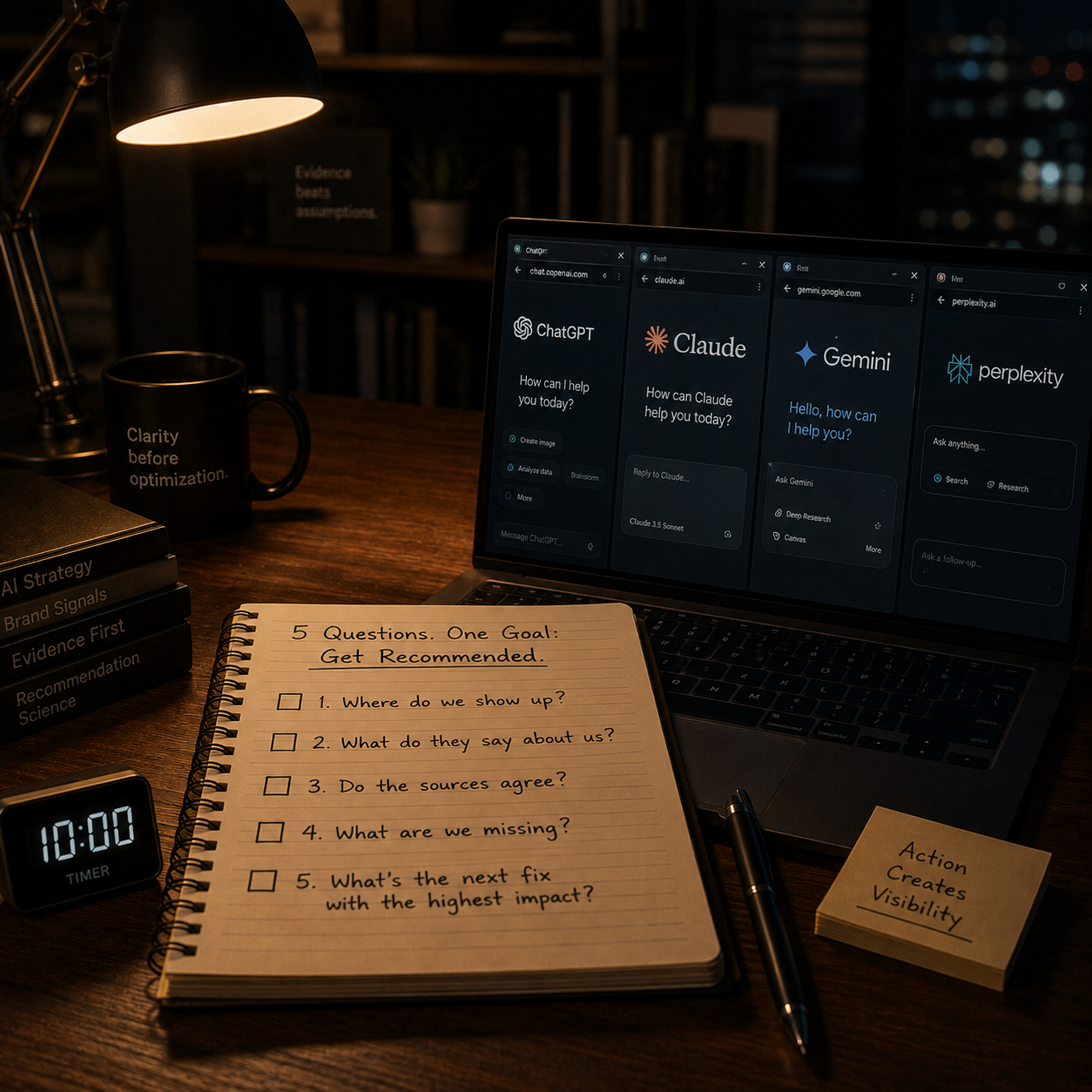
Try this today. Pick one competitor that AI consistently recommends over you.
Ask ChatGPT, Claude, Gemini, and Perplexity: "What are the best platforms for [your category]?"
For each answer, note:
1. How does AI describe the competitor?
2. What category does AI place them in?
3. What evidence does AI use to support the recommendation?
4. Which independent sources repeat the same claims about the competitor?
5. What does AI believe about them that it does not appear to believe about you?
That fifth question is where the diagnosis lives.
The answer is almost never "they have more content." It is usually "they have more independent sources telling the same story."
|
|
|
|
🧠A New Complication Worth Watching |
|
Agent Ads.
Marketers are already experimenting with content designed to influence what AI agents encounter during the recommendation process. That means understanding not only what evidence AI sees, but where it came from and how much influence it carries, is becoming increasingly important.
If AI can be influenced by planted evidence, then the difference between earned convergence and manufactured convergence becomes a trust question the entire industry will need to address.
For now, the brands with genuine convergent evidence from real independent sources have the most defensible position. Manufactured evidence may produce short-term visibility. Earned evidence builds the kind of persistent belief that survives scrutiny. |
|
|
👨💻 Founder’s Note |
|
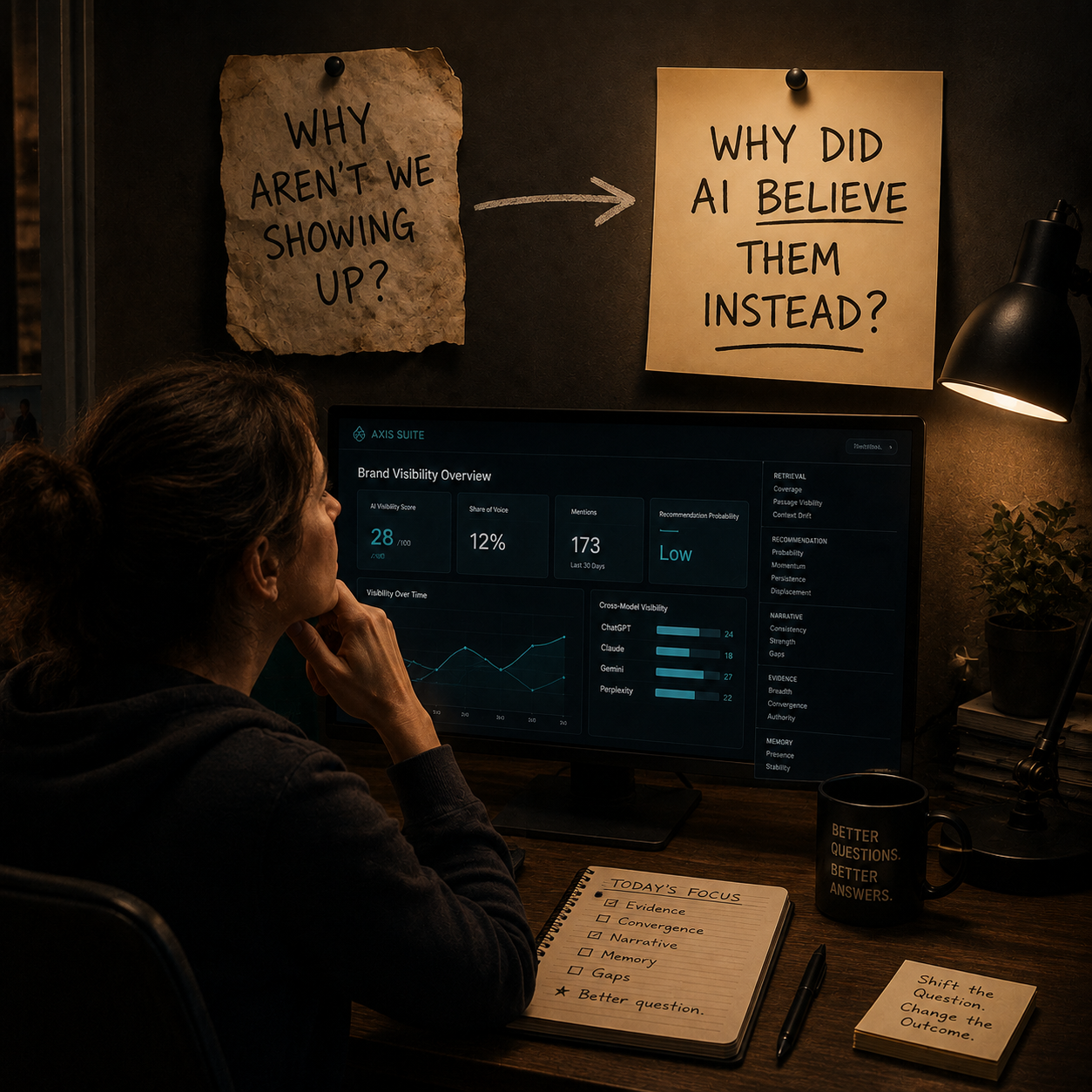
When I started Axis Suite, I was obsessed with absence. Why aren't we showing up? How do we get in the answer?
The more I study recommendation behavior, the more interesting question has become: why did AI believe them instead?
That is a very different question. Absence tells you that you lost. Understanding the evidence, narrative, and competitive context tells you why. And "why" is where you can actually do something about it.
I changed my mind about what matters most. I used to think the goal was getting recommended. I now think the goal is understanding why AI trusts who it trusts. Once you understand that, getting recommended becomes a specific set of fixable problems rather than a mystery. |
|
|
☕AI Caffeinated Wisdom |
|
|
Your Weekly Dose of Caffeinated Wisdom
Imagine two contractors quoting the same kitchen renovation.
Same price. Same timeline. Same references on paper.
One gets the job. Not because of the quote. Because when the homeowner asked around, everyone independently said the same thing about that contractor. "Reliable." "Does what they say." "I would hire them again."
Not one person's recommendation. A belief the neighborhood holds collectively.
The homeowner did not pick the better contractor. They picked the one the community already trusted. The evidence had already converged before the quote was even submitted.
AI works exactly the same way. The brand that wins the recommendation is not always the one with the better product. It is the one where the evidence converged first.
Stay steady. ☕ |
|
|
🔔 CLOSING SIGNAL |
|
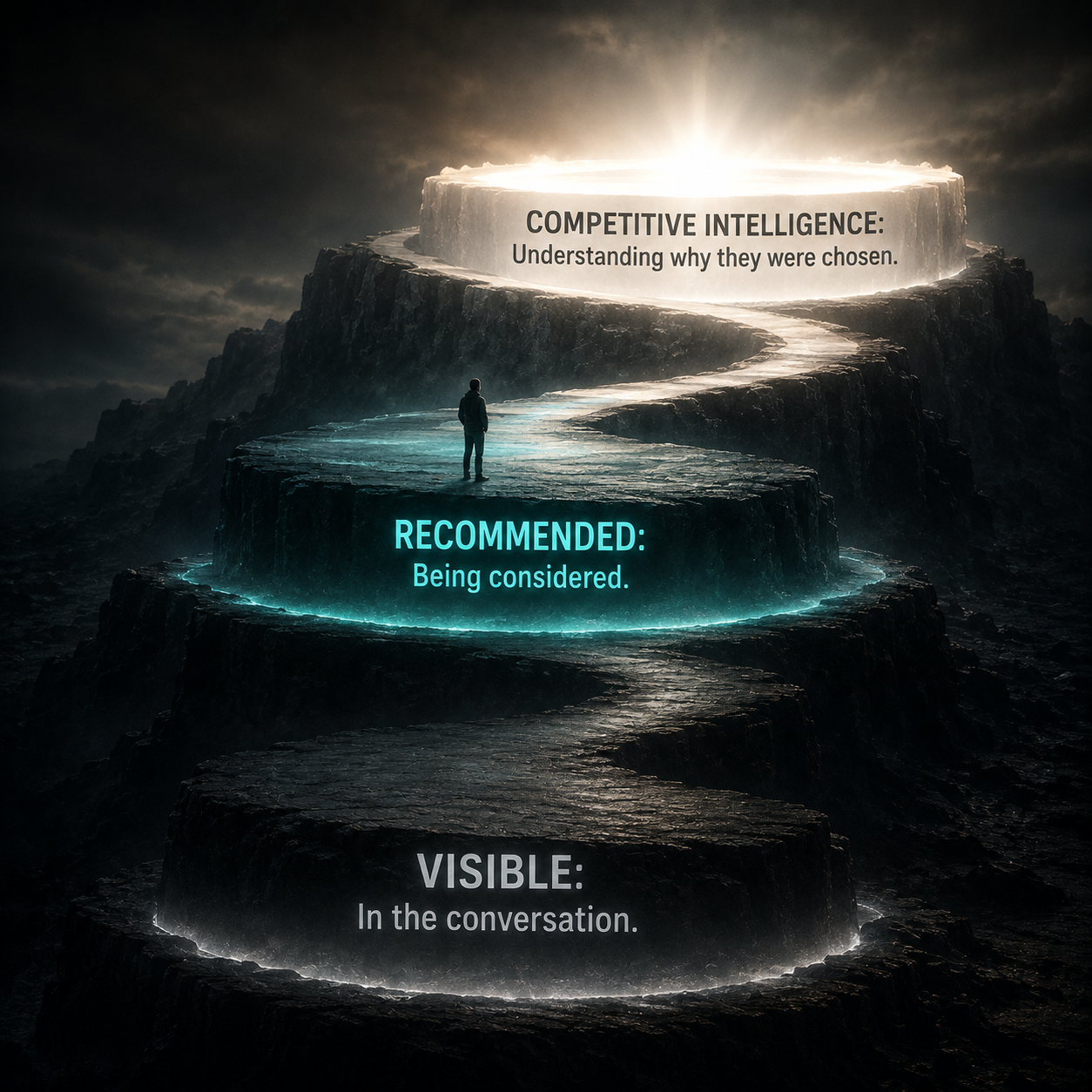
Visibility tells you whether you are in the conversation. Recommendation tells you whether you are considered. Competitive intelligence tells you why someone else was chosen.
The brands that understand that "why" will have a very different advantage from the brands still counting mentions.
The next AI visibility battle is not for more mentions. It is for stronger belief. |
|
|
|
|
🛠 Coming Next Week
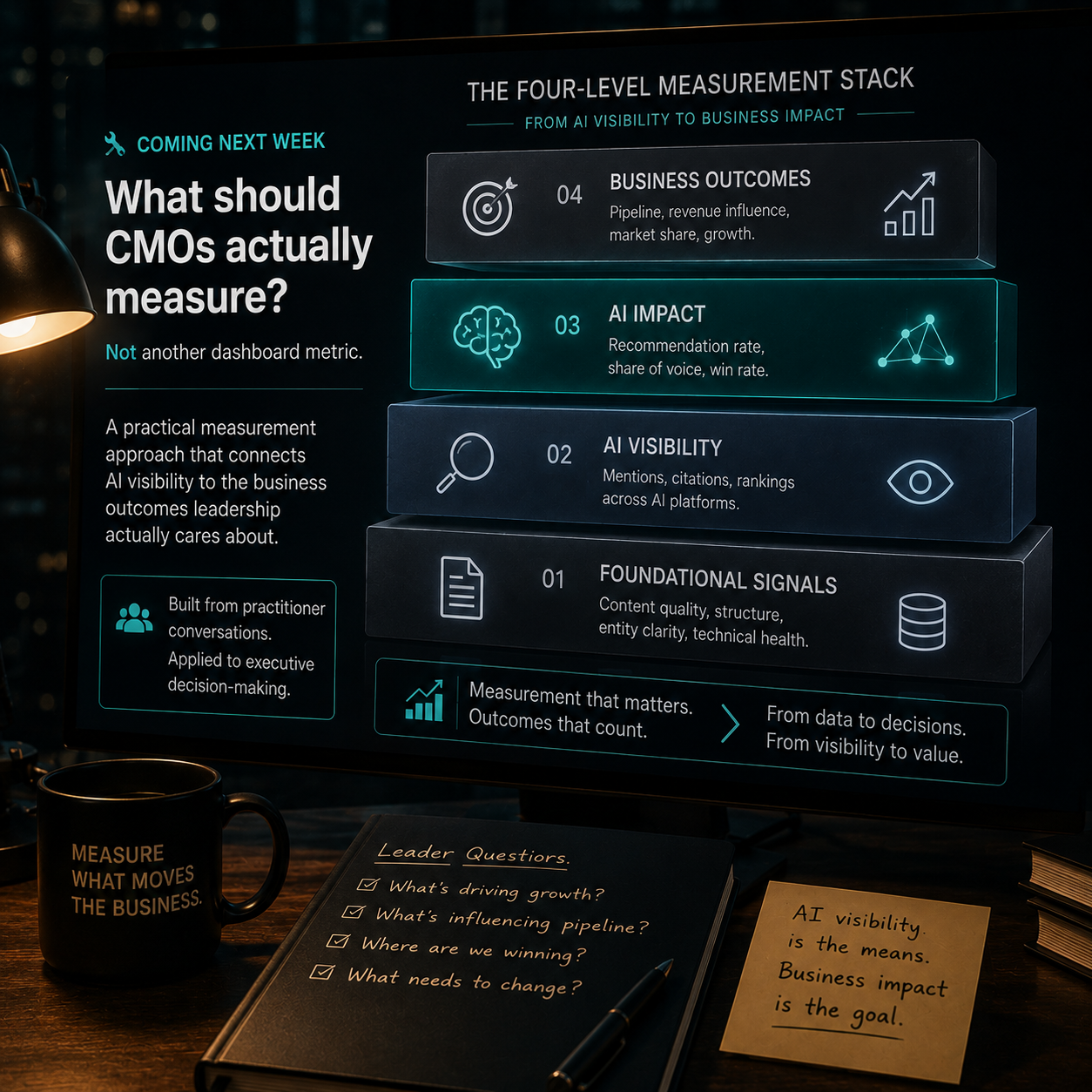
What should CMOs actually measure? Not another dashboard metric. A practical measurement approach that connects AI visibility to the business outcomes leadership actually cares about. The four-level measurement stack, built from practitioner conversations, applied to executive decision-making.
|
 |
|
|
|
|
🚀🤖✨📊🎨
The Axis Suite
AI Recommendation Intelligence. AI Narrative Defense. Agentic Visibility Infrastructure. |
|
"Axis Suite is the independent intelligence layer that explains what AI believes about your brand, why it believes it, and what decision that belief ultimately drives."
👉 Axis Suite | Read the Proof Center
📬 Thank you for being part of this.
Here's to staying visible, staying understood, and becoming the obvious choice.
Stay caffeinated, stay inspired. See you next week! ☕
From the trenches,
The Axis Suite Team 💪
|
|
|
 |
|
© 2026 TrendAxis, LLC™. All rights reserved.
|
|
|