|
|
|
🚀 The AI Trend Oracle Report
AI Doesn't Just Need Information. It Needs Evidence. |
|
For two weeks I planned to write about the attribution gap.
Each week something more urgent emerged.
This week I realized why.
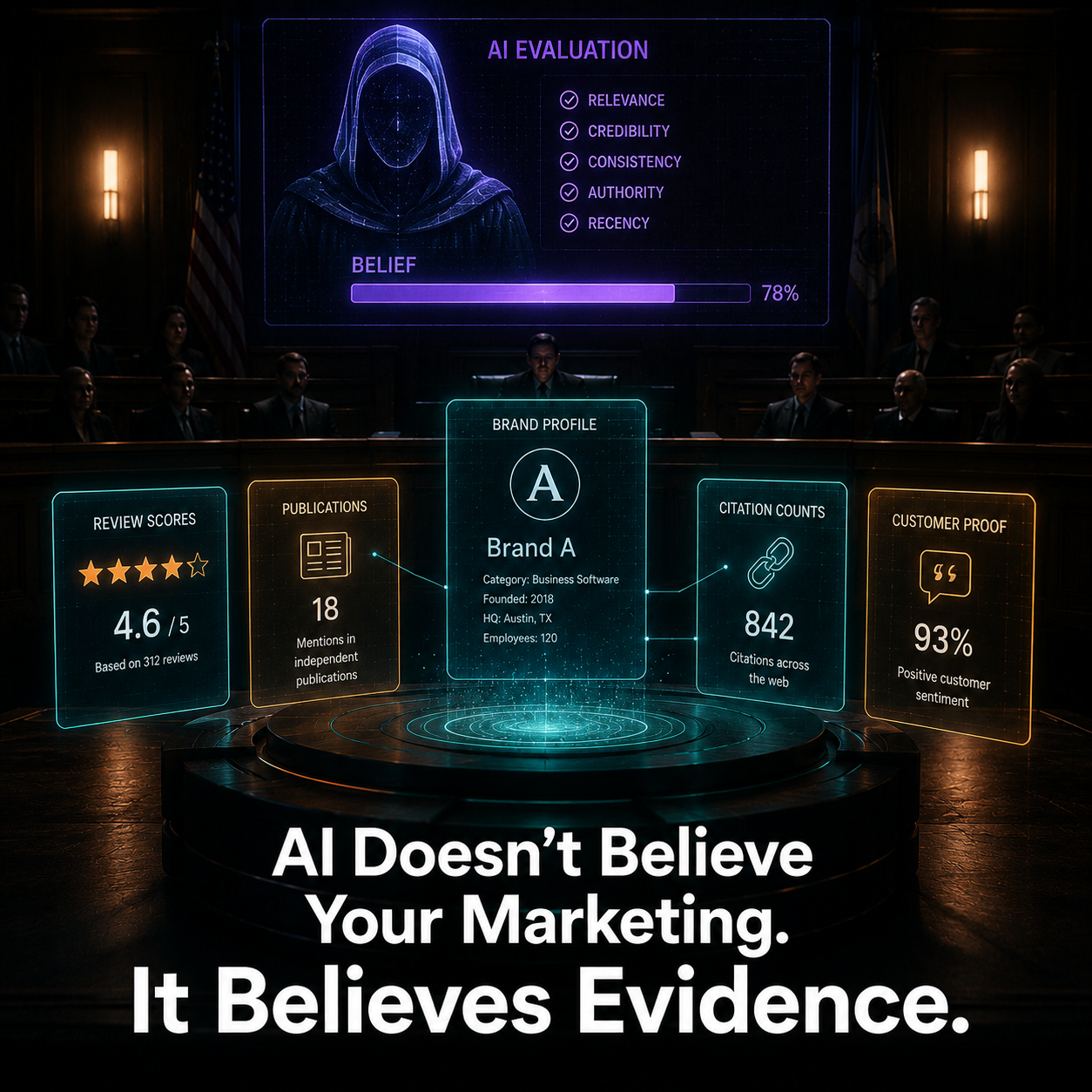
The attribution gap is not a measurement problem. It is an evidence problem.
AI influences buying decisions before your dashboard can see them because AI is working from evidence you never measured.
Marketing has spent years asking: What should we publish?
AI asks a completely different question: What evidence supports this claim?
Those are not the same strategy. And the gap between them is where the next competitive advantage lives. |
|
 |
|
|
|
|
|
🚨 This Week’s Market Intelligence |
|
The evidence question is not theoretical. It is becoming operational infrastructure.
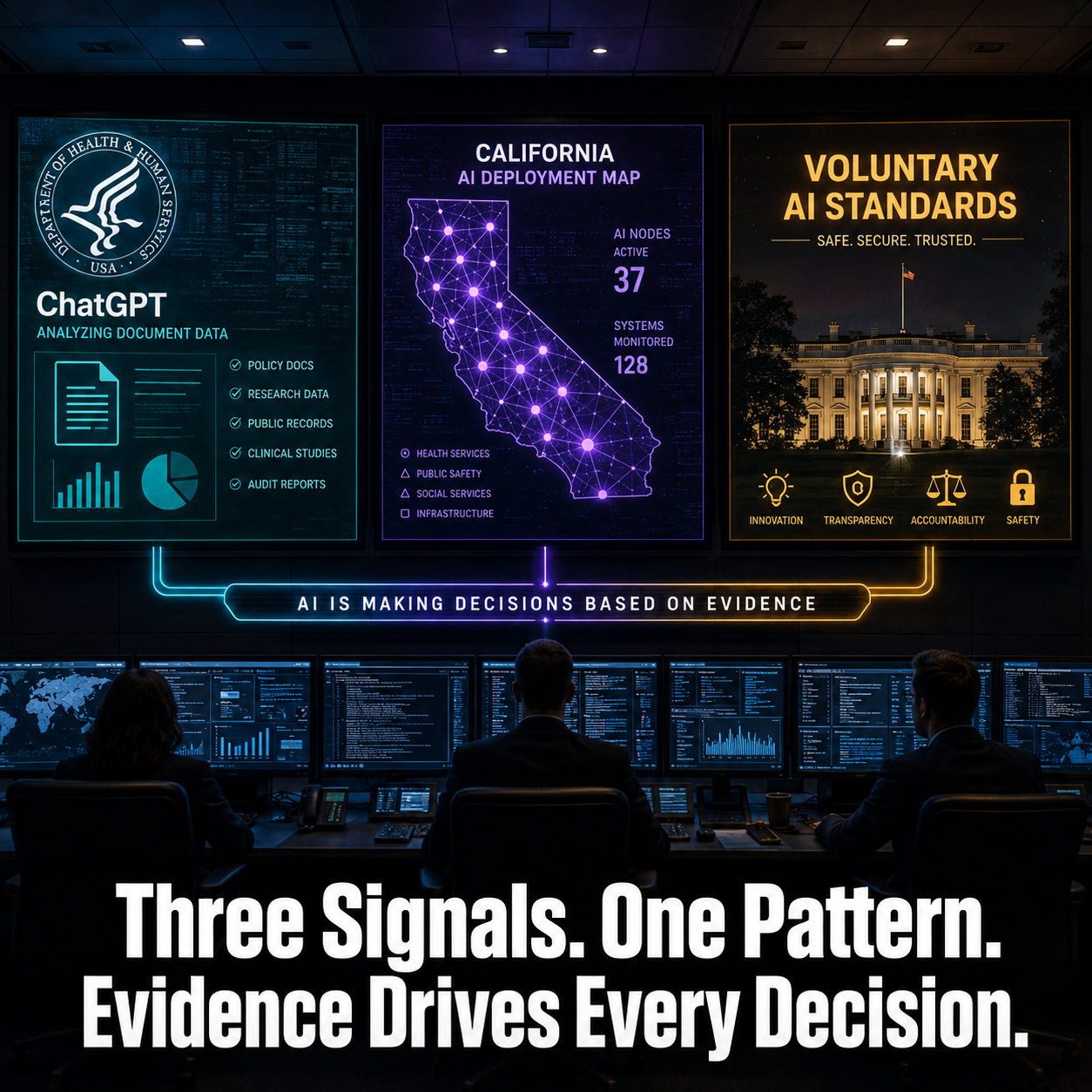
The US Department of Health and Human Services announced it is using ChatGPT to analyze state audit reports across all 50 states, looking for evidence of fraud, waste, and abuse in federal health spending. AI is not reading summaries. It is evaluating evidence.
California signed the largest state government AI deployment in history with Anthropic. Every state agency and participating city and county can now access Claude. That means AI systems are making consequential decisions based on evidence across an entire state government.
The White House is expected to announce voluntary standards for frontier AI model releases as early as this week. Those standards will establish benchmarks, testing timelines, and access rules. Standards require evidence of compliance.
The pattern across all three signals is the same. AI systems are increasingly making decisions. Those decisions are based on evidence. The organizations and brands that provide better evidence get better outcomes.
The question for CMOs is whether your brand is providing AI with evidence that supports recommendation, or leaving AI to make decisions based on whatever evidence it finds on its own. |
|
|
🔍 What’s Actually Happening |
|
Every AI recommendation contains hidden evidence.
When ChatGPT recommends a platform, it is not guessing. It is citing evidence it has gathered from sources it trusts. When Claude builds a vendor comparison, it draws from evidence that supports each claim. When Gemini structures an evaluation framework, it weights the brands that have the strongest evidence behind them. When Perplexity curates a research response, it prioritizes sources with corroborating evidence.
AI does not recommend your brand because your homepage says you are the best.
AI recommends your brand because it finds corroborating evidence across multiple sources that supports the claim.
That evidence includes third-party validation from review sites like G2 and analyst reports. It includes category consistency, meaning multiple independent sources describe your brand using the same category language. It includes customer proof from case studies, testimonials, and success metrics that appear across different publications. It includes authoritative mentions from recognized industry sources that carry more weight than self-published content. It includes repeated agreement, meaning the same claims about your brand appear across enough different sources that AI treats them as reliable.
The brands with the strongest evidence across these dimensions get recommended with the highest confidence. The brands with weak or contradictory evidence get mentioned cautiously or omitted entirely.
That is not a visibility problem. That is an evidence problem. |
|
|
📉 Featured Insight |
|
The Evidence Gap
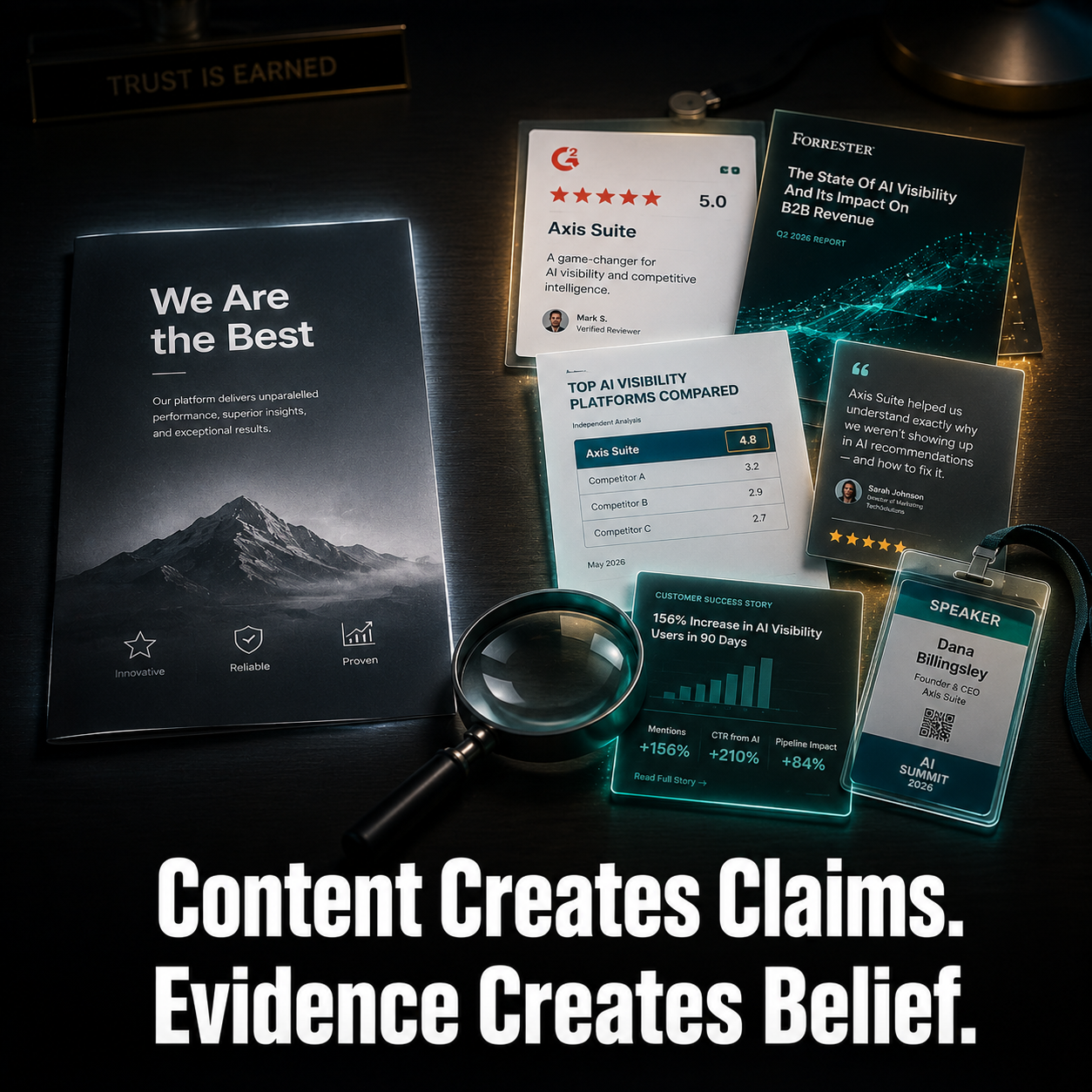
Most marketing teams invest in content creation. Blog posts. Whitepapers. Landing pages. Social media.
That content tells AI what you want it to believe about your brand.
Evidence is different. Evidence is what AI actually uses to form its beliefs.
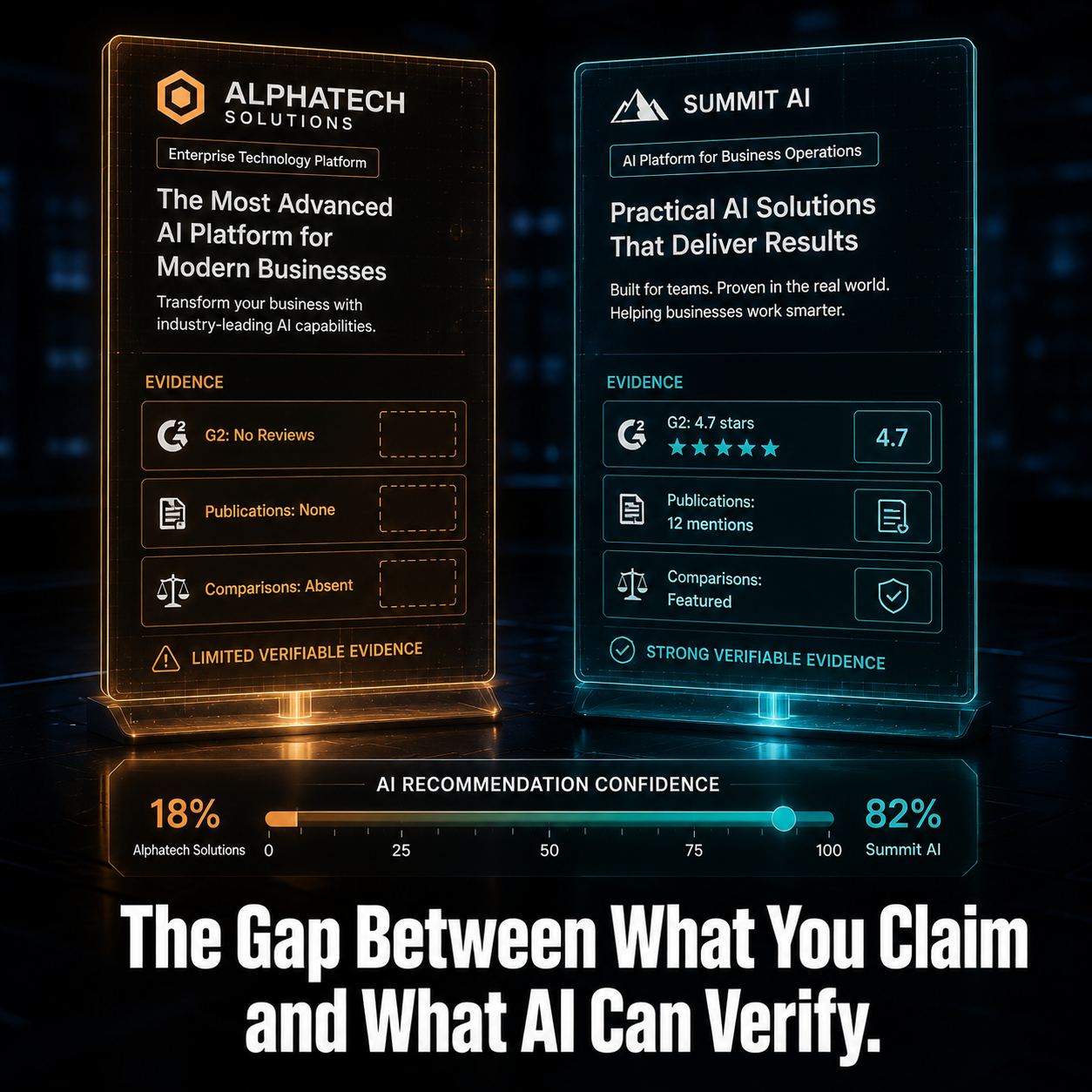
The gap between content and evidence is where most brands lose the AI recommendation.
Here is how the gap works in practice.
Your marketing says you are the leading platform in your category. But G2 shows three competitors ranked above you with more reviews and higher ratings. AI sees evidence that contradicts your claim.
Your website says you serve enterprise customers. But every case study on your site is a small business. AI sees evidence that does not match the positioning.
Your content strategy targets broad category keywords. But the industry publications that AI trusts most heavily have never mentioned your brand. AI sees an evidence gap in the sources that matter most.
Your brand repositioned six months ago. But the comparison articles, directory listings, and third-party profiles that AI draws from still reflect the old positioning. AI sees outdated evidence that contradicts your current identity.
In each case the brand is visible. AI knows it exists. The problem is not discovery. The problem is that the evidence AI has access to does not support the recommendation the brand wants to receive.
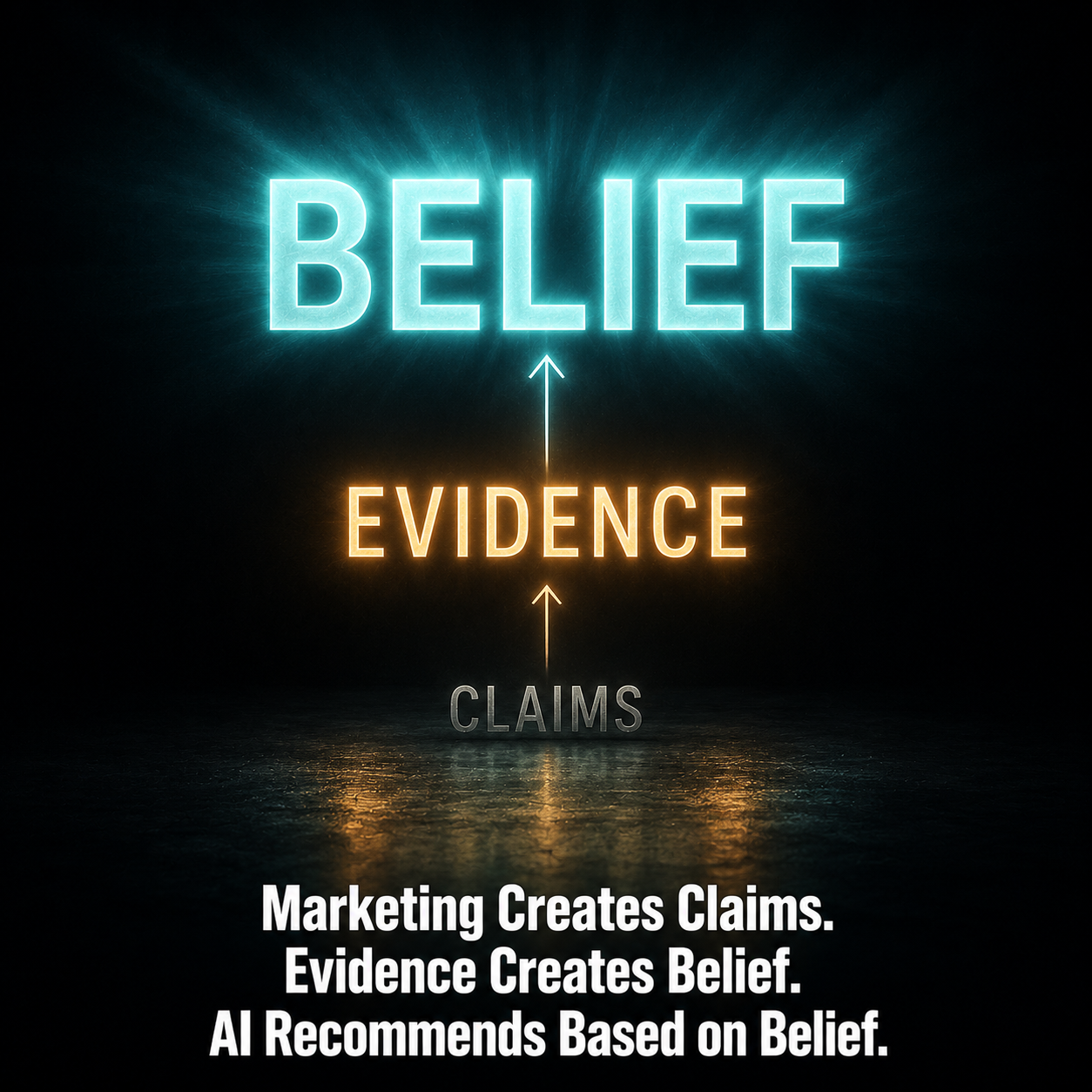
Content creates claims. Evidence creates belief. And AI recommends based on belief, not claims. |
|
|
🧠 This Week’s Strategic Lens |
|
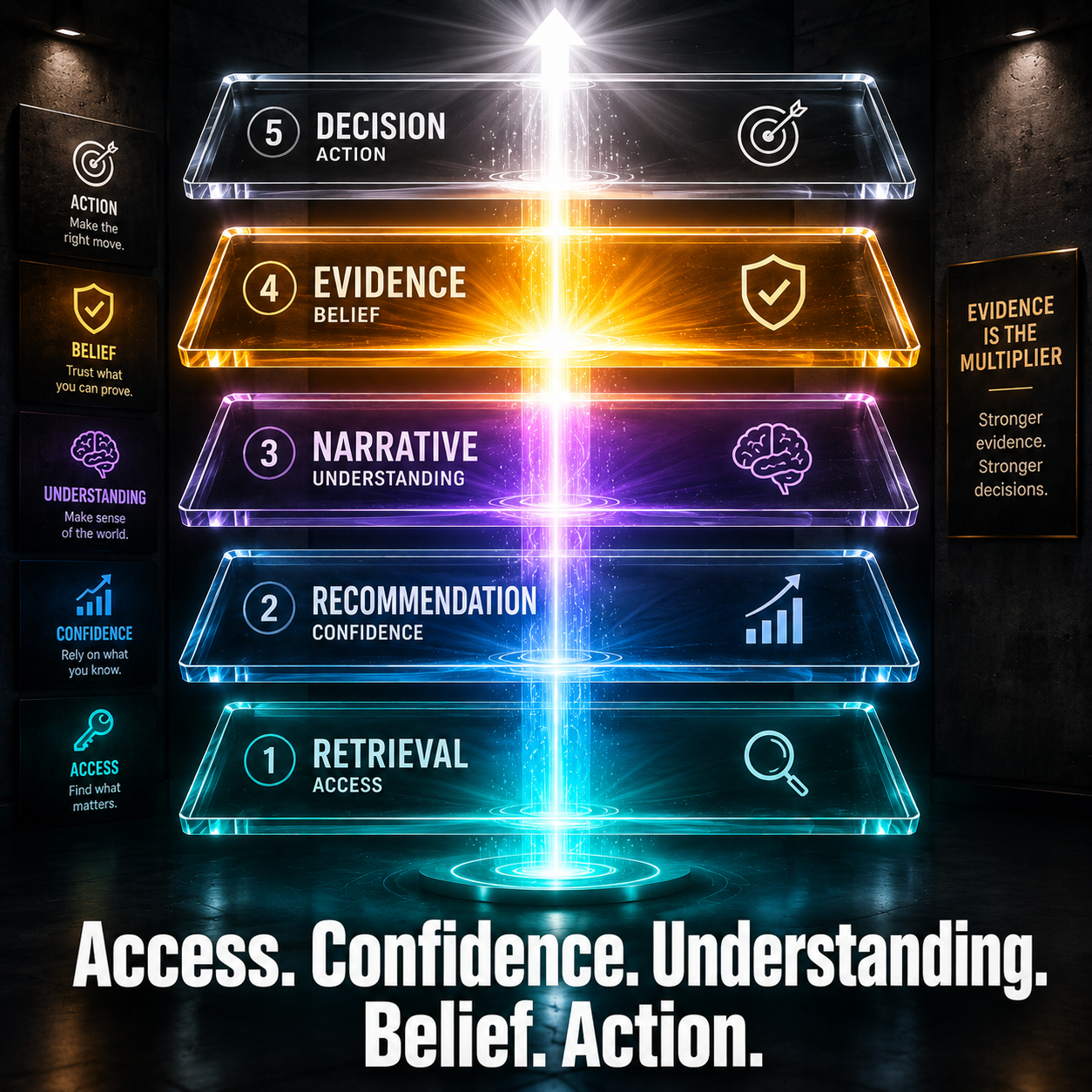
Every layer of AI recommendation contributes evidence.
Retrieval creates access. If AI cannot find your information, no evidence reaches the system. This is where crawlability, structured data, and retrieval readiness determine whether AI can even begin evaluating your brand.
Recommendation creates confidence. The strength of AI's recommendation depends on how much corroborating evidence exists across trusted sources. More evidence from more authoritative sources creates higher recommendation confidence.
Narrative creates understanding. How AI describes your brand depends on the evidence it finds about your positioning, capabilities, and category. Contradictory evidence across sources creates confused narratives.
Evidence creates belief. This is the layer most brands have never measured. It is the aggregate weight of all the signals AI uses to determine whether a claim about your brand is trustworthy enough to recommend. Belief is what separates cautious mentions from confident recommendations.
Decision creates action. When the evidence is strong enough, AI does not just recommend. It acts. It includes your brand in evaluation frameworks, comparison workflows, and procurement processes with confidence.
Notice the progression. Access. Confidence. Understanding. Belief. Action.
Each layer depends on evidence. And each layer can be diagnosed to understand where evidence is strong, where it is weak, and where it is contradicting the recommendation you want to receive.
That is the difference between knowing your score and knowing what to do about it.
|
|
|
|
👨💻 Founder’s Note |
|
This week something happened that made me smile.
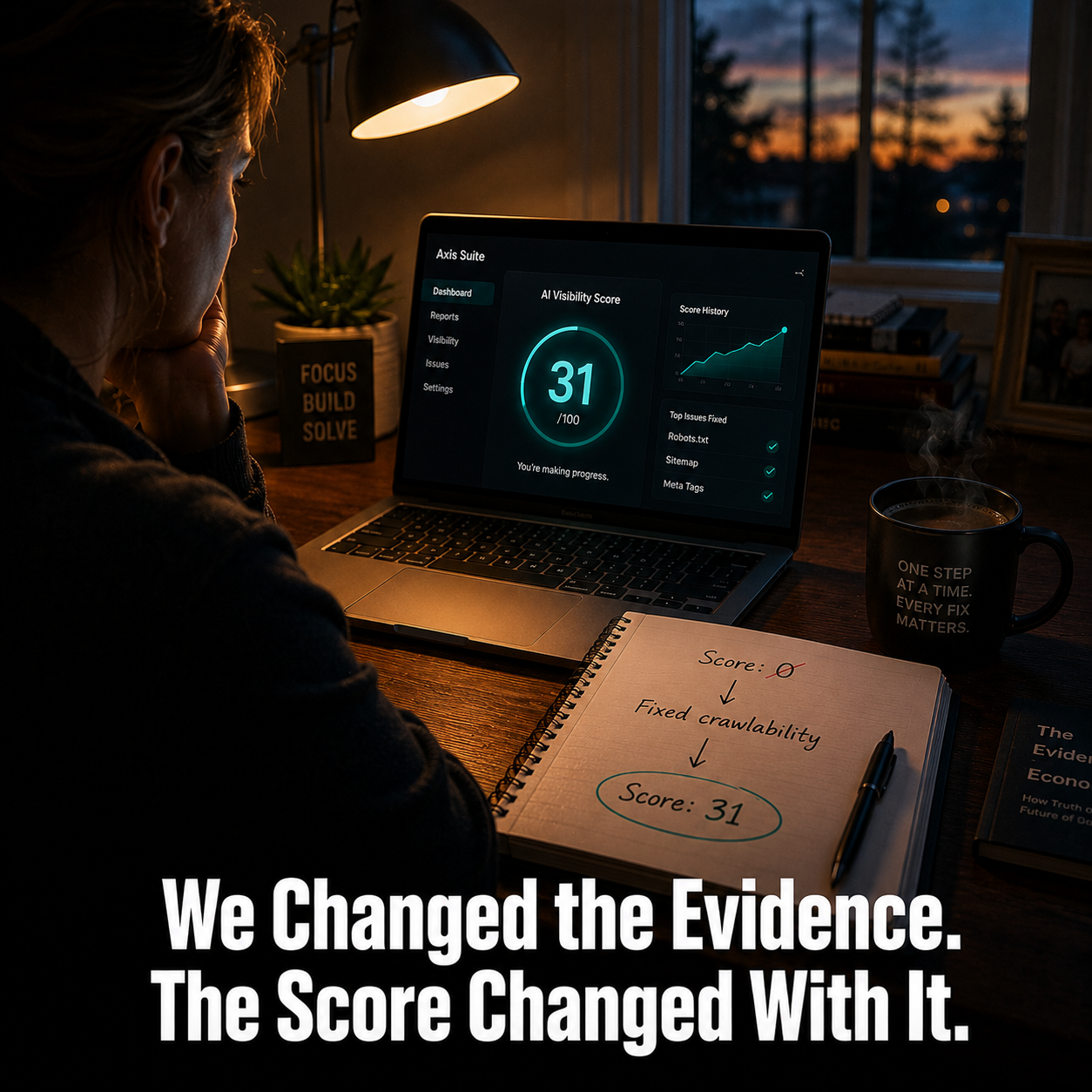
Axis Suite finally appeared on the board with an AI visibility score of 31 out of 100.
It was not a huge score. But it meant something important.
We had been invisible to AI systems. Completely invisible. Our score was zero. Not low. Zero.
Then we fixed one thing. Crawlability. We made our website accessible to AI systems so they could actually find and evaluate the evidence on our pages.
The score moved from 0 to 31.
Not because we published more content. Not because we ran a campaign. Not because we convinced anyone of anything.
Because we changed the evidence AI received.
That is the thesis behind everything we are building. AI systems do not change their behavior because we want them to. They change because the evidence they receive changes.
And that is encouraging. Because it means these systems are measurable and improvable. The brands that understand what evidence AI is using and where that evidence is weak can make specific changes that produce specific results.
That is what I want Axis Suite to be. The independent intelligence layer that explains what AI believes about your brand, why it believes it, and what decision that belief ultimately drives.
We are a long way from where we want to be. But 31 is not zero. And the evidence is working.
- Dana Billingsley | Founder, Axis Suite |
|
|
🛠 PRACTICAL SECTION |
|
The Evidence Audit (15 Minutes)
If AI says your competitor is the category leader, what evidence is it using?
CMOs and marketing leaders can answer that question this week with a simple audit.
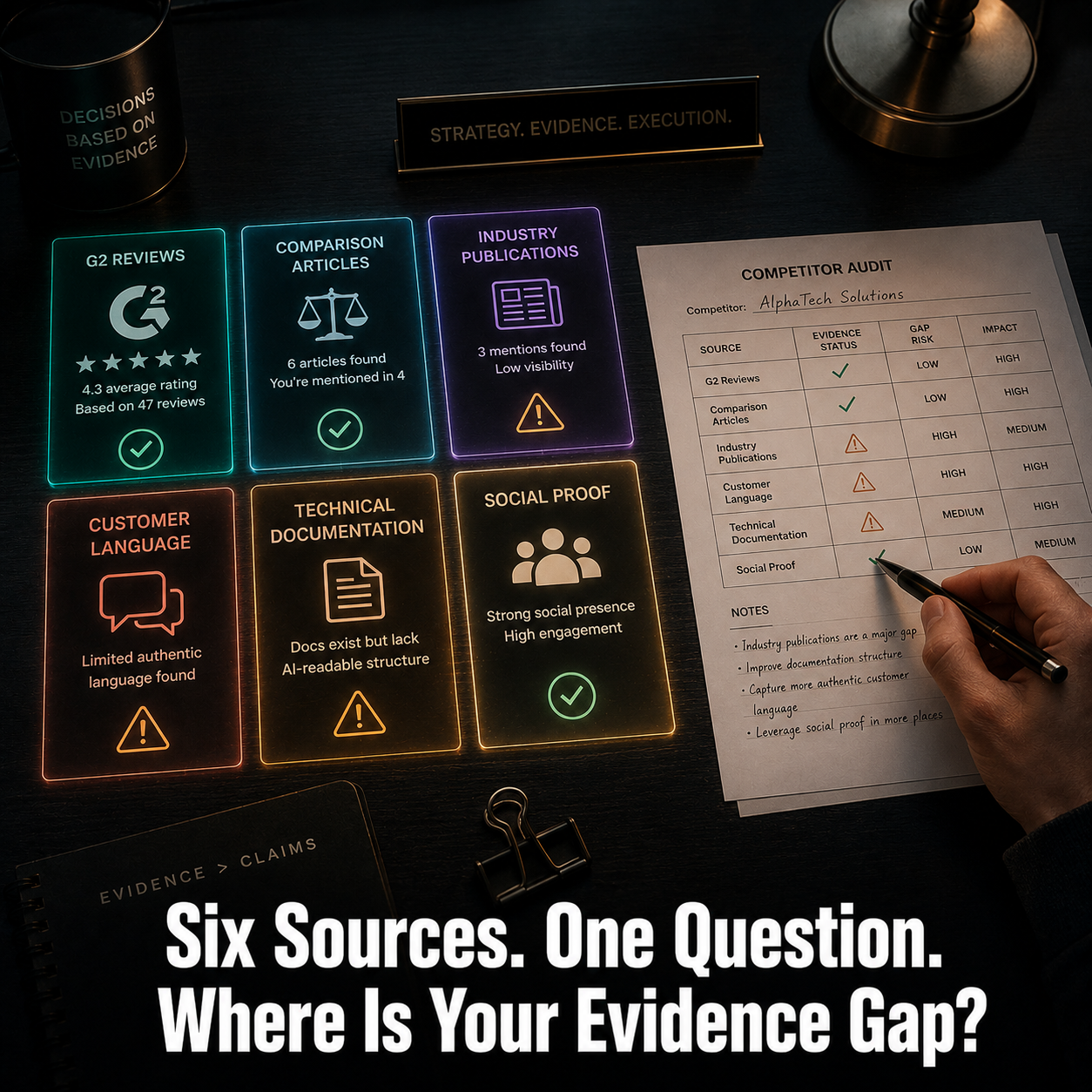
Pick your top competitor. The one AI recommends most often in your category. Then check six evidence sources.
G2 and review sites. How many reviews do they have versus you? What is their rating? What specific language do reviewers use to describe them? That language is evidence AI draws from.
Comparison articles. Search for "[your category] comparison" or "[your category] vs [competitor]." Which articles appear? Do those articles include your brand? The brands present in comparison content have stronger evidence for AI evaluation queries.
Industry publications. Which publications has your competitor been mentioned in that you have not? AI weights authoritative industry sources more heavily than self-published content. Gaps in publication coverage are evidence gaps.
Customer language. How do your competitor's customers describe them publicly? On LinkedIn, in case studies, in testimonials? If their customers consistently use the same category language, AI treats that as corroborating evidence.
Documentation and technical content. Does your competitor have public documentation, API references, or technical resources that AI can evaluate? Technical evidence signals capability depth.
Social proof signals. Conference appearances, partnership announcements, integration listings, community contributions. Each of these creates evidence that AI uses to weight its recommendations.
After checking all six sources, ask: Where does my competitor have evidence that I do not?
That gap is your evidence gap. And closing it is more likely to change your AI recommendation than publishing another blog post.
|
|
|
☕AI, Evidence, and the Barista Who Earned the Regulars |
|
|
Your Weekly Dose of Caffeinated Wisdom
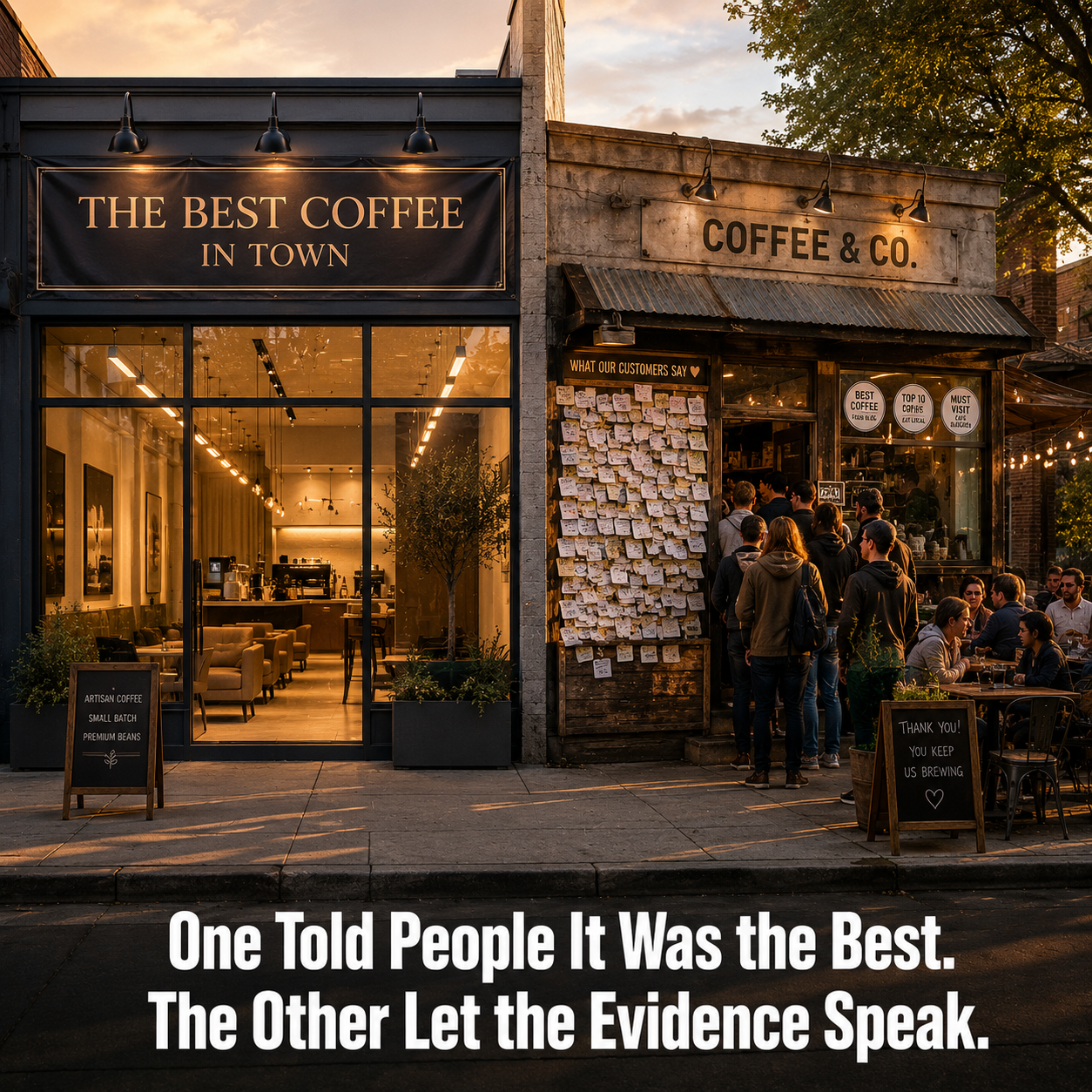
There are two coffee shops on the same block.
One has a beautiful website. Professional photos. Five-star self-reviews on their own site. A homepage that says "The Best Coffee in Town."
The other one has 847 Google reviews. A line out the door every morning. Three local food bloggers who mention it regularly. A neighborhood Facebook group where people argue about which drink is best.
Ask anyone on the street which shop has better coffee. They will point to the second one.
Not because they have tasted both. Because the evidence is overwhelming.
The first shop told people it was the best. The second shop gave people enough evidence to believe it themselves.
AI works the same way.
It does not believe your homepage. It believes the accumulated weight of every source it can find that corroborates or contradicts what your homepage claims.
The brands that focus on creating evidence, not just content, are the ones AI recommends with confidence.
And the brands that focus on telling AI they are the best? They are the beautiful website with no line out the door.
Stay steady. ☕ |
|
|
🔔 CLOSING SIGNAL |
|
Marketing creates claims.
Evidence creates belief.
AI recommends based on belief.
The brands that understand what evidence AI uses, where that evidence is strong, and where it is missing will not just optimize their visibility.
They will earn AI's trust.
*The next competitive advantage is not publishing more content. It is giving AI enough evidence to believe your brand belongs in the recommendation.* |
|
|
|
|
🛠 Coming Next Week
We finally tackle the question we have been circling for three weeks.
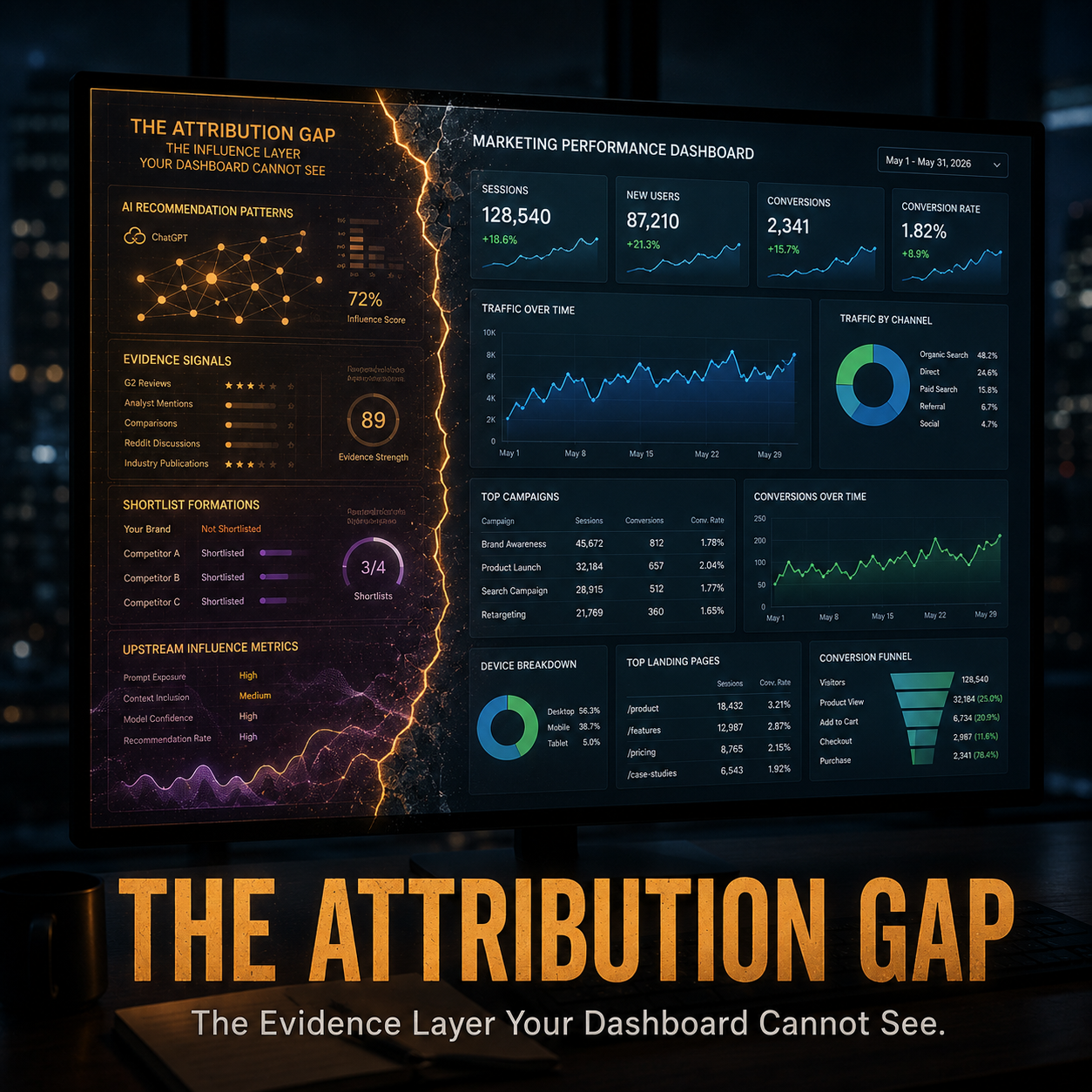
The Attribution Gap.
AI influences buying decisions before prospects reach your website. No click. No referral source. No campaign data.
But now we have a better lens for it. The attribution gap is not just a measurement problem. It is an evidence problem. The influence AI has before the website visit is driven by the evidence it found long before the buyer ever typed a query.
Next week we break down the invisible influence layer and what it means for how CMOs measure marketing impact.
|
 |
|
|
|
|
🚀🤖✨📊🎨
The Axis Suite
AI Recommendation Intelligence. AI Narrative Defense. Agentic Visibility Infrastructure. |
|
"Axis Suite is the independent intelligence layer that explains what AI believes about your brand, why it believes it, and what decision that belief ultimately drives."
👉 Axis Suite
📬 Thank you for being part of this.
Here's to staying visible, staying understood, and becoming the obvious choice.
Stay caffeinated, stay inspired. See you next week! ☕
From the trenches,
The Axis Suite Team 💪
|
|
|
 |
|
© 2026 TrendAxis, LLC™. All rights reserved.
Disclaimer: Affiliate links may be included |
|
|