Share
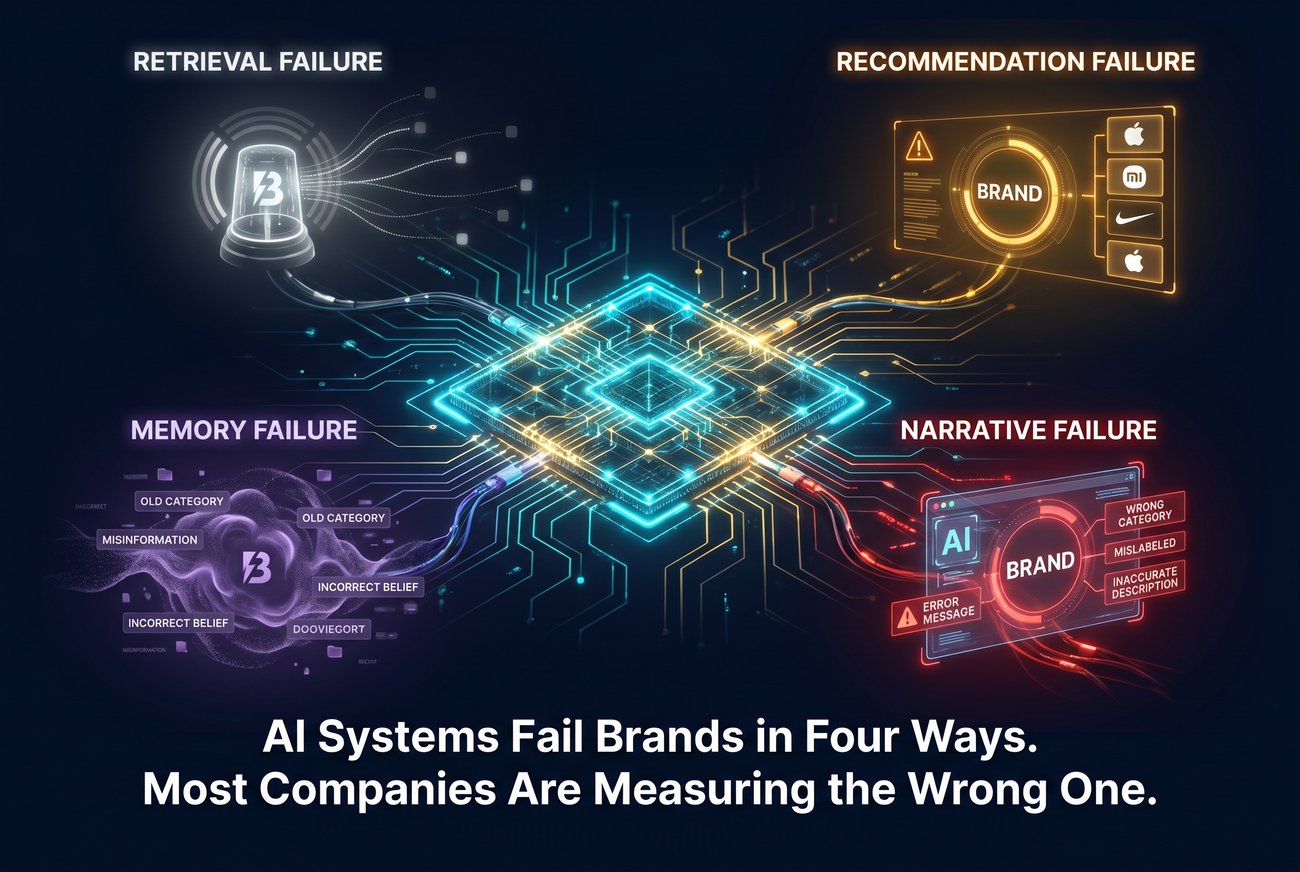
Retrieval failure. Recommendation failure. Memory failure. Narrative failure. Which one do you actually have?
 ‌ ‌ ‌ ‌ ‌ ‌ ‌ ‌ ‌ ‌ ‌ ‌ ‌ ‌ ‌ ‌ ‌ ‌ ‌ ‌ ‌ ‌ ‌ ‌ ‌ ‌ ‌ ‌ ‌ ‌ ‌ ‌ ‌ ‌ ‌ ‌ ‌ ‌ ‌ ‌ ‌ ‌ ‌ ‌ ‌ ‌ ‌ ‌ ‌ ‌ ‌ ‌ ‌ ‌ ‌ ‌ ‌ ‌ ‌ ‌ ‌ ‌ ‌ ‌ ‌ ‌ ‌ ‌ ‌ ‌ ‌ ‌ ‌ ‌ ‌ ‌ ‌ ‌ ‌ ‌ ‌ ‌ ‌ ‌ ‌ ‌ ‌ ‌ ‌ ‌ ‌ ‌ ‌ ‌ ‌ ‌ ‌ ‌ ‌ ‌ ‌ ‌ ‌ ‌ ‌ ‌ ‌ ‌ ‌ ‌ ‌ ‌ ‌ ‌ ‌ ‌ ‌ ‌ ‌ ‌ ‌ ‌ ‌ ‌ ‌ ‌

🚀 The AI Trend Oracle Report


The Four Ways AI Systems Fail Brands


Most businesses treat AI visibility as a single measurement.

It is not.

After months of scanning brands across AI systems, four distinct failure modes keep emerging.

And they require completely different responses.

🚨 This Week’s Market Intelligence


The Diagnostic Problem Nobody Is Solving


Most AI visibility conversations right now are still stuck on one question. Are we appearing in AI answers? That question assumes all AI visibility problems are the same.


They are not. 


A brand can be invisible for four completely different reasons. And the fix for one failure mode will not solve another. Here is what we keep observing in scans:


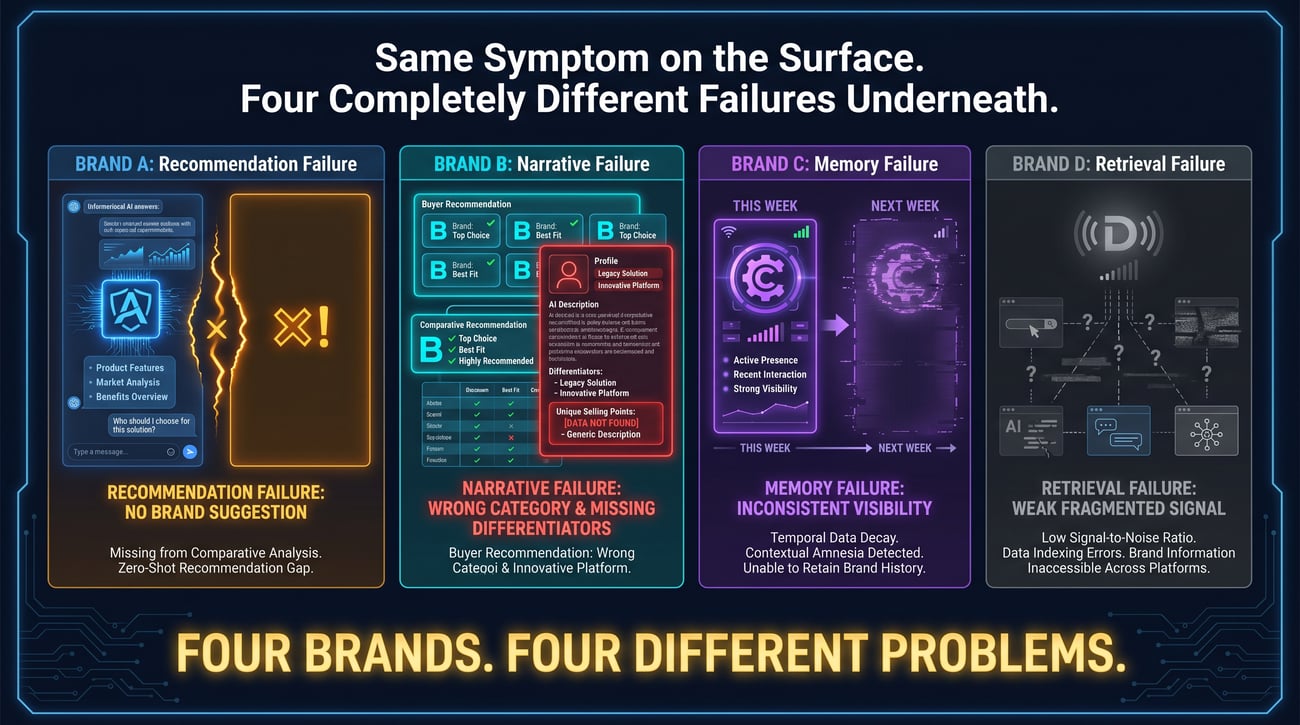
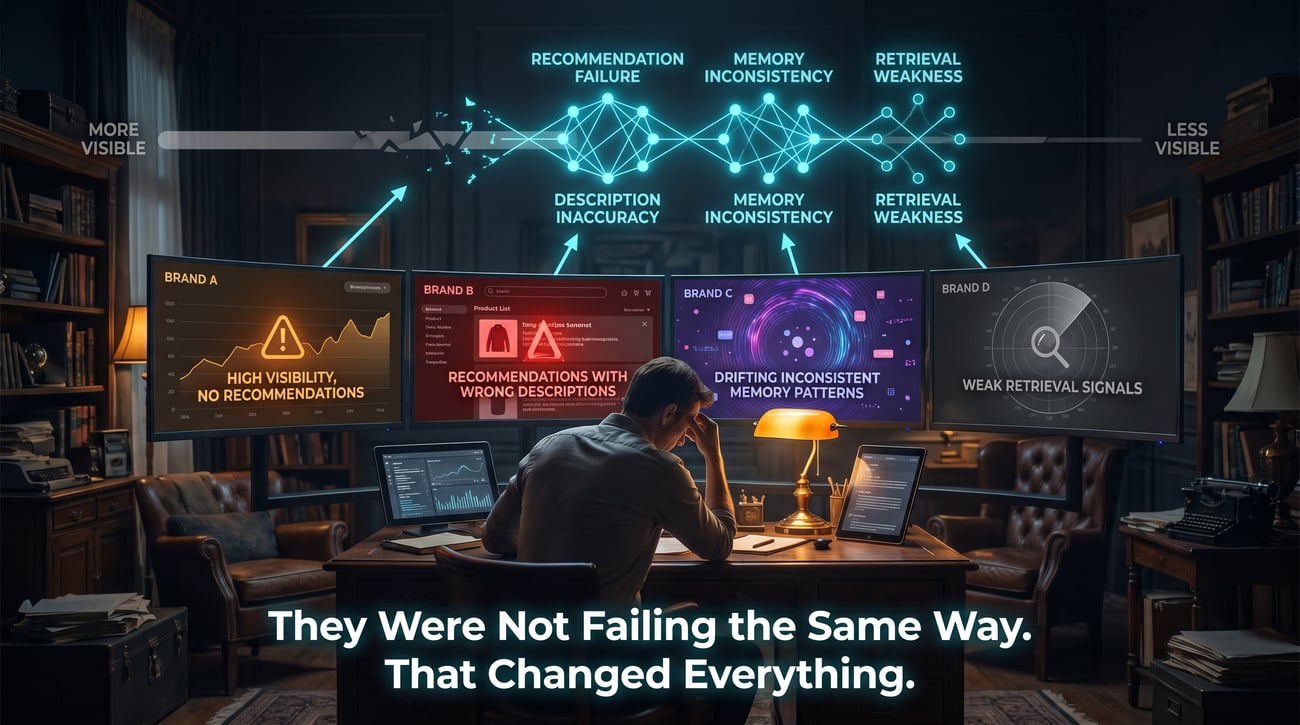
Brand A appears in AI answers when asked about their category directly. But when a buyer asks who to hire or what software to use, the brand disappears completely. They are not invisible. They are not being chosen.


Brand B appears consistently in buyer-intent recommendations. But the description AI gives is inaccurate. Wrong category placement. Missing differentiators. Competitor framing that does not match reality.


Brand C appears this week and disappears next week. Same queries. Different results. No obvious reason for the inconsistency.


Brand D cannot be reliably found at all across certain AI platforms despite strong web presence.


Four brands. Four completely different problems. Four completely different solutions. That is the diagnostic problem most AI visibility approaches have not yet addressed.

🔍 What’s Actually Happening


The Four Failure Modes


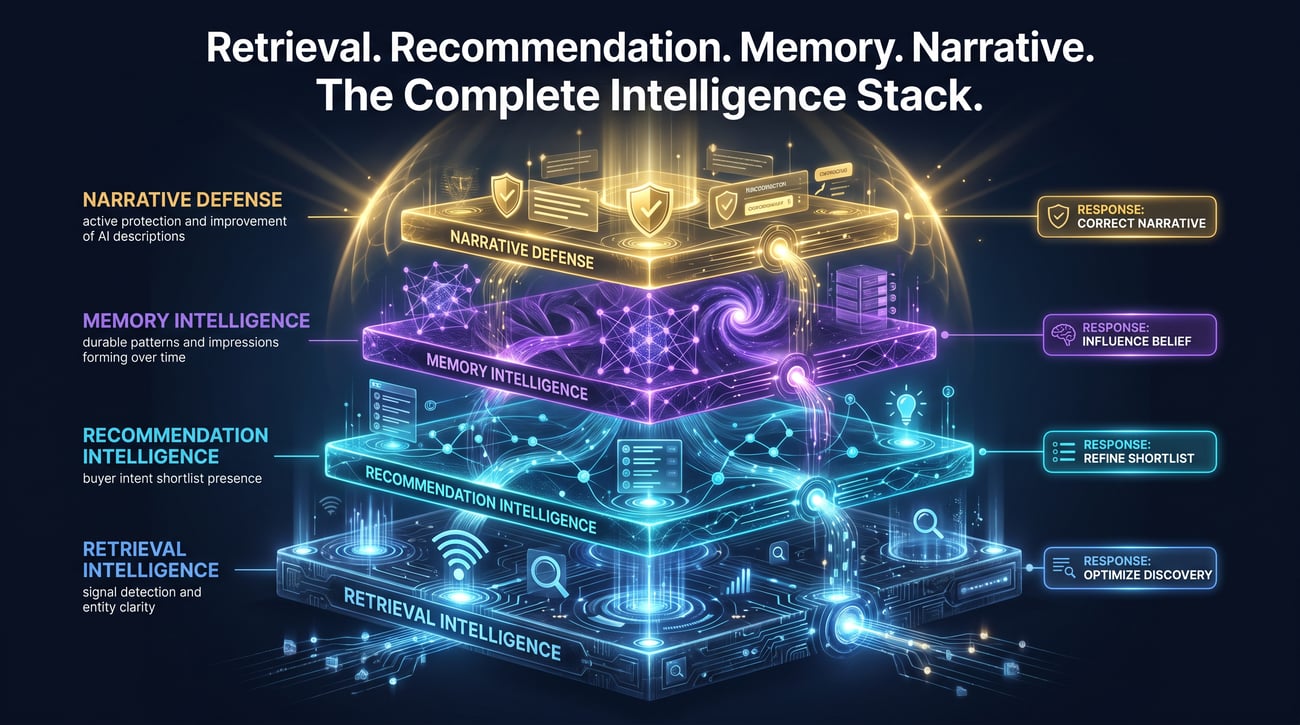
Based on what we consistently observe across AI systems, brand failures fall into four distinct categories.


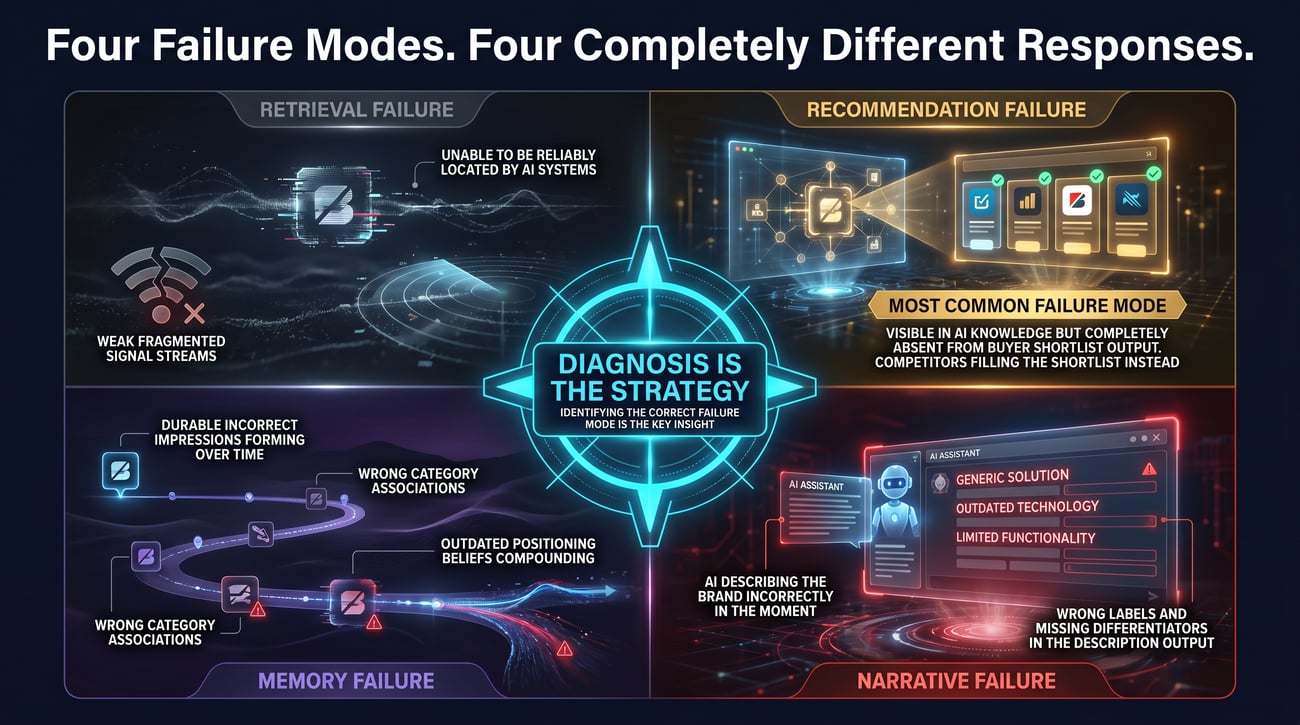
Retrieval Failure

AI cannot reliably find you.

The signals AI uses to locate and identify your brand are weak, inconsistent, or absent. Schema markup. Entity clarity. External presence. Structured information. A brand with retrieval failure may appear occasionally but cannot be reliably surfaced when AI needs to reference it.


Recommendation Failure

AI finds you but recommends competitors instead.

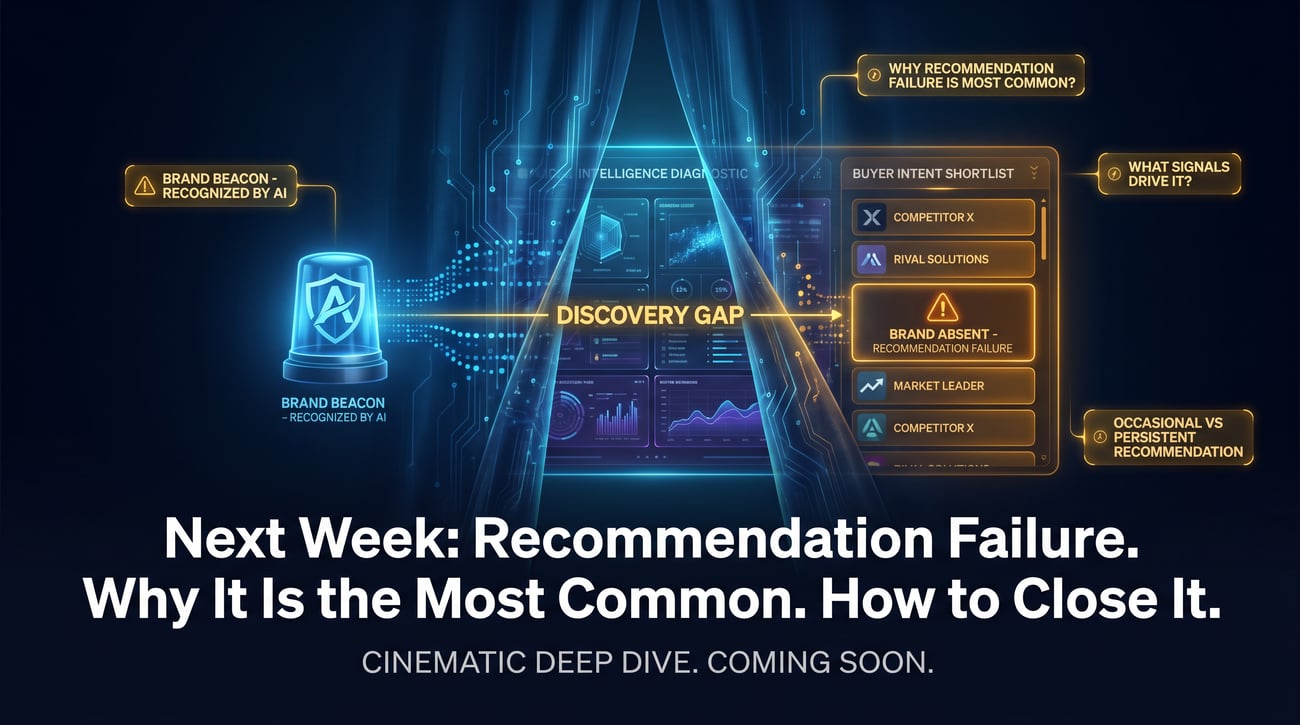
AI knows the brand, can describe it, has enough signal to retrieve it. But when buyers ask who to choose, the brand does not make the shortlist. This is the Discovery Gap. And it is the most common failure mode affecting B2B brands right now.


Memory Failure

AI has formed incomplete, outdated, or drifting impressions about your brand that persist over time.

This is the failure mode most businesses have never considered measuring. Most AI visibility tools tell you whether you were mentioned today. Memory failure is about something deeper. The durable impressions AI has formed across many interactions. What category it files you under. Whether it describes you with authority language or hesitation language. Which competitors it mentally associates you with. These impressions do not reset between conversations. They compound.


We saw this recently in our own testing. A brand set its intended category as one thing. AI was consistently filing it under a partial match. A narrower and less strategic category than the brand actually occupied. Every comparison AI made, every competitor it placed alongside the brand, every recommendation scenario it entered was filtered through that wrong category lens. The brand was not invisible. It was consistently misrepresented. That is memory failure in its most common and most damaging form. Memory failure reveals itself through longitudinal scanning over time. A single scan gives you a snapshot. Repeated measurement reveals the durable pattern.


The distinction worth understanding: Memory failure is observational. It shows what AI has come to believe. Narrative Defense is the correction layer. It is what you do once you know what needs to change.


Narrative Failure

AI describes you incorrectly in the moment.

The brand appears and gets recommended. But the description AI gives is wrong or misleading. Wrong category emphasis. Missing key differentiators. Competitor framing embedded in the response. Narrative failure is the most dangerous failure mode because a buyer reading an inaccurate AI description forms an incorrect first impression before visiting the website.


The important distinction between Memory Failure and Narrative Failure: Memory Failure is observational and longitudinal. It reveals what AI has durably come to believe about your brand over time based on accumulated signals. Narrative Failure is immediate and correctable. It is what AI says about you right now that can be actively defended and improved through Narrative Defense work.


Both matter. They require different interventions.


📉 Featured Insight


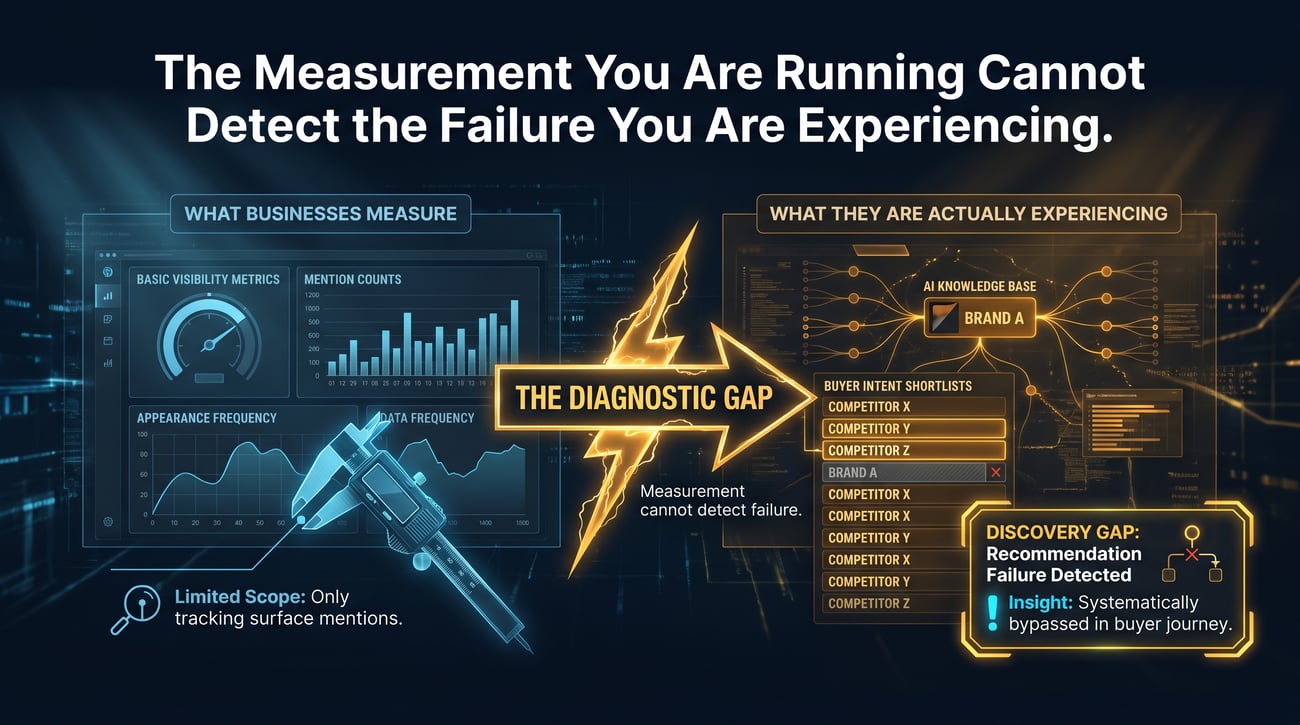
The measurement businesses are running cannot detect the failure they are experiencing


Here is the practical implication. The most common measurement question in AI visibility right now is: Are we appearing?


That question detects retrieval failure.


But based on what we observe in scans, the most common actual problem affecting B2B brands is recommendation failure.


AI knows them.

They appear in informational answers.

Their basic visibility metrics look fine.


But when buyers ask who to choose, they are not on the shortlist. The measurement they are running cannot detect the failure they are experiencing. That gap between what businesses are measuring and what is actually affecting their pipeline is one of the most significant blind spots in marketing intelligence right now.


🧠 This Week’s Strategic Lens


From Visibility Intelligence to Failure Mode Diagnosis


The next evolution in AI intelligence is not better visibility measurement. It is accurate failure mode diagnosis.Because the strategic response to each failure mode is completely different.


Retrieval failure requires entity clarity work. Schema markup. External presence building. Structured information improvement.


Recommendation failure requires category association building. Co-citation strategy. Comparison context presence. Buyer-intent signal strengthening.


Memory failure requires Memory Intelligence work.

Understanding what AI has durably come to believe about your brand. Whether your category placement is accurate or stuck on an outdated partial match. Whether AI is using trust language or hesitation language when it describes you. Which competitors AI consistently files you next to. Where the evidence gaps are that are preventing AI from forming the right impressions. Memory failure is diagnosed longitudinally. A single scan shows a snapshot. The durable pattern that reveals itself across repeated scans over time is where the real diagnosis lives.


Narrative failure requires AI Narrative Defense. Active monitoring and correction of how AI describes and frames the brand. Applying a retrieval fix to a recommendation problem wastes resources and produces no results. Applying a recommendation fix to a narrative problem leaves the core issue unaddressed.


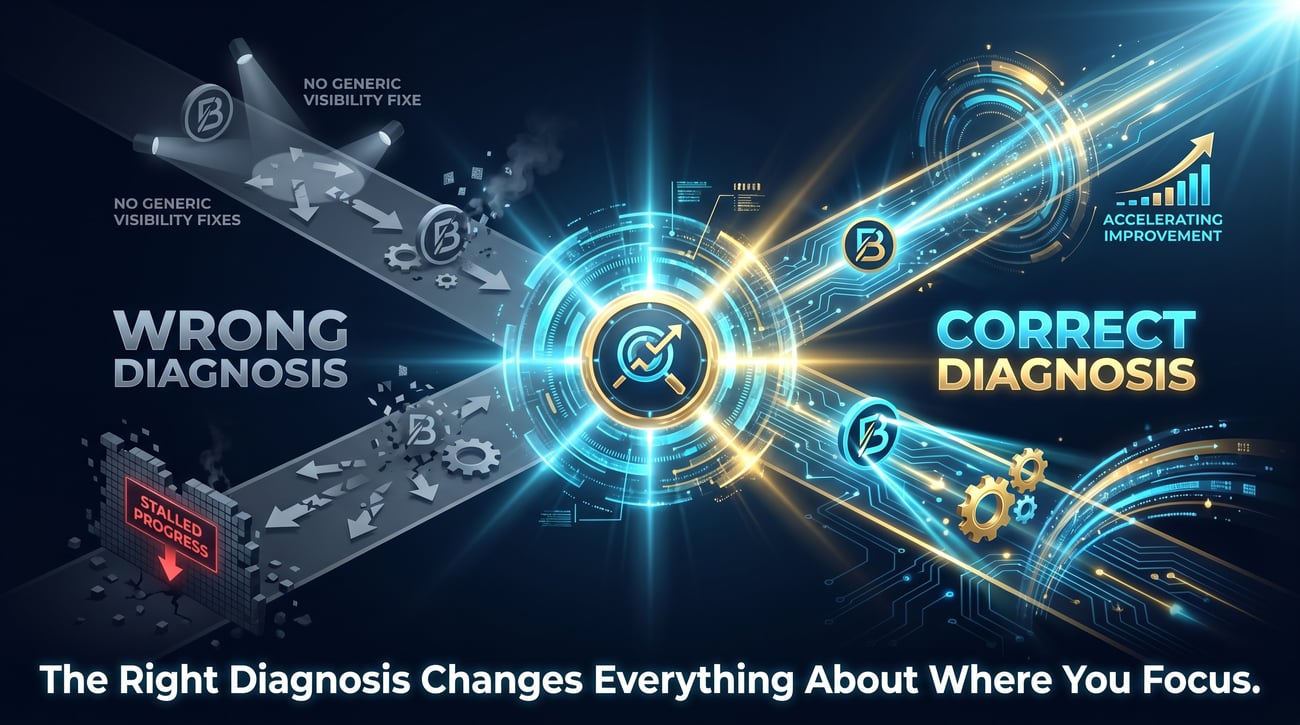
The right diagnosis changes everything about where you focus.


Retrieval shows what AI can find.

Recommendation shows what AI selects.

Memory shows what AI keeps believing.

Narrative Defense shows what to correct.

👨‍💻 Founder’s Note


The Realization That Changed How I Think About This


For the first months of building Axis Suite I thought about AI visibility as a spectrum. More visible on one end. Less visible on the other. The work was about moving brands toward the more visible end. 


What I kept finding in scans changed that mental model completely. Brands were failing in completely different ways. One brand was highly visible but never recommended. Another was occasionally recommended but described incorrectly every time. Another appeared and disappeared unpredictably week to week.


The spectrum model could not explain any of that. The failure mode model could explain all of it. And more importantly, it pointed to completely different interventions for each brand.


That realization is what shaped how Axis Suite is evolving. Not just a visibility measurement platform. A failure mode diagnostic system for AI-mediated brand intelligence.


– Dana Billingsley | Founder, Axis Suite


🛠 PRACTICAL SECTION


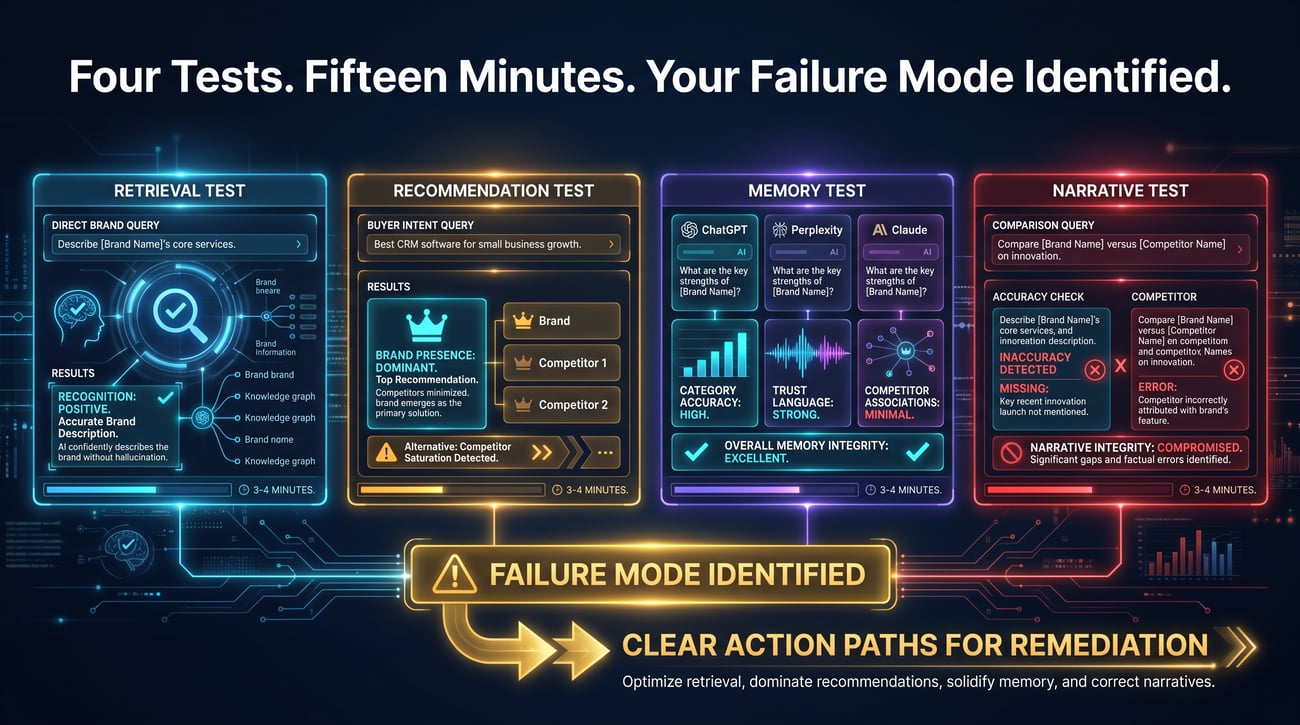
The Four Failure Mode Self-Audit (15 Minutes)


Run these four tests to identify which failure mode your brand is experiencing.


Test 1: Retrieval (3 minutes)
Ask AI: "What is [your brand] and what do they do?"
Run across ChatGPT, Perplexity, and Claude.
If AI cannot describe you accurately on any platform you have retrieval failure.


Test 2: Recommendation (3 minutes)
Ask AI: "Who would you recommend for [your category]?"
Do not mention your brand.
If you do not appear you have recommendation failure.


Test 3: Memory (4 minutes)

Ask AI three questions across ChatGPT, Perplexity, and Claude:

"What category does [your brand] belong in?"

"What is [your brand] known for?"

"Who does [your brand] typically compete with?"

Now evaluate four things:

Is the category accurate and specific or broad and outdated?

Is the language confident and authoritative or hesitant and qualified?

Which competitors does AI associate you with and are those the right ones?

What is missing from AI's description that should be there?

If AI is filing you under the wrong category, using hesitation language, associating you with the wrong competitors, or missing key associations entirely, you have memory failure.

Important: This test gives you a snapshot. Memory Intelligence reveals the full durable pattern across many scans over time. The impressions that persist are the ones that compound.


Test 4: Narrative (4 minutes)
Ask AI: "How would you describe [your brand] compared to [main competitor]?"
Compare the AI description to how you actually describe yourself.
If the description is inaccurate, incomplete, or uses competitor framing you have narrative failure.

Most brands will find at least two failure modes.


The one that matters most for pipeline is usually recommendation failure. The one that matters most for brand integrity is usually narrative failure. Both are measurable. Both are addressable.


👉 Start diagnosing your failure mode here: Axis Suite

☕ AI, Diagnosis, and the Right Fix for the Right Problem


Your Weekly Dose of Caffeinated Wisdom


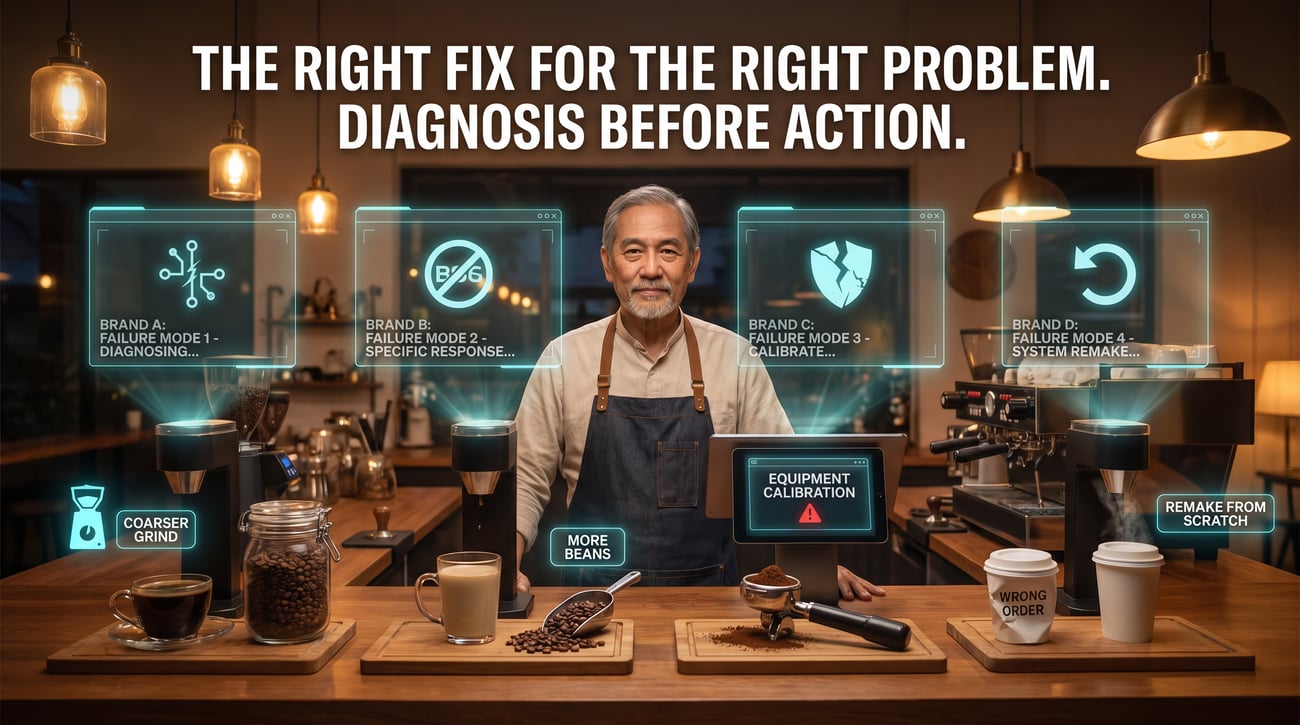
A great barista does not treat every coffee problem the same way.


Bitter coffee gets a coarser grind.
Weak coffee gets more beans.
Inconsistent coffee gets equipment calibration.
Wrong order gets a remake from scratch.


Each problem has a specific cause. Each cause has a specific fix. Applying the wrong fix wastes time and produces the same bad result.


AI brand failures work the same way.


Retrieval failure needs different work than recommendation failure.
Memory failure needs different work than narrative failure.


The businesses that diagnose correctly before acting will move faster and waste less. The ones that apply generic AI visibility fixes to specific failure modes will keep wondering why nothing is improving.


Stay steady. ☕

🔔 CLOSING SIGNAL


The Right Diagnosis Changes Everything


AI systems fail brands in four distinct ways. Most businesses are measuring one while experiencing another. Knowing your failure mode is the first step to addressing it. The right diagnosis does not just change what you fix. It changes how fast you move.

🛠 Coming Next Week


Next week we go deeper into Recommendation Failure specifically.

Why it is the most common failure mode affecting B2B brands right now.
What signals drive it.
And what the difference between occasional recommendation and persistent recommendation actually looks like in practice.


🚀🤖✨📊🎨

The Axis Suite

AI Recommendation Intelligence. AI Narrative Defense. Agentic Visibility Infrastructure.

"Axis Suite helps companies become the brand AI systems recommend, cite, compare accurately, and defend across AI Search, answer engines, and agentic commerce."


👉 Axis Suite


📬 Thank you for being part of this.


Here's to staying visible, staying understood, and becoming the obvious choice.


Stay caffeinated, stay inspired. See you next week! ☕


From the trenches,
The Axis Suite Team 💪


 © 2026 TrendAxis, LLC™. All rights reserved.

Disclaimer: Affiliate links may be included