|
|
|
🚀 The AI Trend Oracle Report
AI Isn't Changing Marketing. It's Changing Executive Decisions. |
|
I was going to write about the attribution gap this week.
Then something happened that changed my priority.
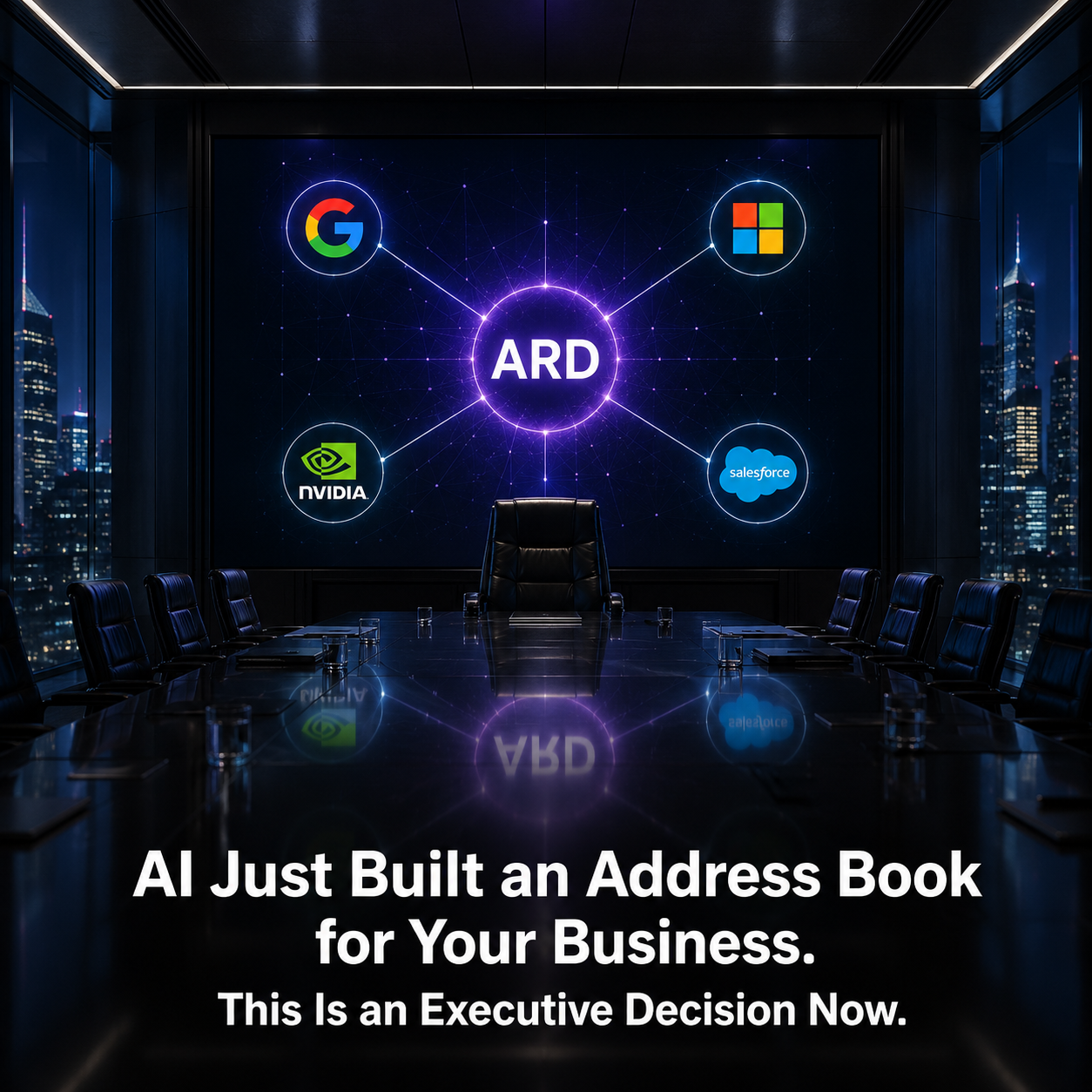
Google, Microsoft, NVIDIA, Salesforce, and several other major technology companies released an open specification called Agentic Resource Discovery. It is a standard that allows AI agents to locate, verify, and connect with businesses at runtime.
Read that again.
The largest technology companies on the planet just built an address book for AI agents to find and act on behalf of businesses.
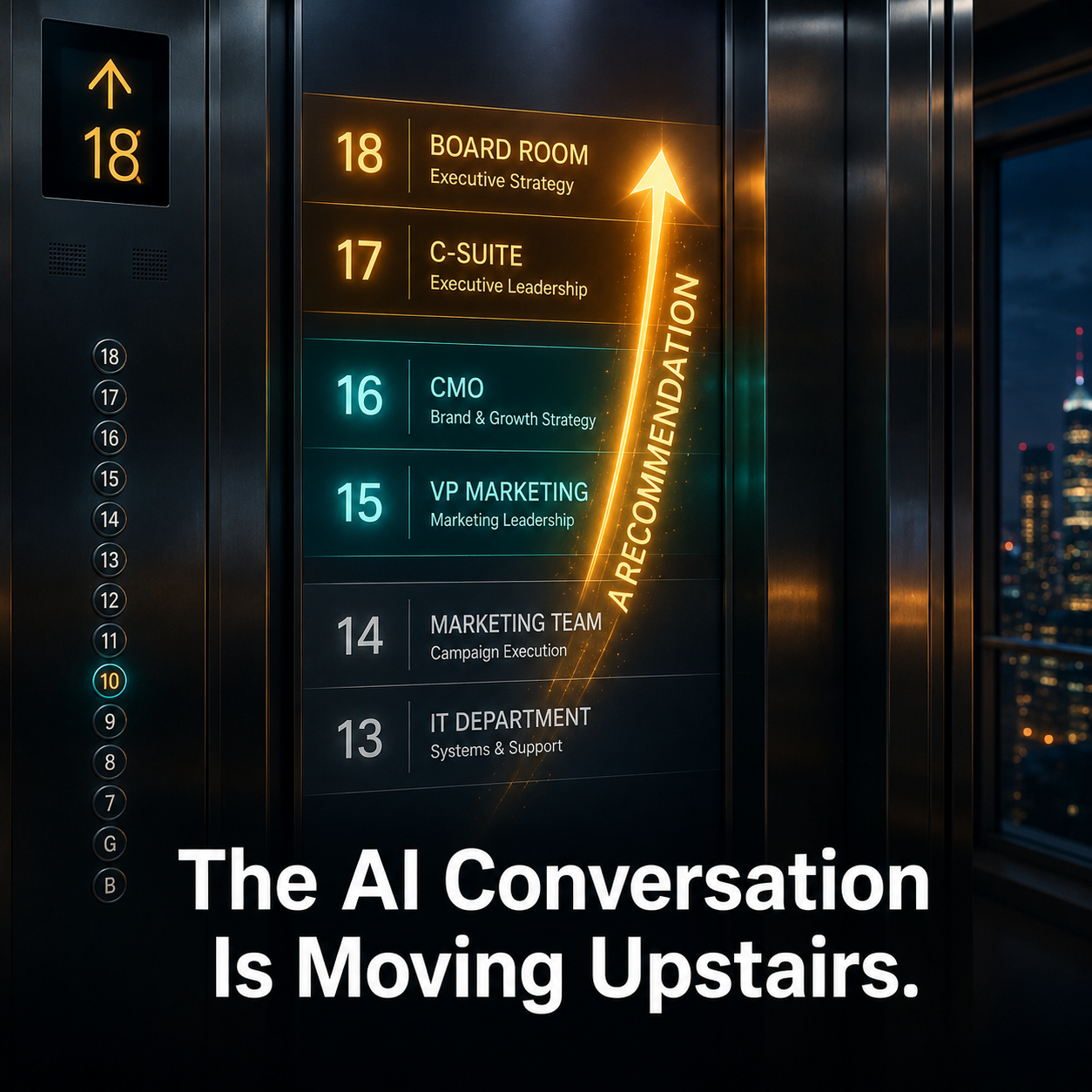
This is not a marketing problem anymore.
This is an executive decision. |
|
 |
|
|
|
|
|
🚨 This Week’s Market Intelligence |
|
Six months ago AI visibility was a marketing team conversation. Marketing owned it. Marketing measured it. Marketing decided what to do about it.
That is changing.
Three things happened in the past two weeks that signal AI recommendation is becoming a boardroom conversation.
First, the Agentic Resource Discovery specification. When Google, Microsoft, NVIDIA, and Salesforce collaborate on an open standard for AI agents to discover and interact with businesses, that is infrastructure. Not a marketing experiment. Infrastructure that will determine which businesses AI can find, verify, and act on.
Second, Warner Bros. Discovery announced it is rebuilding its entire advertising technology stack around agentic AI. Not adding AI features. Rebuilding around AI agents. That is not a marketing decision. That is an operational transformation led by executives.
Third, the Colorado AI Act takes effect June 30. The first comprehensive state AI law in the United States. It regulates AI systems used in consequential decisions. When regulation arrives, the conversation moves from marketing to legal, compliance, and the C-suite.
The pattern is clear. AI recommendation is graduating from a marketing metric to an executive priority. |
|
|
🔍 What’s Actually Happening |
|
The Gaetano DiNardi post that went viral this week in the AI marketing community said something that every executive should hear. Most companies do not have an AI visibility problem. They have a positioning, category alignment, and market validation problem. 202 reactions. 36 comments. Every comment agreed.
Not because it was a new insight. Because it was the first time someone in the AI marketing space said clearly what most vendors will not admit:
Buying a tool is not a strategy.
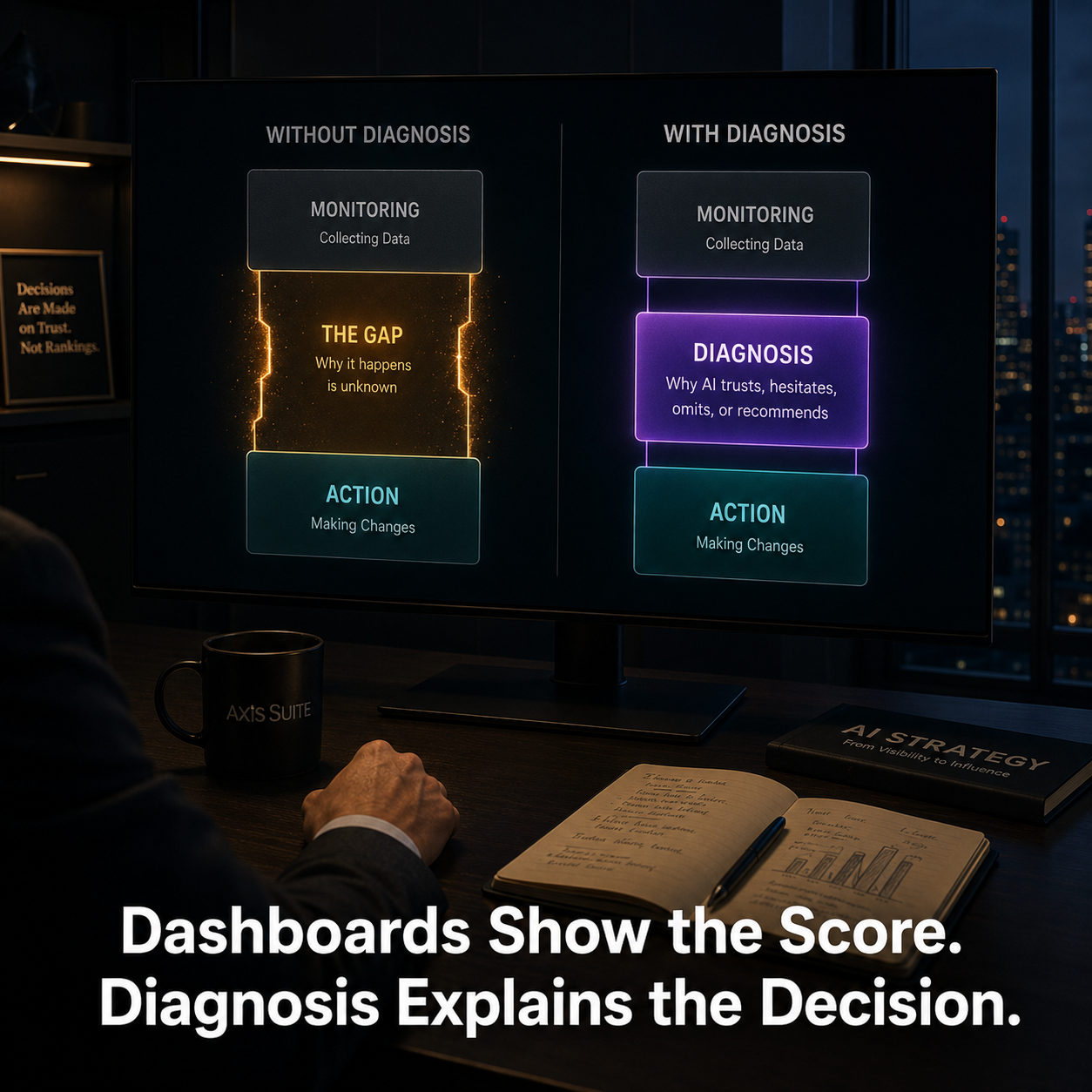
Dashboards are not decisions.
The number you cannot explain cannot be improved on purpose.
Here is what that means for executives specifically.
The AI recommendation conversation is splitting into three layers. Some companies are building monitoring. They tell you your score. Some are building action. They push fixes and generate content. Very few are building the layer in between: diagnosis. The layer that explains why AI systems trust, hesitate, omit, or recommend your brand.
That diagnosis layer is where most brands get stuck. They can see their score. They cannot explain it. And a score you cannot explain to your board is a score that does not drive decisions. |
|
|
📉 Featured Insight |
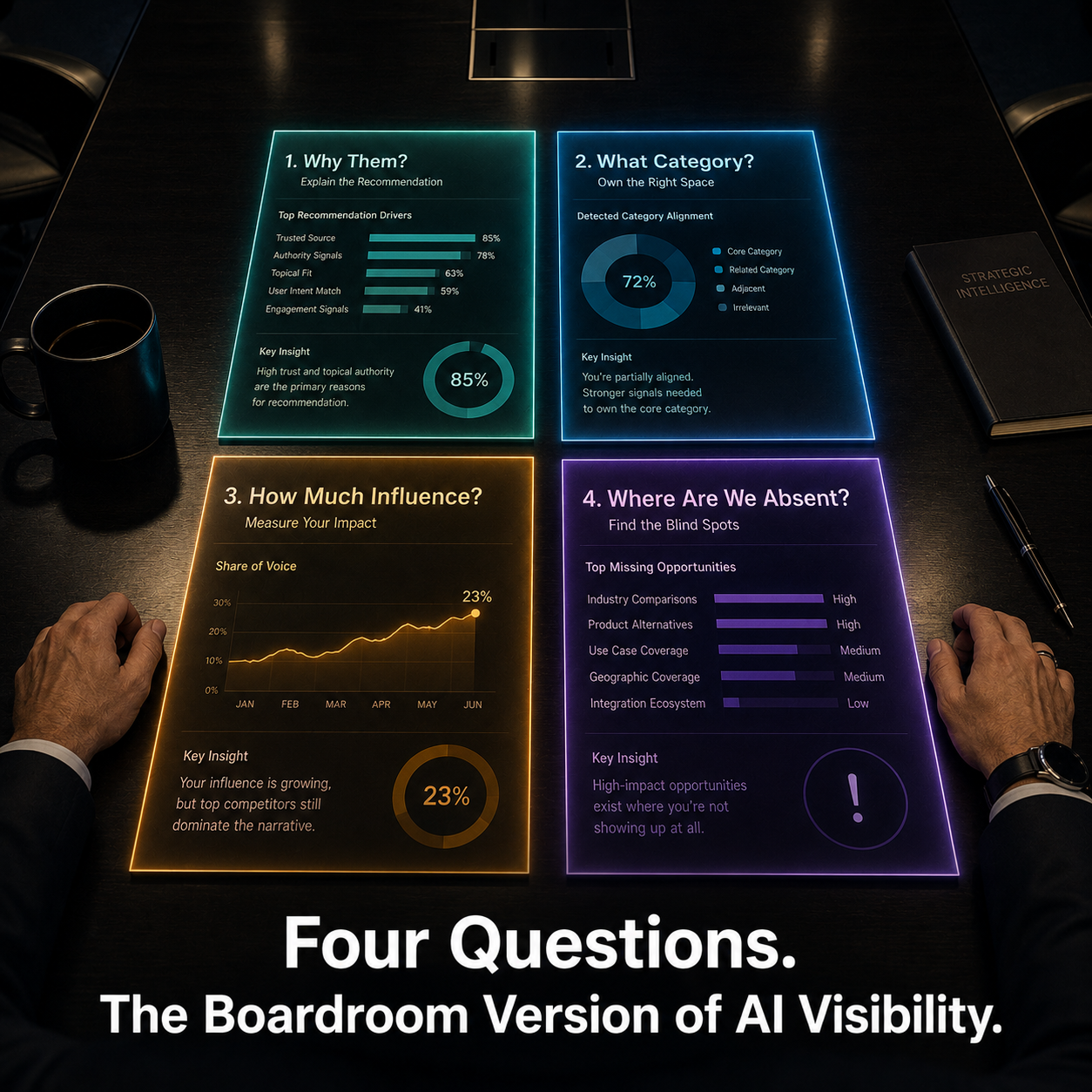
Four Questions Executives Will Ask in the Next Twelve Months
The era of "how many AI mentions do we have" is ending. Here are the four questions that will replace it.
1. Why are competitors being recommended instead of us? Not just whether competitors appear. Why AI systems choose them. What signals they carry that your brand does not. What category AI places them in versus where it places you. This is a competitive intelligence question that requires diagnosis, not a dashboard.
2. What category does AI actually place us in? Most brands assume AI categorizes them the way they categorize themselves. It often does not. A brand that describes itself as a specialized platform gets filed by AI under a broader generic category. That misalignment means every recommendation, every comparison, and every shortlist places you in the wrong competitive set. Executives need to know the gap between intended positioning and AI-assigned positioning.
3. How much influence does AI have before buyers reach us? This is the question marketing dashboards cannot answer. When AI shapes the shortlist before a prospect visits your website, the most important moment in the buyer journey is invisible to your analytics. Executives need to understand the size of that invisible influence layer.
4. Where are we absent from AI buying conversations? Not just broad recommendation queries. Specific buying conversations. When a buyer asks ChatGPT, Claude, Gemini, or Perplexity to evaluate vendors for a specific use case at a specific company size in a specific industry, does your brand appear? The specificity of the query changes which brands surface. Most companies only measure the broad query. Executives need visibility into the specific ones. |
|
|
🧠 This Week’s Strategic Lens |
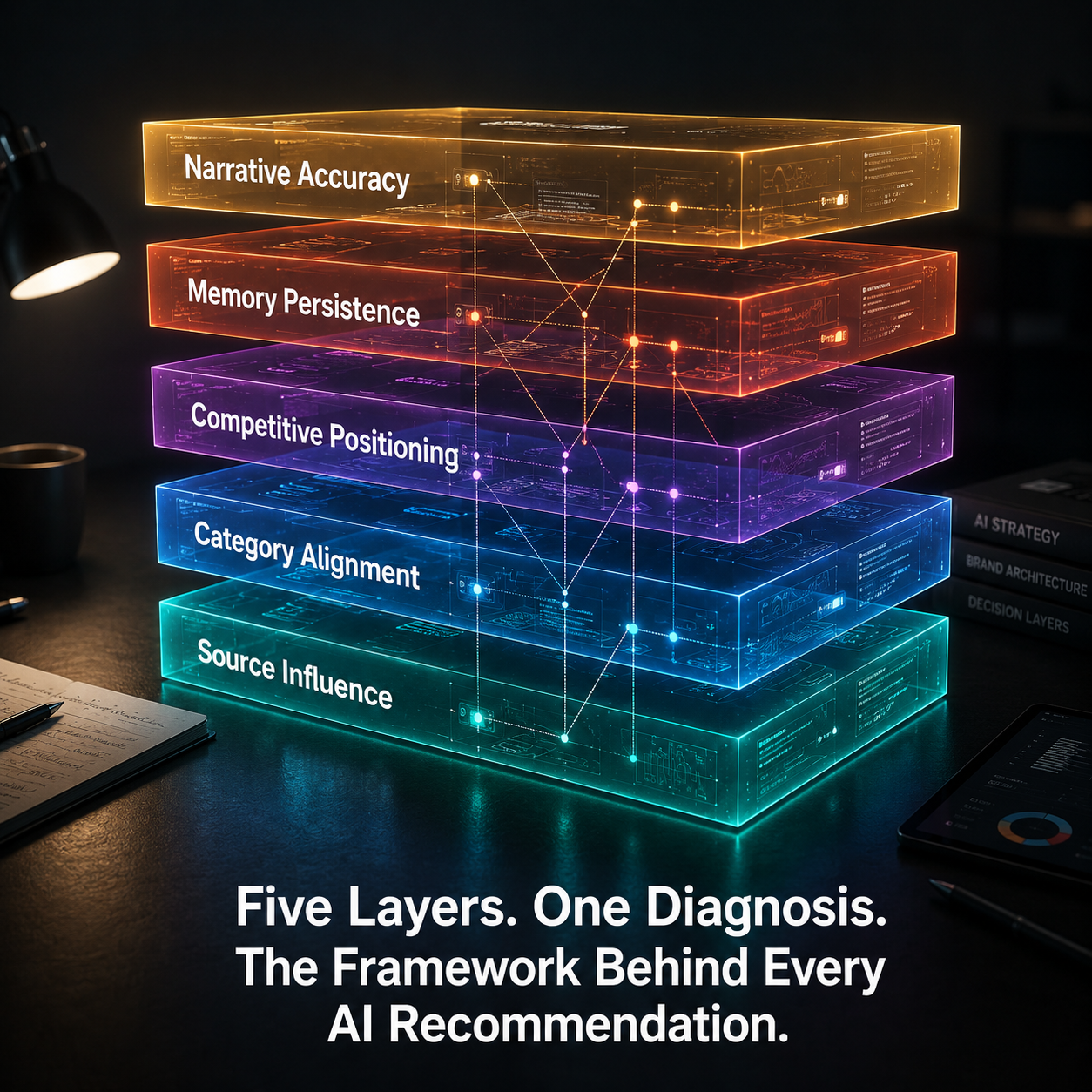
The Five Layers
This week we are publishing The Five Layers of AI Recommendation. The newsletter is not the place for the full technical breakdown. But here is why executives should care about it.
Every AI recommendation your brand receives or misses is the result of five distinct layers working together. Source influence. Category alignment. Competitive positioning. Memory persistence. Narrative accuracy.
Most tools measure the output: did AI mention you or not. Very few explain which layer is causing the result.
That is the difference between knowing your score and knowing what to do about it. And it is the difference between a marketing metric and an executive decision.
When your CMO can walk into a board meeting and say "AI is recommending our competitor because our category alignment is wrong in these specific sources, and here is the remediation plan," that is not a marketing report. That is a strategic brief.
The Five Layers framework gives executives the diagnostic language to have that conversation.
Full article published today: The Five Layers of AI Recommendation |
|
|
|
👨💻 Founder’s Note |
|
Over the past month I have spent more time reviewing competitors, talking with users, and watching how AI recommendation platforms are evolving than actually writing code.
The biggest thing I realized is not technical. It is organizational.
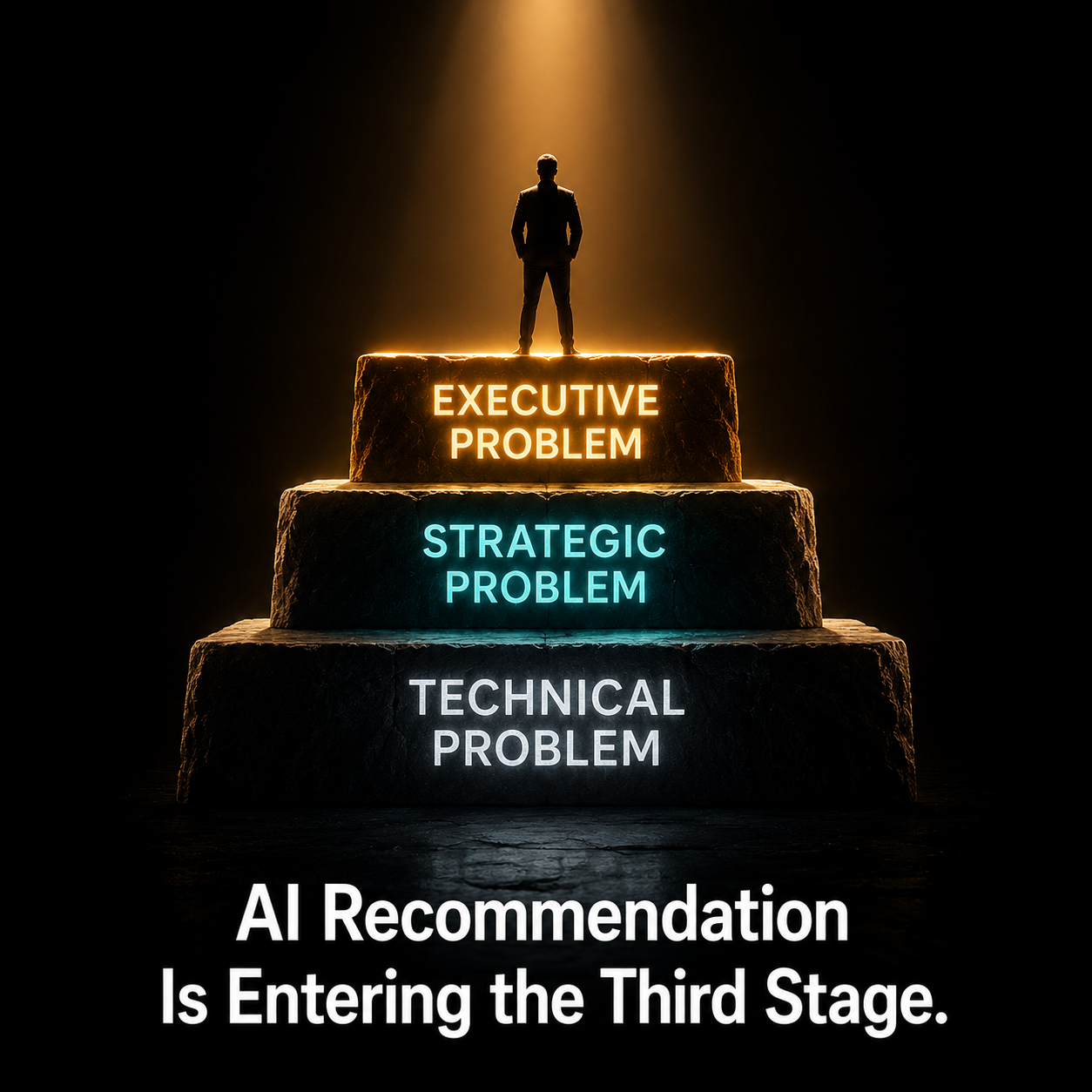
Every technology shift follows the same pattern. It begins as a technical problem. Then it becomes a strategic problem. Eventually it becomes an executive problem.
AI recommendation is entering that third stage.
Six months ago marketing teams asked me: "Can you show us our AI visibility score?" Now executives are asking: "Why is AI recommending our competitor instead of us?"
Those are fundamentally different conversations. The first one needs a dashboard. The second one needs a diagnosis.
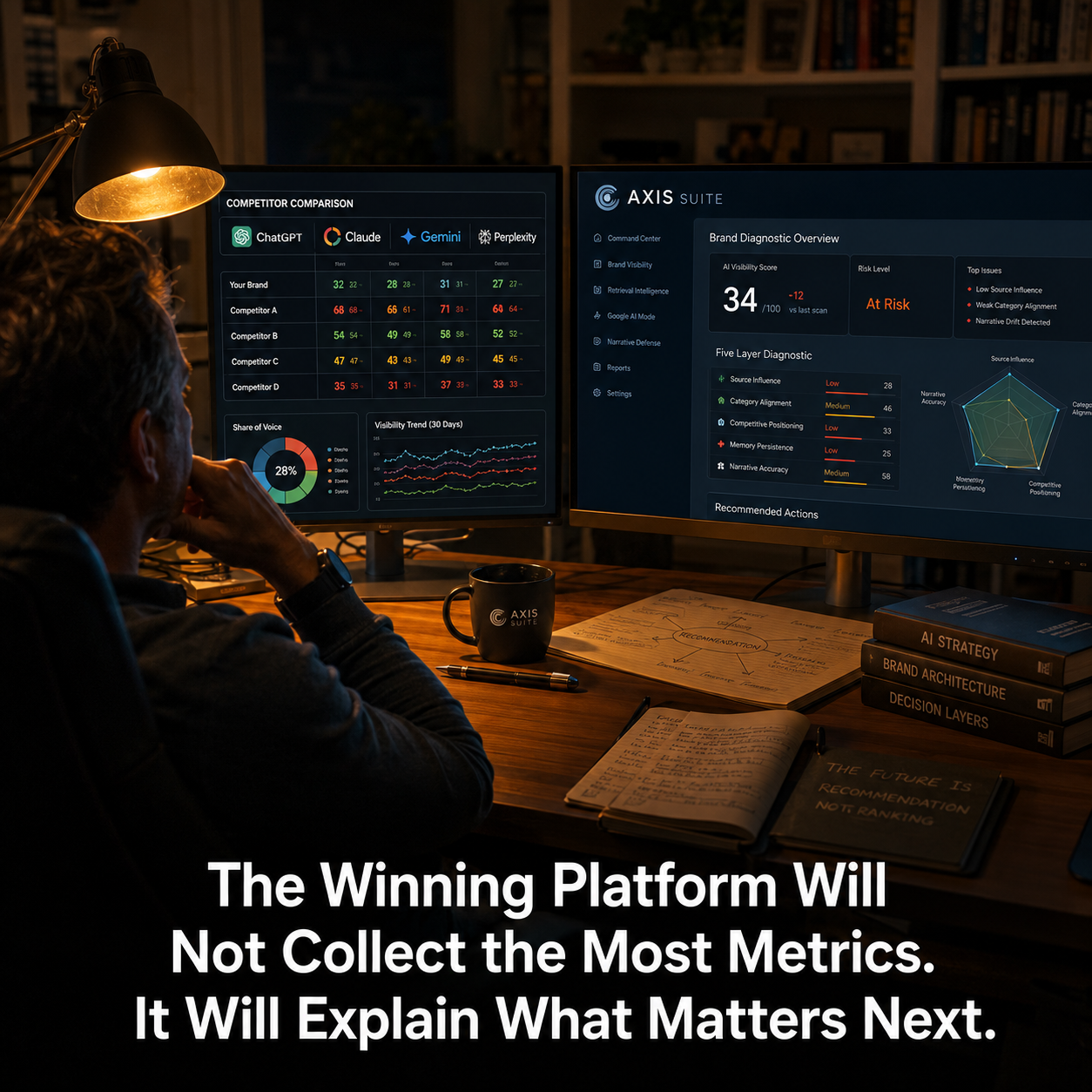
That is why I have been focused on building Axis Suite as something specific. Not another monitoring tool. Not another optimization engine. The independent layer that explains why AI systems trust, hesitate, omit, or recommend a brand. Because the eventual winner in this space will not be the platform that collects the most metrics. It will be the one that explains what matters next.
- Dana Billingsley | Founder, Axis Suite
|
|
|
🛠 PRACTICAL SECTION |
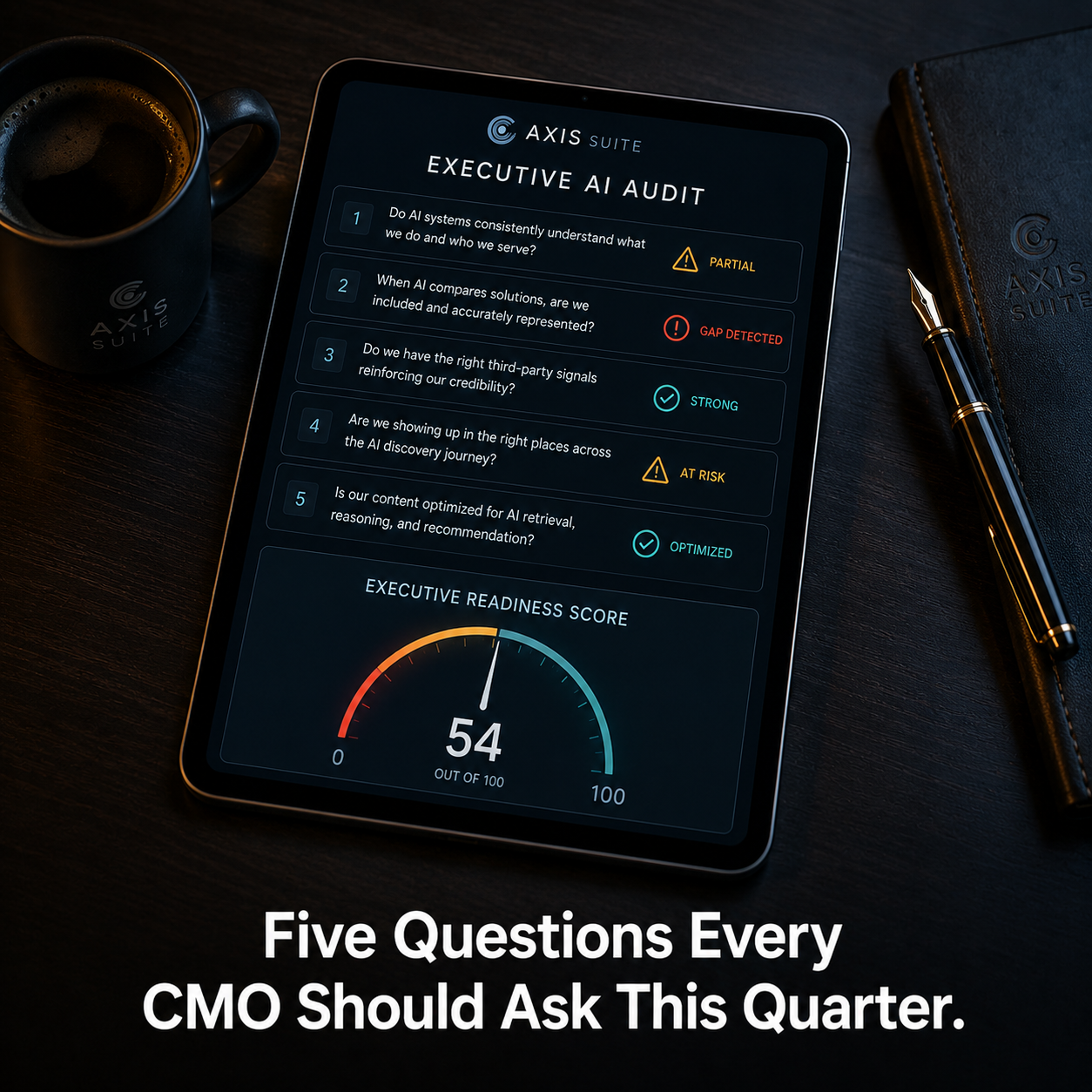
The Executive AI Audit (15 Minutes)
Five questions every CMO should ask this quarter. No jargon. No technical prerequisites. Just questions that reveal whether your organization is ready for how AI is reshaping buyer decisions.
- Can your team explain why AI recommends your top competitor? Not just that it does. Why. If the answer is "we don't know," the diagnosis layer is missing.
- Does AI categorize your brand the way you categorize yourselves? Ask ChatGPT, Claude, Gemini, and Perplexity what category your company belongs in. Compare it to your positioning. The gap is often larger than expected and it affects every recommendation.
- Can you quantify AI's influence before buyers reach your website? If your attribution model starts at the website visit, you are missing the moment AI shaped the shortlist. That invisible influence layer may be the most important part of your funnel.
- Do you know which specific buying conversations your brand is absent from? Not broad category queries. Specific ones. By company size. By industry. By use case. The specificity changes everything.
- Is your AI visibility strategy a marketing initiative or an executive priority? If it lives entirely within marketing, it will be measured like marketing. If it becomes an executive priority, it will be measured like competitive intelligence. The framing determines the investment.
|
|
|
☕AI, Executive Decisions, and the Coffee Shop That Stopped Counting Cups |
|
|
Your Weekly Dose of Caffeinated Wisdom
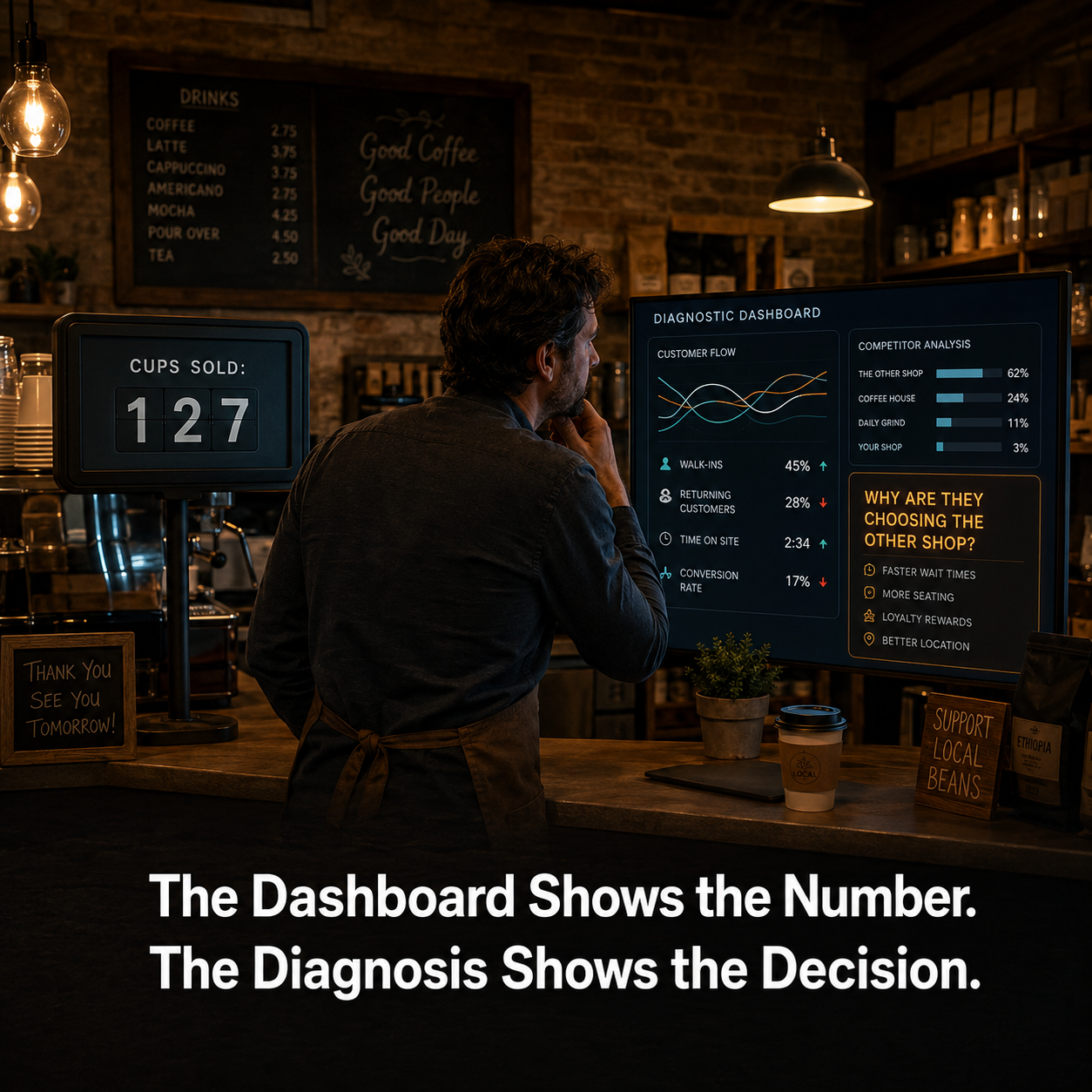
There is a coffee shop in my neighborhood that used to track one metric obsessively.
Cups sold per day.
Every morning the owner would check the number. Good days were high numbers. Bad days were low numbers. Simple. Then a large chain opened across the street. The owner panicked. Cups sold dropped. The dashboard looked terrible. So the owner did something unexpected. Stopped counting cups. Started asking a different question.
"Why are people choosing the other shop?"
Turns out it was not about the coffee. It was about the mobile ordering. The loyalty app. The fact that the chain made it easy for customers to buy without thinking. The owner did not make better coffee. The owner made it easier to buy.
Within six months the numbers were back. Not because the product changed. Because the decision framework changed.
That is what is happening with AI right now. The brands that stop asking "what is our score" and start asking "why is AI choosing someone else" are the ones that will figure out what to fix.
The dashboard tells you the number. The diagnosis tells you the decision.
Stay steady. ☕ |
|
|
🔔 CLOSING SIGNAL |
|
Every technology shift begins as a technical problem.
It becomes a strategic problem.
Eventually it becomes an executive problem.
AI recommendation is entering that third stage.
The brands that recognize this transition early will not just optimize their visibility. They will reshape how their organizations make decisions about AI.
The winning platform will not collect the most metrics. It will explain what matters next. |
|
|
|
|
🛠 Coming Next Week
We return to the question we almost asked this week.
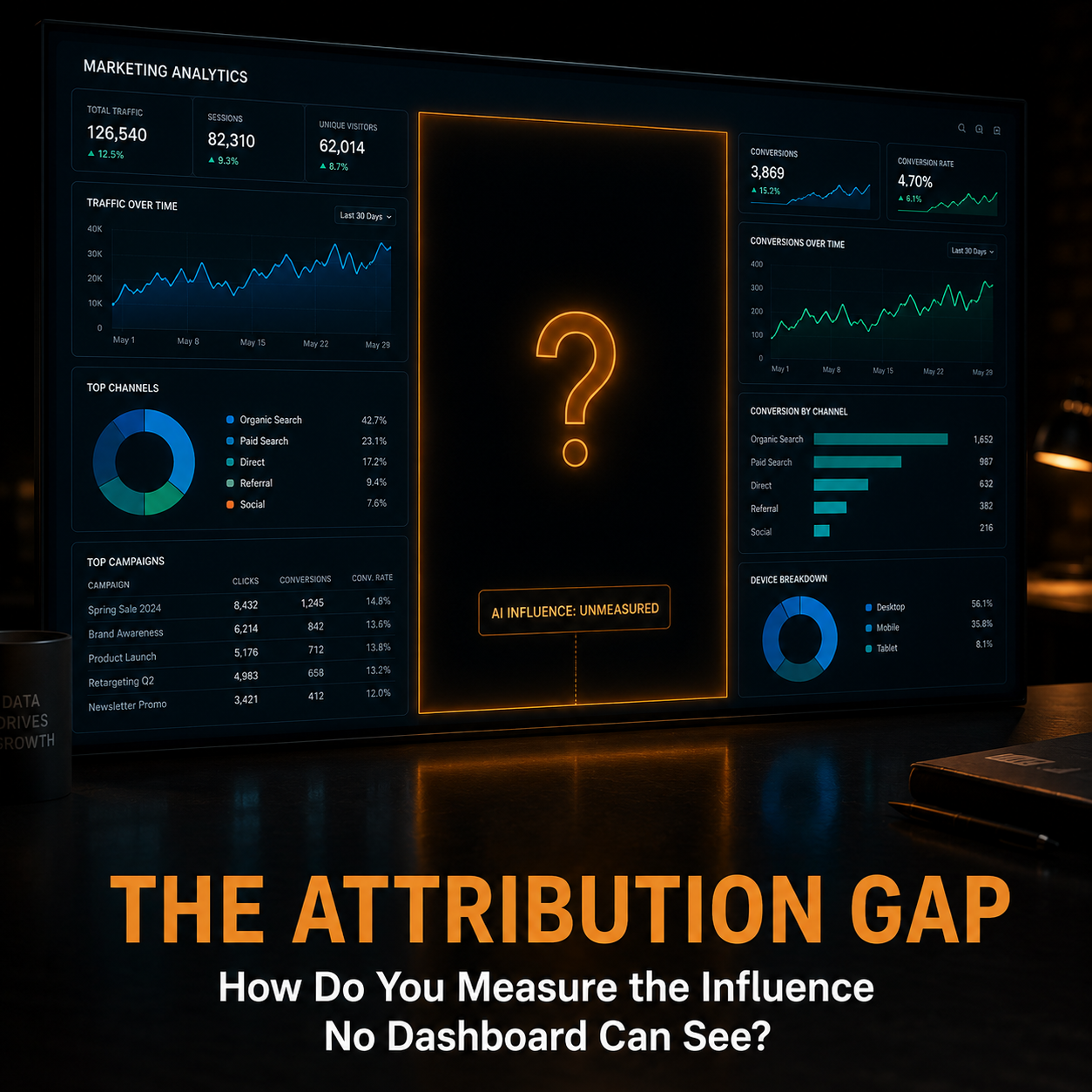
The Attribution Gap.
AI influences buying decisions before prospects reach your website. No click. No referral source. No campaign data.
Next week we break down the invisible influence layer and introduce a framework for measuring the marketing impact no dashboard can see.
|
 |
|
|
|
|
🚀🤖✨📊🎨
The Axis Suite
AI Recommendation Intelligence. AI Narrative Defense. Agentic Visibility Infrastructure. |
|
"Axis Suite is the independent layer that explains why AI systems trust, hesitate, omit, or recommend your brand."
👉 Axis Suite
📬 Thank you for being part of this.
Here's to staying visible, staying understood, and becoming the obvious choice.
Stay caffeinated, stay inspired. See you next week! ☕
From the trenches,
The Axis Suite Team 💪
|
|
|
 |
|
© 2026 TrendAxis, LLC™. All rights reserved.
Disclaimer: Affiliate links may be included |
|
|