|
|
|
🚀 The AI Trend Oracle Report
We Changed the Evidence. The Score Changed With It. |
|
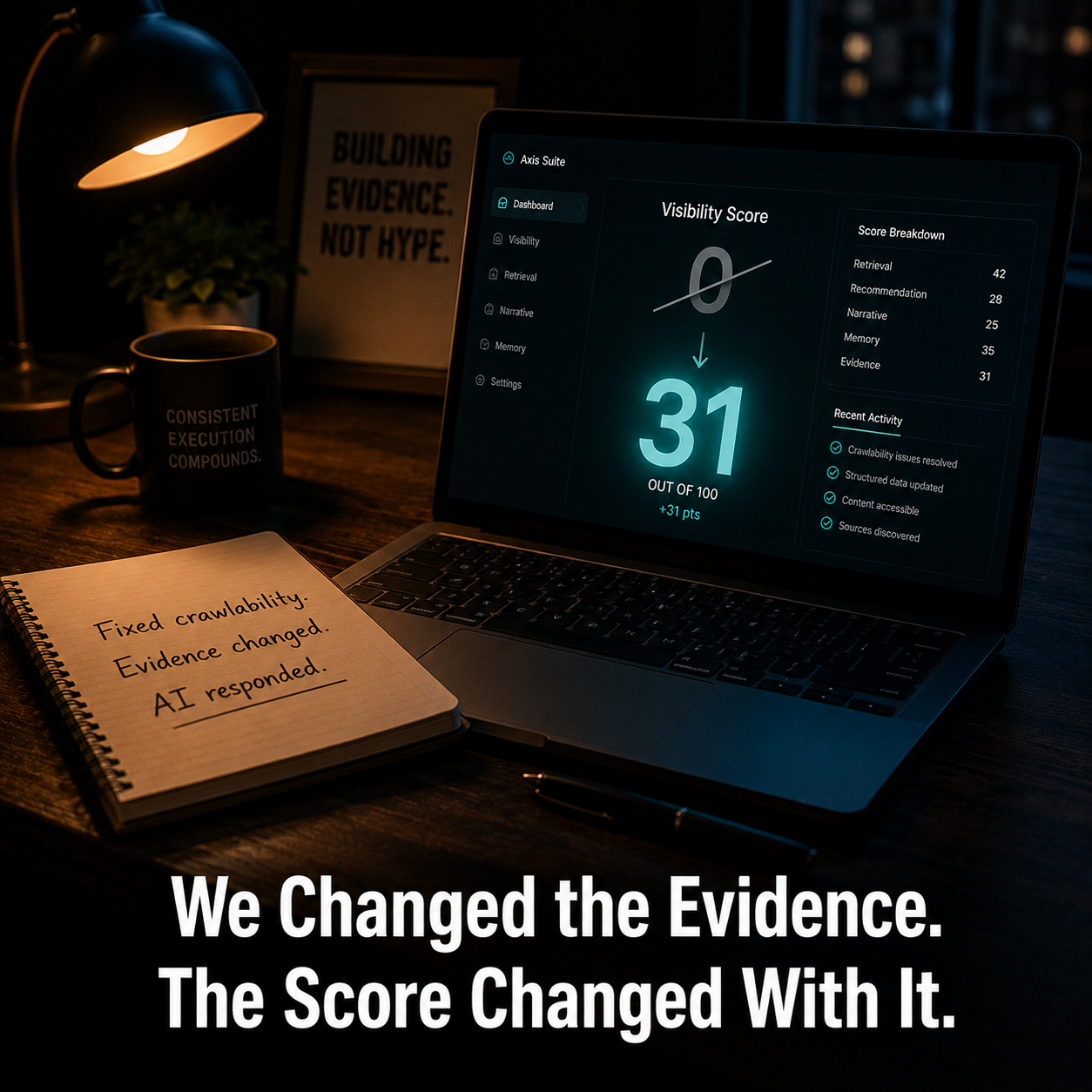
Last week Axis Suite reached an AI Visibility Score of 31.
A month ago the score was zero.
Not low. Zero. Completely invisible to ChatGPT, Claude, Gemini, and Perplexity.
We did not launch a marketing campaign. We did not publish dozens of articles. We did not hire an agency.
We fixed crawlability.
The evidence changed. AI changed its understanding.
That reinforced something I have been thinking about for months.
AI visibility is not magic.
It is engineering. |
|
 |
|
|
|
|
|
🚨 This Week’s Market Intelligence |
|
The broader market is confirming the same shift.
Enterprise AI adoption has moved from experimentation to measurable deployment. The organizations reporting the strongest ROI are not the ones adding AI features. They are the ones redesigning processes around AI.
Google's Gemini 3.5 Pro is targeting general availability this week with a two million token context window and deeper reasoning capabilities. AI systems are getting more capable at evaluating evidence across larger information sets.
Microsoft launched a $2.5 billion operating unit called Microsoft Frontier Company, embedding 6,000 engineers directly with enterprise clients to deploy and optimize AI systems. Not a product launch. An infrastructure investment.
The pattern is consistent. The market is moving from AI as a marketing experiment to AI as business infrastructure. The companies treating AI visibility as an engineering discipline are pulling ahead of the companies still treating it as a content strategy.
That is exactly what our own experience confirmed this month. |
|
|
🔍 What’s Actually Happening |
|
For the past year the AI visibility conversation has focused on marketing.
What content should we publish? How do we get mentioned? What keywords matter for AI?
Those are marketing questions. They produce marketing answers. Blog posts. Whitepapers. Social campaigns.
But our own 0 to 31 experience taught us something different.
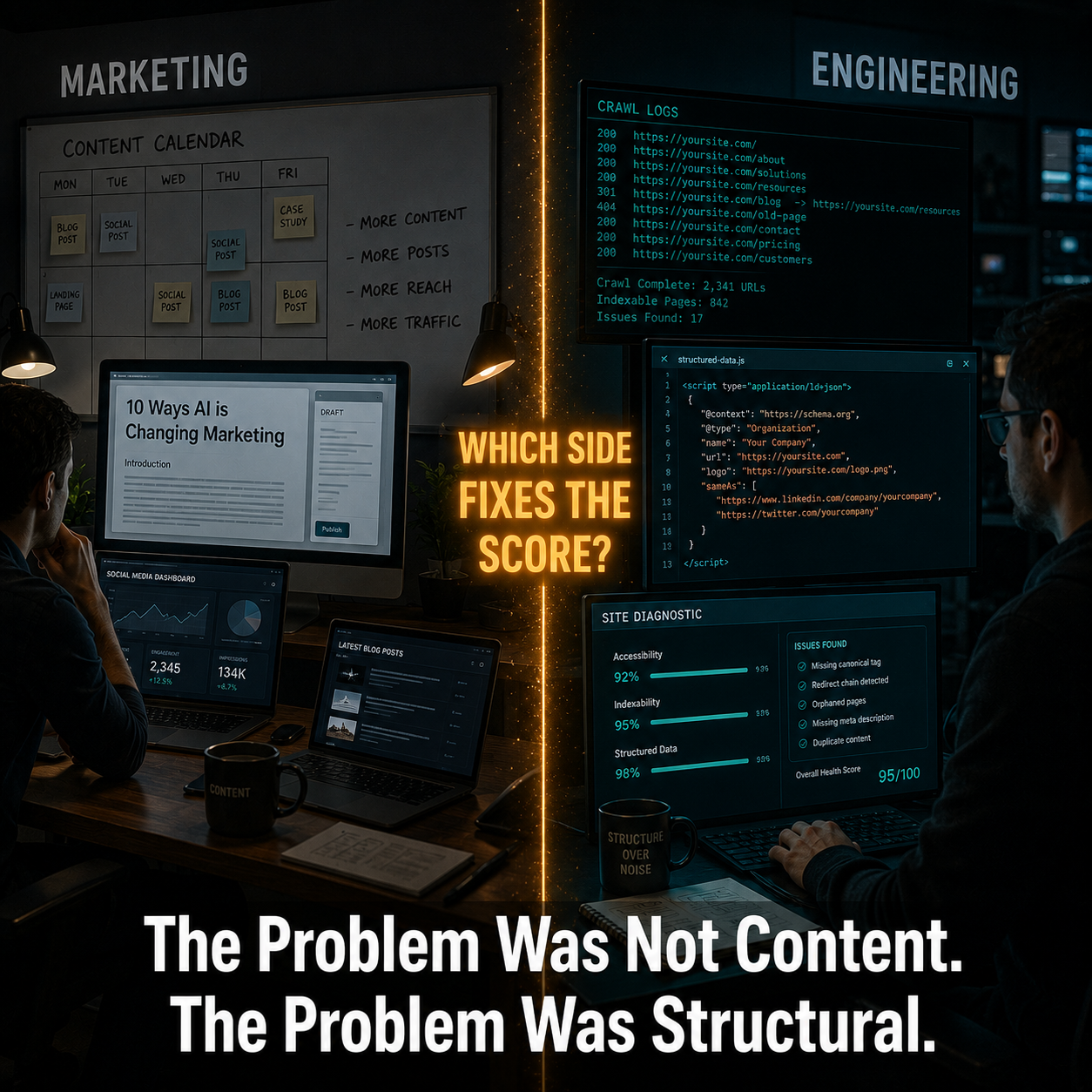
The problem was not content. The problem was structural.
AI could not crawl our website. It could not access the evidence on our pages. It could not evaluate our positioning, read our documentation, or assess our capabilities.
The fix was not a content strategy. It was an engineering fix. We made the site accessible to AI systems so they could reach the evidence that already existed.
One structural change. One measurable result.
That distinction between marketing problems and engineering problems is becoming one of the most important in AI visibility. Because teams that treat AI visibility as a content problem will keep publishing. Teams that treat it as an engineering problem will actually fix what is blocking AI from reaching the evidence. |
|
|
📉 Featured Insight |
|
Marketing Creates Claims. Engineering Creates Evidence.
This is the insight I keep coming back to.
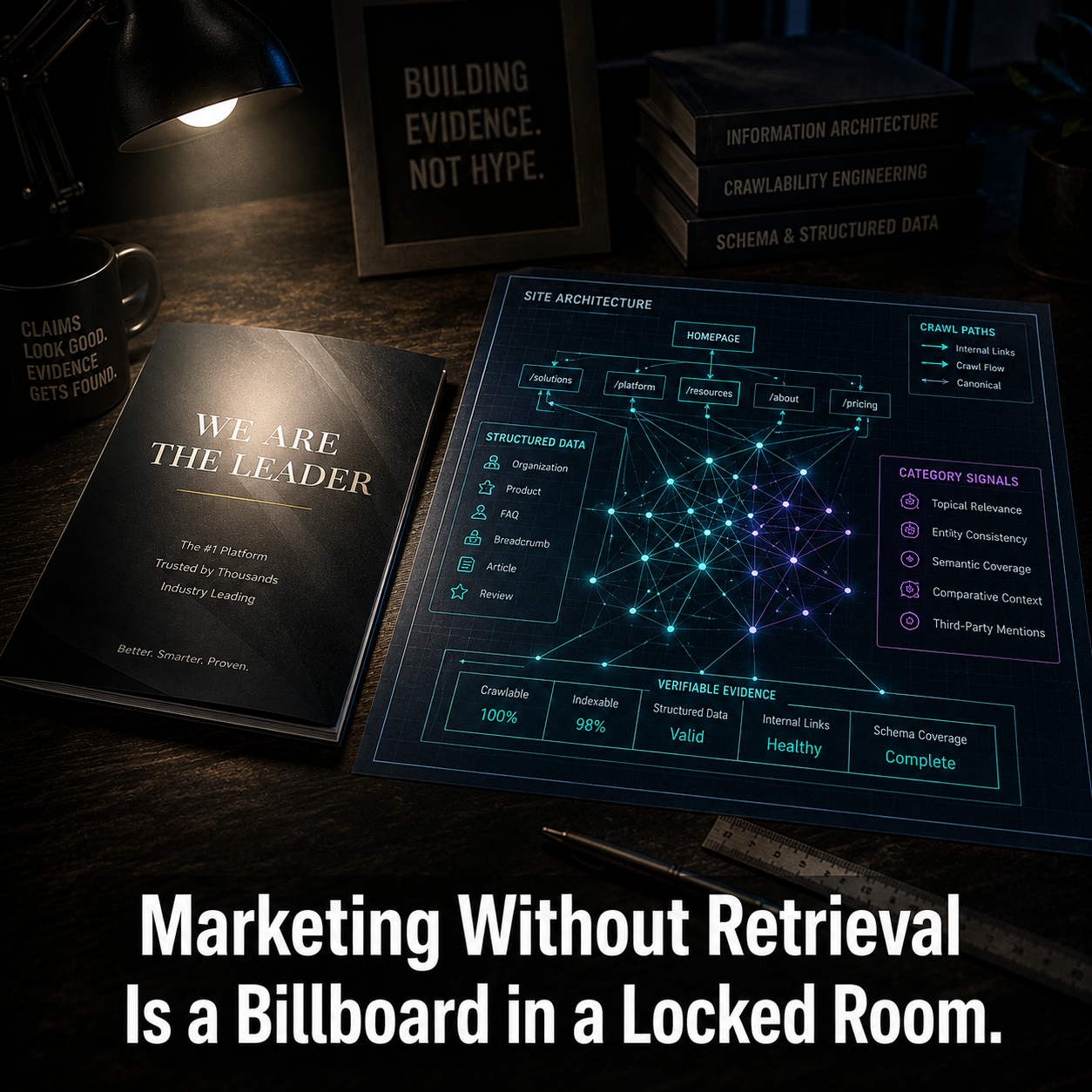
Marketing tells AI what you want it to believe. Your homepage says you are the leader. Your blog says you are innovative. Your landing page says you serve enterprise customers.
Those are claims. AI reads them. But AI does not believe them simply because you wrote them.
Engineering creates the conditions for AI to find evidence. Crawlable pages let AI access your content. Structured data lets AI understand your capabilities. Consistent category language across your site lets AI classify you correctly. Public documentation lets AI evaluate your depth.
The marketing team asks: What should we say?
The engineering team asks: What can AI verify?
Both matter. But increasingly the engineering side determines whether AI can even reach the evidence your marketing creates.
Consider what happened with our score. The marketing content was already on the site. The positioning was clear. The messaging was accurate. But none of it mattered because AI could not access it.
Marketing without retrieval is a billboard in a locked room.
That is why AI visibility is becoming a collaboration between marketing and engineering. Marketing creates the claims. Engineering creates the conditions for AI to verify them. When both work together, AI has the evidence it needs to recommend with confidence. |
|
|
🧠 This Week’s Strategic Lens |
|
Every improvement in AI recommendation moves through five layers.
Retrieval determines whether AI can find you. Our 0 to 31 jump happened entirely in this layer. Before the crawlability fix, AI had no access. After the fix, AI could reach our evidence.
Recommendation determines whether AI includes you. Once AI could access our content, it began forming initial beliefs about our brand. The 31 score represents AI's first evaluation based on the evidence it found.
Narrative determines how AI describes you. This is where we go next. Now that AI can find us, the question becomes whether it describes us accurately. Does it classify us correctly? Does it understand what Axis Suite does?
Evidence determines whether AI trusts the claims. This layer asks whether independent sources corroborate what our website says. G2 reviews, industry mentions, comparison articles. Each source adds evidence that strengthens or weakens AI's confidence.
Decision determines whether AI acts on the belief. This is the long-term goal. AI that trusts our brand enough to include us in evaluation frameworks, comparison workflows, and procurement processes.
We are at the beginning of this progression. Layer one is fixed. Layers two through five are ahead. Each one is diagnosable. Each one is fixable. Each one produces measurable results.
That is the diagnostic approach. Not guessing. Engineering.
|
|
|
|
👨💻 Founder’s Note |
|
I want to be honest about something.
Celebrating 31 out of 100 felt a little strange. Most people would not celebrate a 31.
But the number was not the point.
The point was that I knew exactly why it changed.
We were at zero because AI could not access our evidence. We fixed the access. AI evaluated what it found. The score moved to 31.
That clarity is what excited me. Not the number. The understanding.
Because a score you can explain is a score you can improve. And a score you cannot explain is a score that only changes by accident.
Most brands I talk to are in the second category. They watch their AI visibility fluctuate and they do not know why. They publish more content hoping it helps. Sometimes it does. Sometimes it does not. They cannot tell which action caused which result.
That is not a strategy. That is guessing with a content calendar.
The diagnostic approach is different. Identify the specific layer that is blocking progress. Fix that layer. Measure the result. Move to the next layer.
We just proved that works. On ourselves. With our own platform.
We are a long way from where we want to be. But we know exactly where we are and exactly what to fix next. That is worth more than any score.
- Dana Billingsley | Founder, Axis Suite |
|
|
🛠 PRACTICAL SECTION |
|
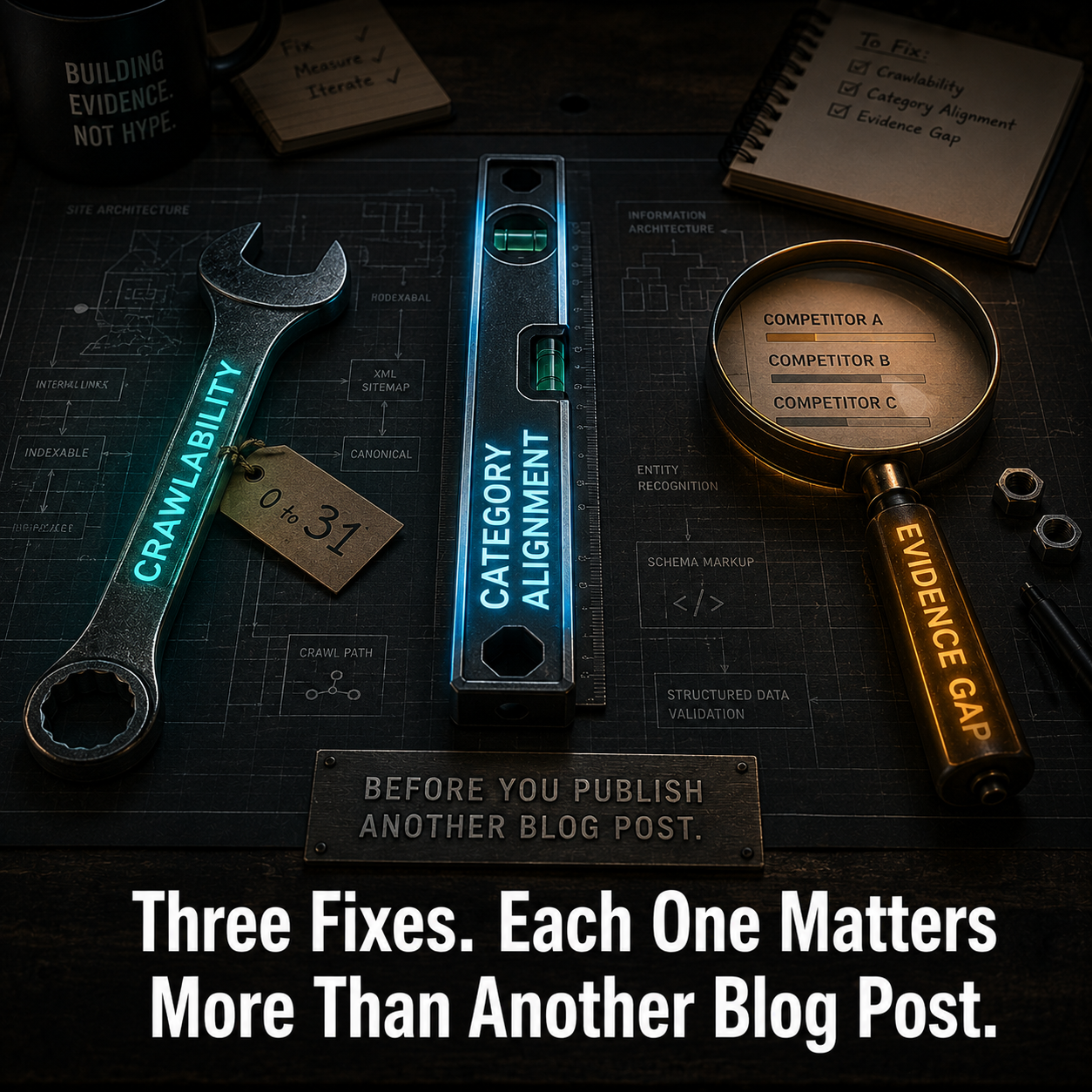
Three Evidence Fixes That Usually Matter More Than Publishing Another Blog Post
Most teams respond to AI visibility gaps by publishing more content. Here are three fixes that typically produce faster results.
**Fix your crawlability.** Before anything else, confirm AI systems can access your website. Check whether your robots.txt blocks AI crawlers. Verify that key pages render content without requiring JavaScript. Test whether ChatGPT, Claude, Gemini, and Perplexity can actually describe your homepage when asked. If they cannot, no amount of content will change your recommendation. This single fix moved our score from 0 to 31.
**Align your category language.** Ask each major AI platform what category your company belongs in. Compare the answer to your intended positioning. If AI categorizes you differently than you categorize yourself, the fix is not more content. The fix is consistent category language across your website, directory listings, comparison profiles, and third-party sources. Category alignment affects every recommendation.
**Close one independent evidence gap.** Identify one source category where your competitor has evidence and you do not. G2 reviews. Analyst mentions. Comparison article inclusion. Then close that single gap. One targeted evidence investment often changes AI recommendation dynamics faster than a quarter of blog content.
Each fix is specific. Each is measurable. Each addresses a structural cause rather than adding more claims. |
|
|
☕We Changed the Evidence. The Score Changed With It |
|
|
Your Weekly Dose of Caffeinated Wisdom
No coffee shop analogy this week.
Just a real story.
A month ago I stared at a dashboard that showed our AI visibility score as zero. Not low. Zero.
Every AI system on the planet had no idea we existed.
I had spent months building a platform designed to help businesses improve their AI visibility. And my own platform was invisible.
The irony was not lost on me.
My first instinct was to publish more content. Write more articles. Push more social media. Do all the things marketers do when the numbers look bad.
Then I stopped and asked the question I keep telling other people to ask.
Why?
Why is the score zero? Not what should I publish. Why is AI not seeing us?
The answer was embarrassing in its simplicity. Our website was not crawlable. AI could not access the pages. The evidence was there. The door was locked.
We fixed the door. AI walked in. The score moved to 31.
I am not celebrating 31. I am celebrating the fact that I asked why instead of what.
That is what I want every reader of this newsletter to take away this week. Before you publish another blog post, before you launch another campaign, before you spend another dollar on content, ask why.
Why is AI not seeing us? Why is AI recommending someone else? Why is our score what it is?
The answer is usually simpler than you expect. And the fix is usually more engineering than marketing.
Stay steady. ☕ |
|
|
🔔 CLOSING SIGNAL |
|
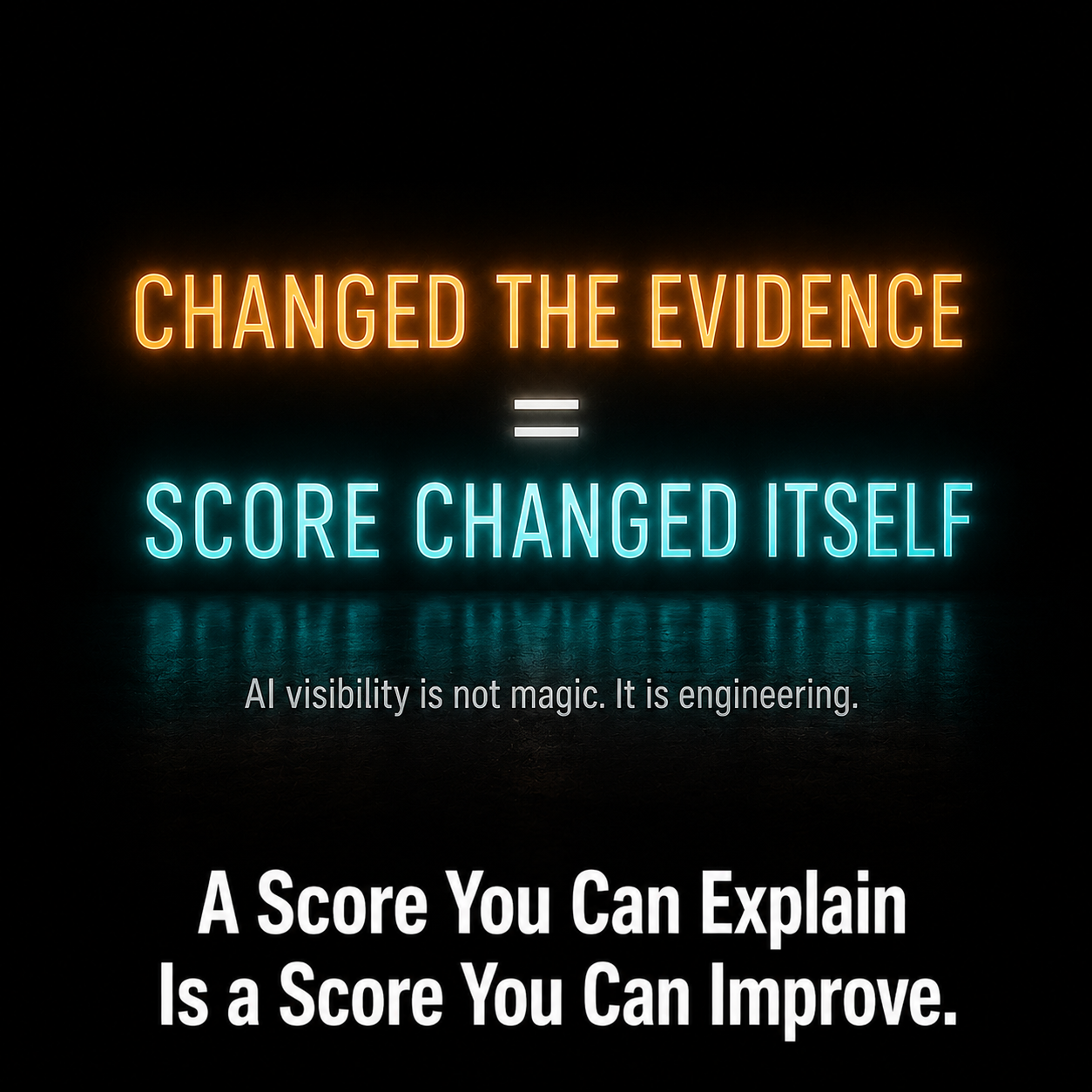
We did not change the score.
We changed the evidence.
The score changed itself.
AI visibility is not magic. It is engineering.
The brands that understand this will stop guessing and start diagnosing.
*A score you can explain is a score you can improve.* |
|
|
|
|
🛠 Coming Next Week
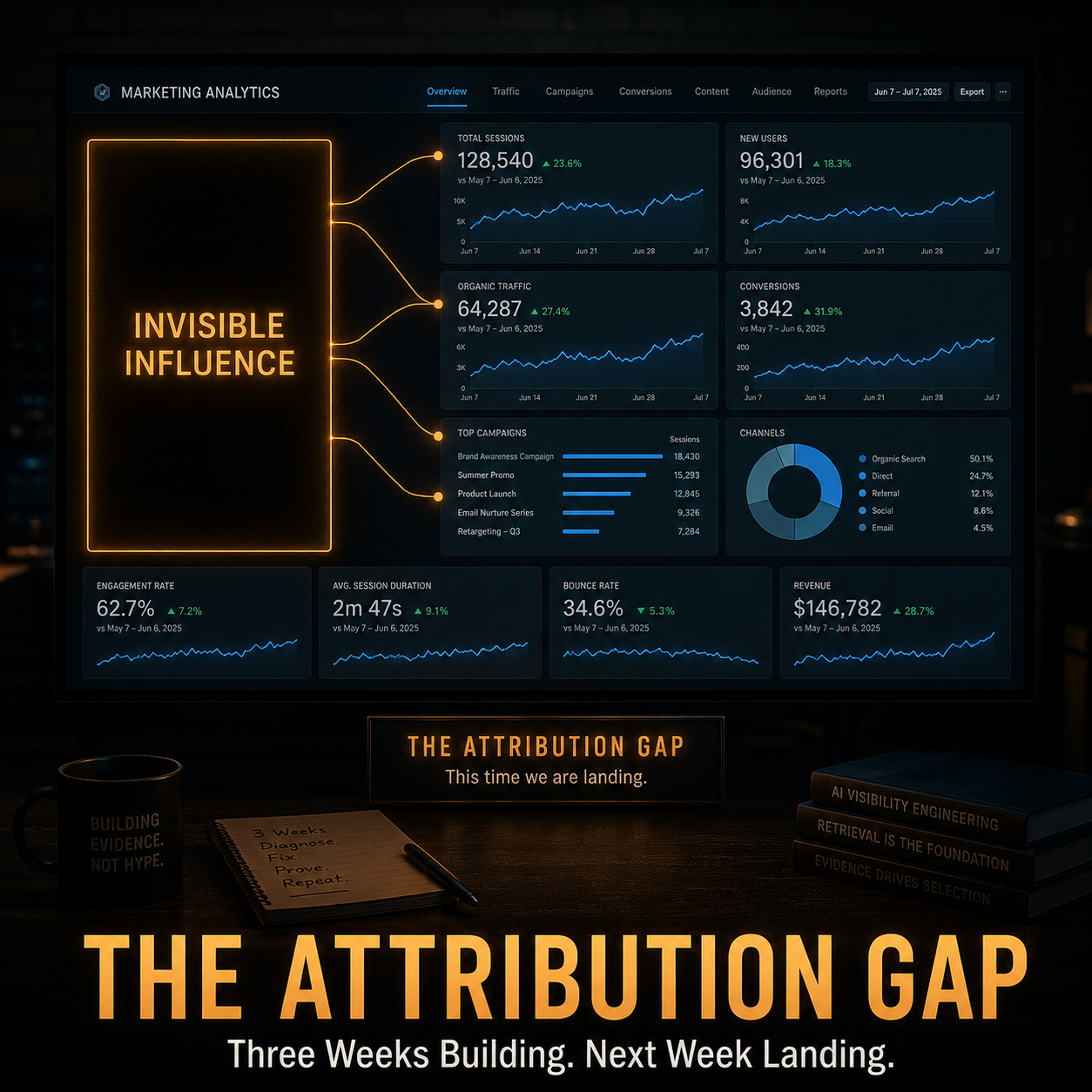
The Attribution Gap.
For three weeks we have been building toward this. First we established that AI influences decisions before buyers reach your website. Then we established that those decisions are based on evidence. Now we have the lens.
Next week we break down the invisible influence layer, what it means for marketing attribution, and why CMOs need a new measurement framework for the impact no dashboard can see.
This time we are not circling. We are landing.
|
 |
|
|
|
|
🚀🤖✨📊🎨
The Axis Suite
AI Recommendation Intelligence. AI Narrative Defense. Agentic Visibility Infrastructure. |
|
"Axis Suite is the independent intelligence layer that explains what AI believes about your brand, why it believes it, and what decision that belief ultimately drives."
👉 Axis Suite
📬 Thank you for being part of this.
Here's to staying visible, staying understood, and becoming the obvious choice.
Stay caffeinated, stay inspired. See you next week! ☕
From the trenches,
The Axis Suite Team 💪
|
|
|
 |
|
© 2026 TrendAxis, LLC™. All rights reserved.
Disclaimer: Affiliate links may be included |
|
|