|
|
|
🚀 The AI Trend Oracle Report
The Attribution Gap:
The Invisible Influence Layer No Dashboard Can See |
|
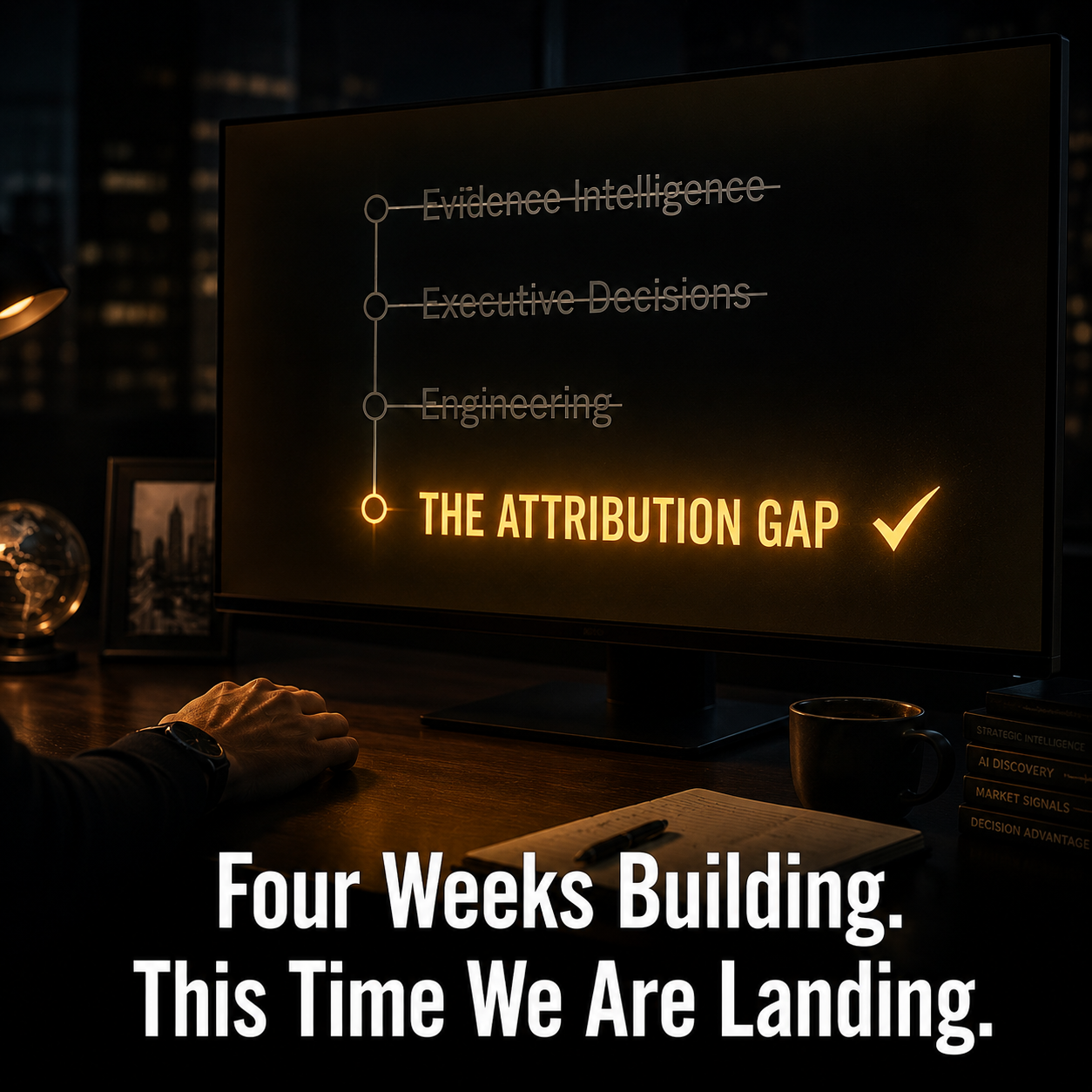
Four weeks ago I said I was going to write about the attribution gap.
Then something more urgent kept emerging. Evidence Intelligence. Executive Decisions. Engineering over marketing. Each week the topic shifted because the market kept moving.
But the attribution gap never went away. It was underneath every topic we covered.
When we wrote about evidence, the question was: how do you attribute a recommendation to evidence that exists across six different source categories?
When we wrote about engineering, the question was: how do you attribute a visibility improvement to a structural fix when no dashboard tracks crawlability?
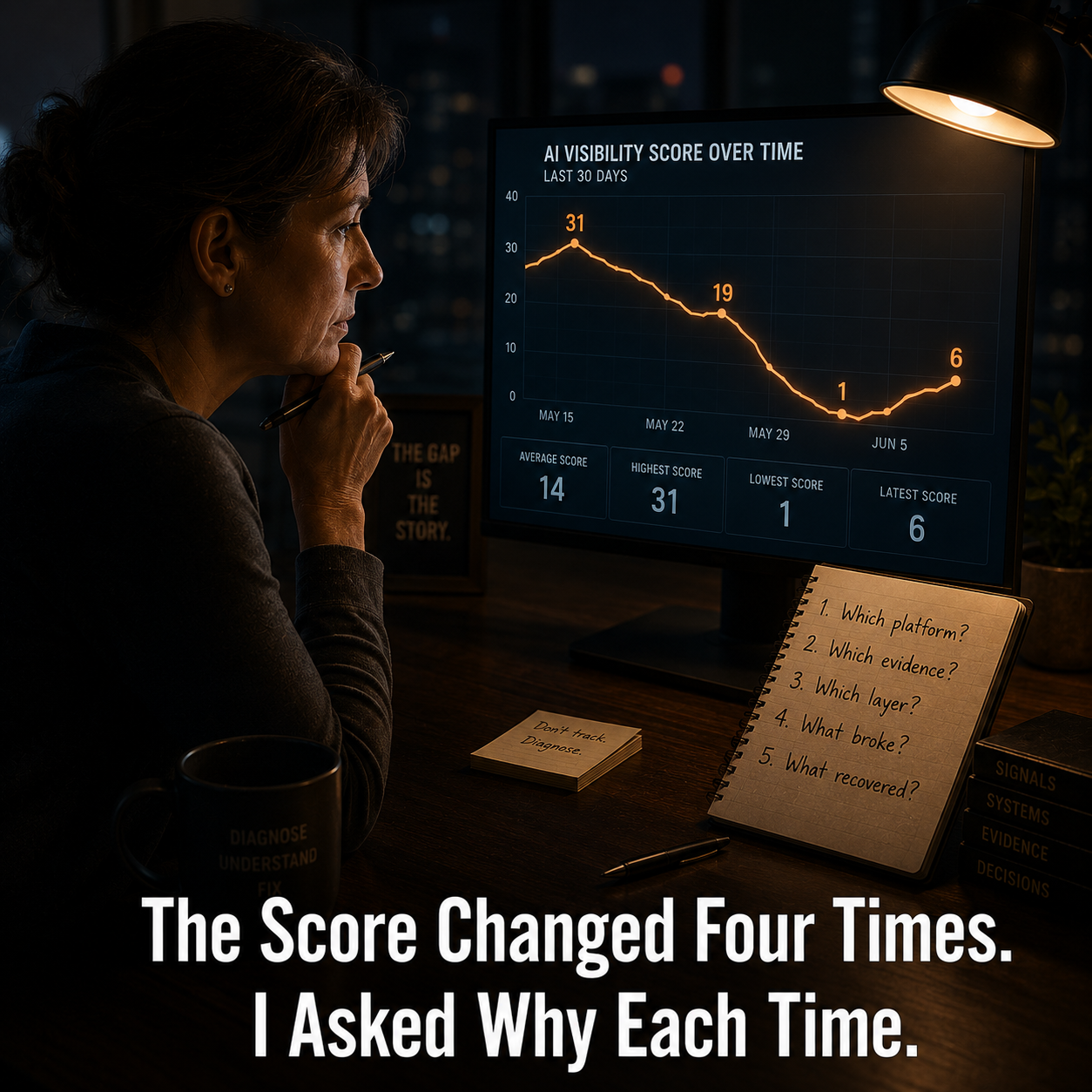
When our own score moved from 0 to 31 to 19 to 1 to 6, the question was: how do you attribute those movements to specific changes when the AI platforms themselves are shifting constantly?
The attribution gap is not one topic among many. It is the thread running through everything.
This time we are landing. |
|
 |
|
|
|
|
|
🚨 This Week’s Market Intelligence |
|
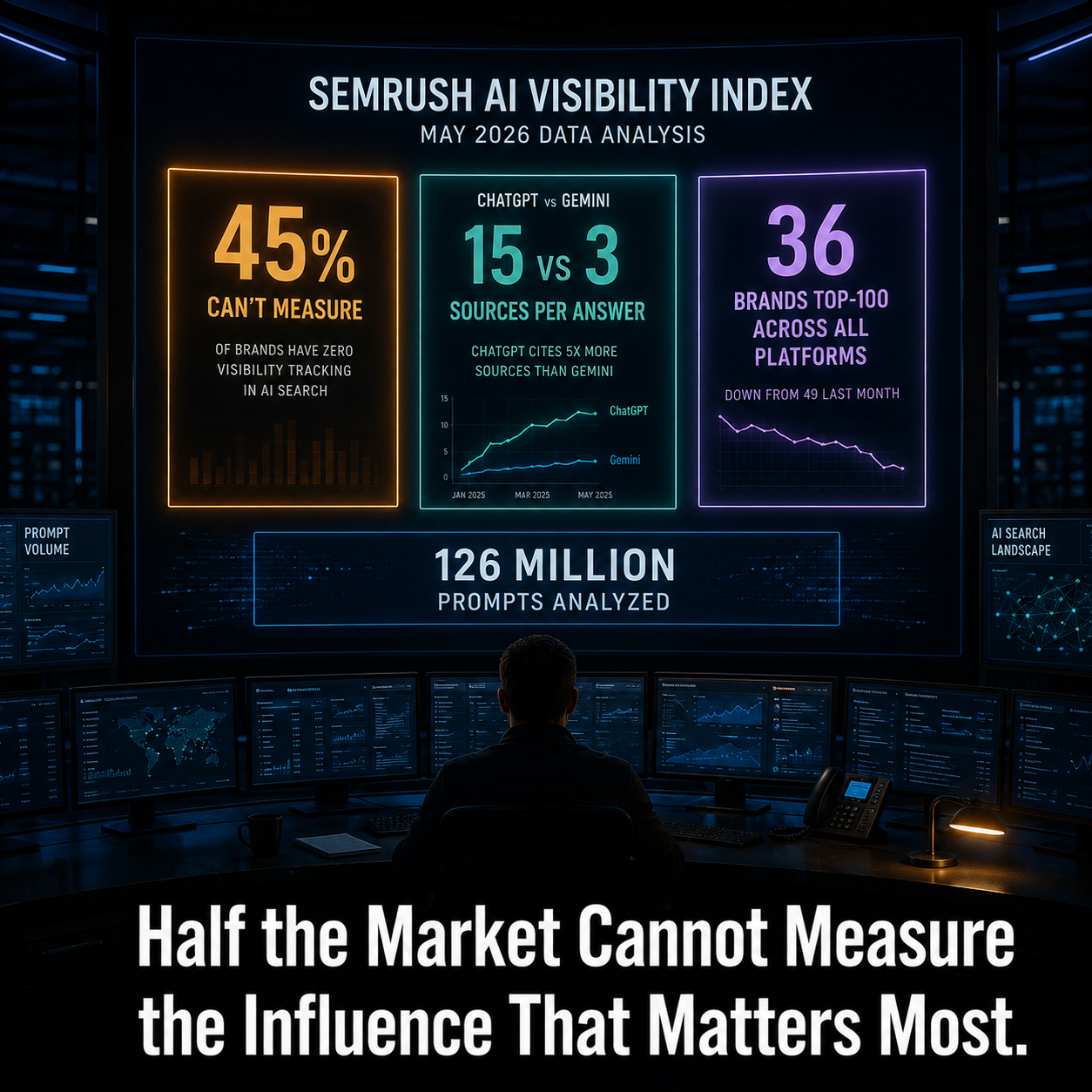
Semrush published its expanded 2026 AI Visibility Index this month, analyzing 126 million prompts across major AI platforms. The headline numbers tell a clear story.
45% of marketing leaders still cannot accurately measure AI-answer visibility. Nearly half of the market cannot measure the thing they know is influencing their buyers.
ChatGPT cites approximately 15 sources per answer. Gemini cites approximately 3. The attribution surface is fundamentally different across platforms. A brand's visibility on one platform does not predict its visibility on another.
Only 36 brands hold top-100 visibility across all four major AI platforms simultaneously. For everyone else, visibility is fragmented, inconsistent, and platform-specific.
Meanwhile Gemini 3.5 Pro has slipped for a third consecutive time, delaying general availability again. The EU ordered Google to open Android to AI rivals. China's Kimi K3 topped a major coding leaderboard, signaling the competitive landscape is in constant flux.
The platforms making recommendations are themselves changing week to week. Attribution models built for a stable world break when the recommendation infrastructure is this dynamic.
That is the attribution gap in its broadest form: the influence AI has on buying decisions is growing, but the ability to measure, attribute, and act on that influence is not keeping pace. |
|
|
🔍 What’s Actually Happening |
|
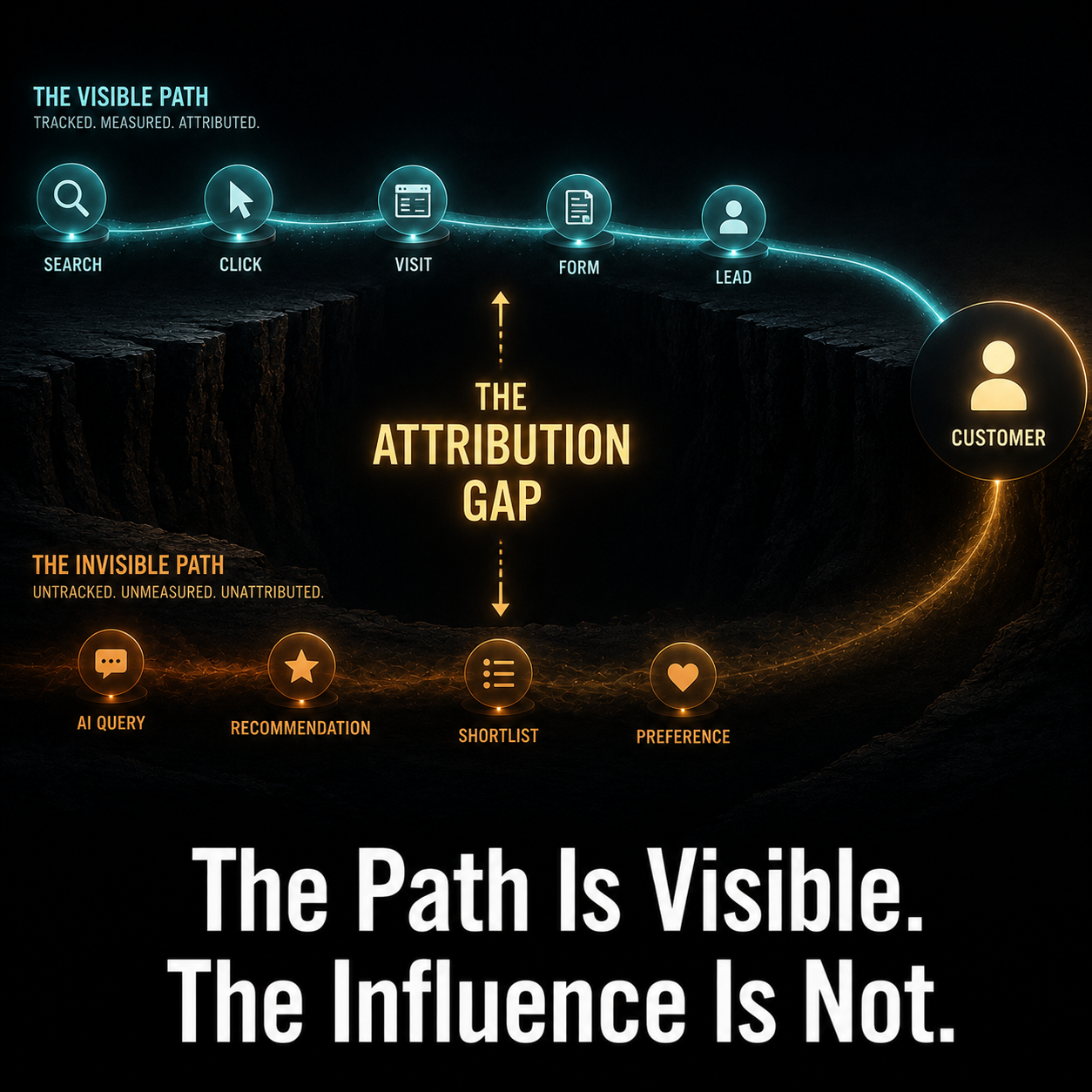
Traditional attribution works because the path is visible.
Buyer searches on Google. Clicks a result. Visits your website. Fills out a form. Becomes a lead. Marketing attributes the lead to the search query, the campaign, the content, the channel.
Every step produces data. Every touchpoint is tracked. The path from discovery to conversion is a dashboard.
AI breaks that path.
When a buyer asks ChatGPT to recommend platforms in your category, there is no click. When Claude builds a vendor shortlist for a procurement team, there is no referral source. When Gemini structures an evaluation framework that includes your competitor but not you, there is no campaign data that explains why you were excluded.
The influence happens upstream of everything your marketing dashboard can see.
A buyer arrives at your website through a branded search. Marketing attributes it to brand awareness. But the reason the buyer searched your name is that ChatGPT recommended you 20 minutes earlier in a conversation nobody on your team will ever see.
A buyer requests a demo. Marketing attributes it to the landing page. But the reason the buyer chose you over three alternatives is that Claude consistently included you in vendor evaluations the buyer ran before ever visiting your site.
A competitor wins a deal you expected to close. Sales says the buyer "went another direction." But the reason was that Perplexity repeatedly recommended the competitor in the buyer's research phase, building a preference your team never knew was forming.
In each case the AI influence is real. The attribution is invisible. |
|
|
📉 Featured Insight |
|
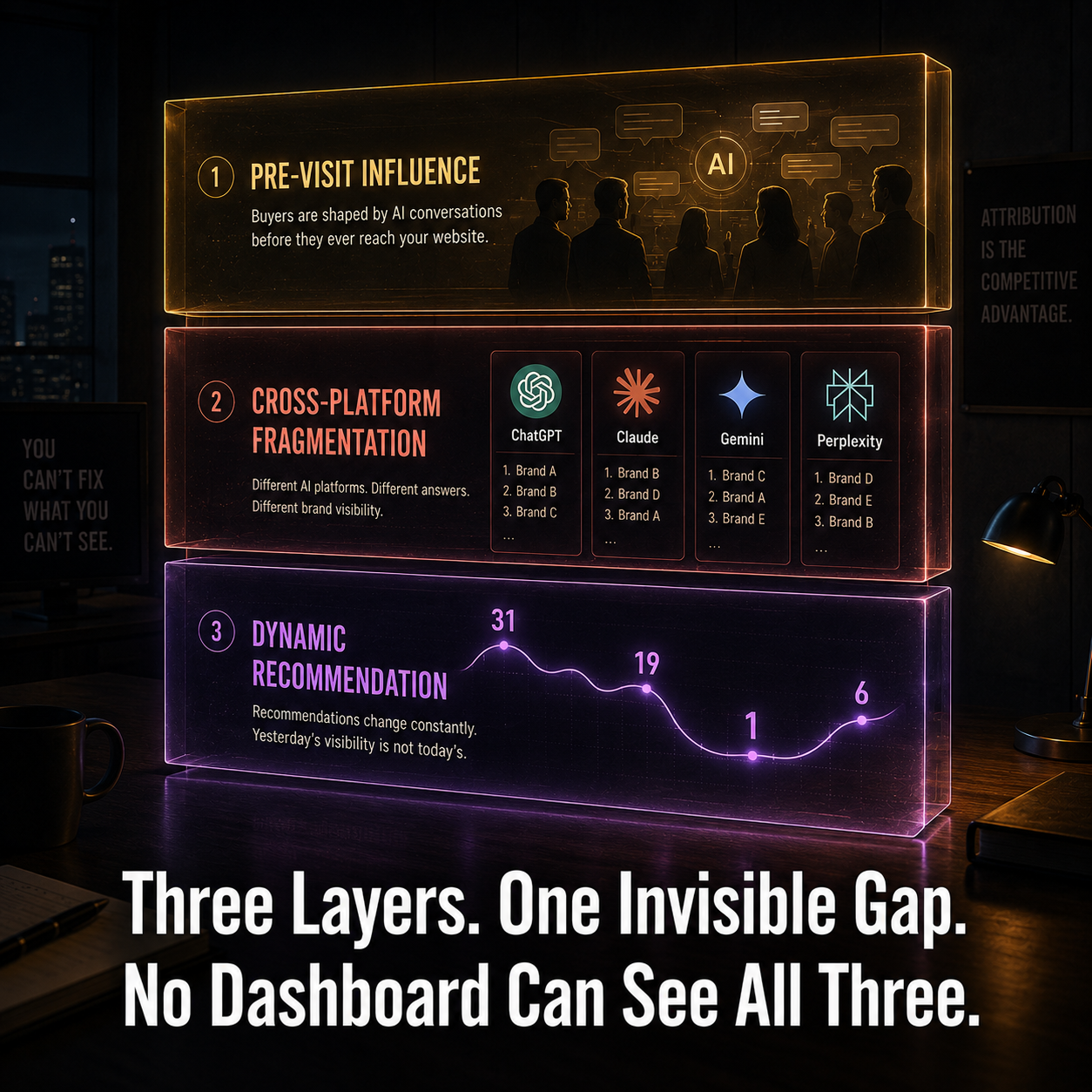
The Three Layers of Invisible Influence
The attribution gap is not one problem. It is three overlapping problems.
The first is pre-visit influence. AI shapes buyer decisions before they reach your website. By the time a prospect arrives, they may already have a shortlist, a preferred vendor, and evaluation criteria, all formed inside AI conversations your dashboard cannot see. Marketing measures what happens on the website. The decisive influence happened before the visit.
The second is cross-platform fragmentation. Your brand's AI visibility is different on ChatGPT than it is on Claude, Gemini, or Perplexity. A buyer who researches on Perplexity gets a different recommendation than one who uses ChatGPT. Traditional attribution assumes one discovery path. AI creates multiple simultaneous paths that your analytics cannot distinguish or connect.
The third is dynamic recommendation. Our own experience proved this. Our score moved from 0 to 31 to 19 to 1 to 6. If we only watched the number, we would panic. Instead we asked: which platform changed? Which evidence shifted? Which layer moved? The recommendation environment is not static. It shifts weekly, sometimes daily. Attribution models built for stable channels cannot account for a recommendation surface that moves this frequently.
Each layer compounds the others. Pre-visit influence is invisible. The influence is fragmented across platforms. And the recommendation itself changes constantly. That triple gap is why 45% of marketing leaders cannot accurately measure AI visibility. The problem is not that they need better tools. The problem is that the attribution model itself needs to change. |
|
|
🧠 This Week’s Strategic Lens |
|
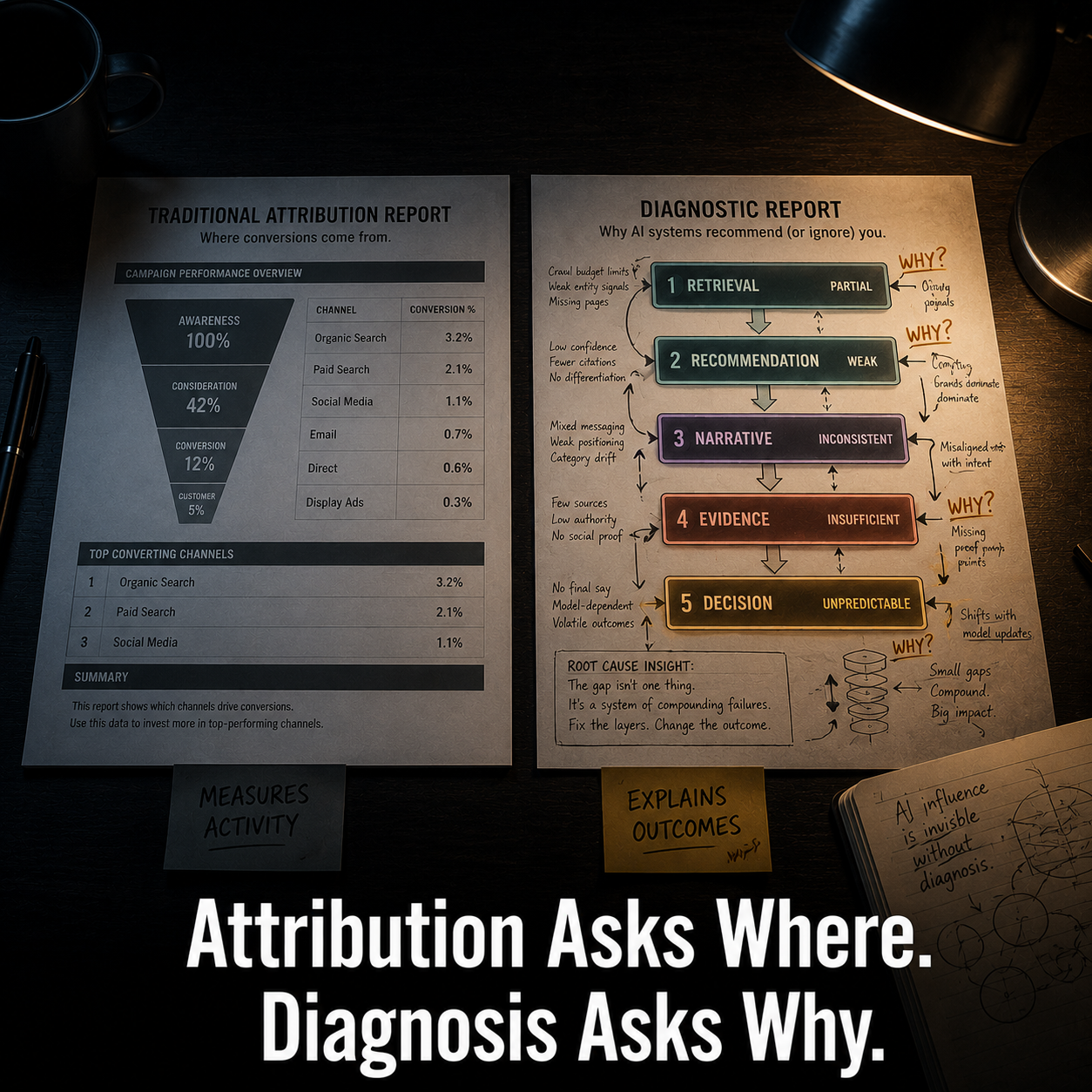
From Attribution to Diagnosis
Traditional attribution asks: where did this buyer come from?
AI attribution needs to ask: what influenced this buyer before they arrived?
That is a fundamentally different question. And it requires a fundamentally different measurement approach.
Instead of tracking the path, you need to diagnose the influence.
Retrieval diagnosis asks whether AI can find your brand at all. If your score dropped from 31 to 1, the first question is not "what content should we publish." The first question is "did something break in the retrieval layer."
Recommendation diagnosis asks whether AI is including you when buyers ask about your category. Not just whether you appear once, but whether you persist through follow-up questions, constraints, and specificity.
Narrative diagnosis asks whether AI describes you accurately when it does include you. A recommendation that misrepresents your capabilities is worse than no recommendation because it attracts the wrong buyers or creates false expectations.
Evidence diagnosis asks whether independent sources corroborate your claims. A score without evidence context is just a number. Understanding which evidence supports or undermines your recommendation tells you what to invest in.
Decision diagnosis asks what specific action will have the biggest impact. Not "publish more content." Not "increase the budget." A specific, targeted intervention based on which layer is causing the gap.
That diagnostic approach is what we used when our own score fluctuated. We did not chase the number. We asked which layer changed. That is the difference between traditional attribution and AI-era diagnosis.
|
|
|
|
👨💻 Founder’s Note |
|
I want to share something that happened over the past few weeks that taught me more about attribution than any framework could.
Our AI visibility score hit 31 after we fixed crawlability. I wrote about it. I celebrated it.
Then it dropped to 19.
Then to 1.
Then it recovered to 6.
If I were a CMO watching that on a dashboard, I would have had four different reactions in a short time period. Excitement. Concern. Panic. Cautious optimism.
But none of those reactions would have been useful. Because the number alone does not explain anything.
What was useful was asking why.
Why did it drop from 31 to 19? Did a platform update change how it evaluates our content? Did a competitor's evidence shift the competitive set? Did something break in our retrieval layer?
Why did it drop to 1? Was this a platform-wide recalibration? A temporary crawl issue? A change in how evidence is weighted?
Why is it recovering to 6? Is the same content being re-evaluated? Are new evidence sources being incorporated?
Each question maps to a specific diagnostic layer. Each layer has a specific investigation. Each investigation produces understanding that the score alone cannot provide.
That is the attribution gap in microcosm. The score tells you something changed. The diagnosis tells you why. Without the diagnosis, you are reacting to numbers instead of understanding systems.
A score you can explain is a score you can improve. That has never been more true than it is right now.
- Dana Billingsley | Founder, Axis Suite |
|
|
🛠 PRACTICAL SECTION |
|
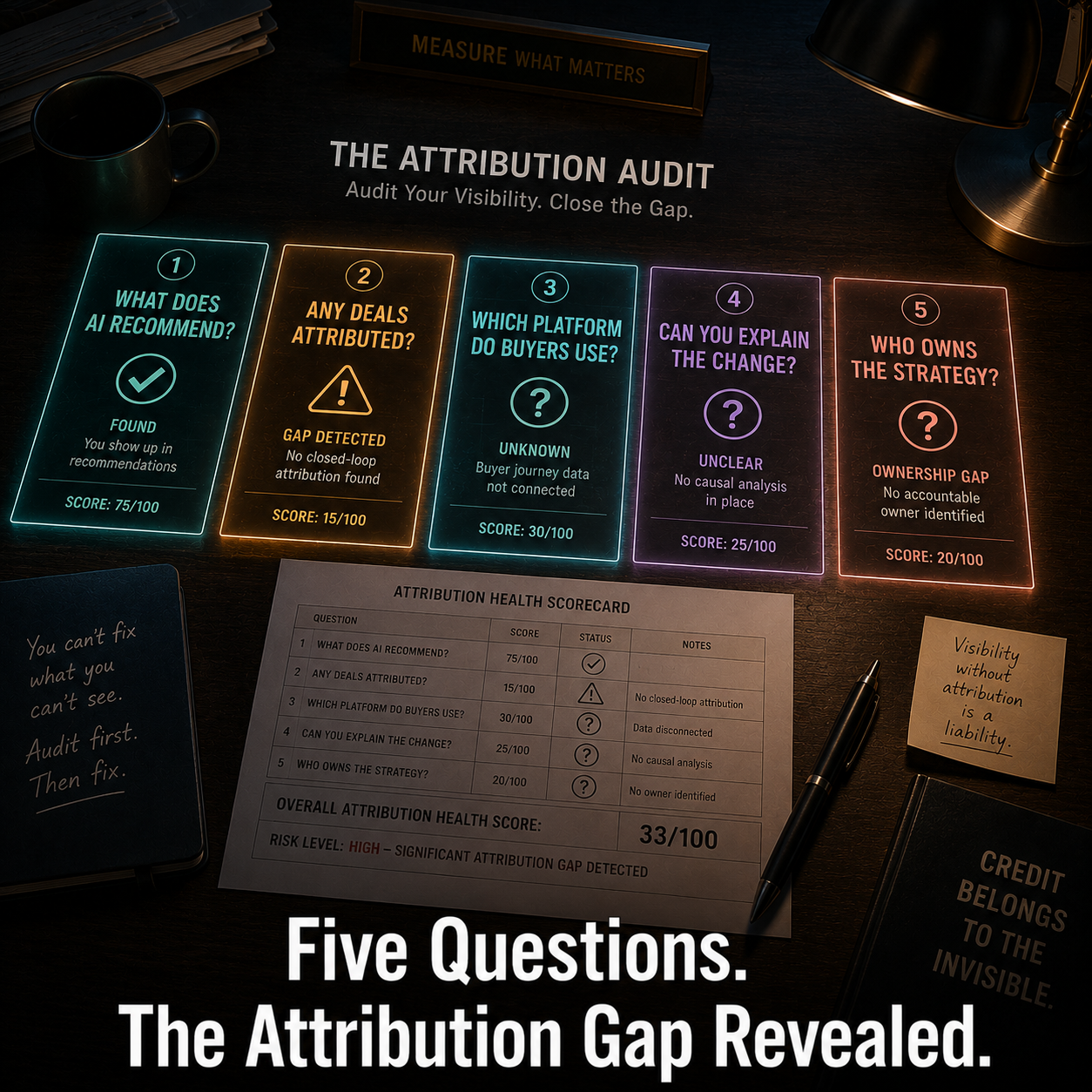
The Attribution Audit (15 Minutes
Five questions that reveal whether your marketing team has an attribution gap for AI influence.
Can your team explain what AI recommends when buyers ask about your category? Not what you hope AI recommends. What it actually recommends today. Ask ChatGPT, Claude, Gemini, and Perplexity right now. If the answer surprises you, the attribution gap is already affecting your pipeline.
Can your team attribute any closed deal to AI influence? If the answer is no, that does not mean AI is not influencing deals. It means you cannot see the influence. That gap between reality and visibility is the attribution problem.
Do you know which AI platform your buyers use most? ChatGPT cites 15 sources per answer. Gemini cites 3. If your buyers primarily use one platform and you are measuring another, your attribution data is measuring the wrong surface.
Can you explain why your AI visibility changed last month? If the score moved and nobody can explain which layer caused it, you are watching numbers without understanding systems. That makes improvement accidental rather than intentional.
Is your AI visibility strategy owned by marketing alone? If yes, you are probably measuring content output without measuring structural accessibility, evidence coverage, or platform-specific behavior. The attribution gap grows when the team measuring influence does not have visibility into all the layers that create it. |
|
|
☕AI, Attribution, and the Coffee Shop That Could Not Explain Its Own Success |
|
|
Your Weekly Dose of Caffeinated Wisdom
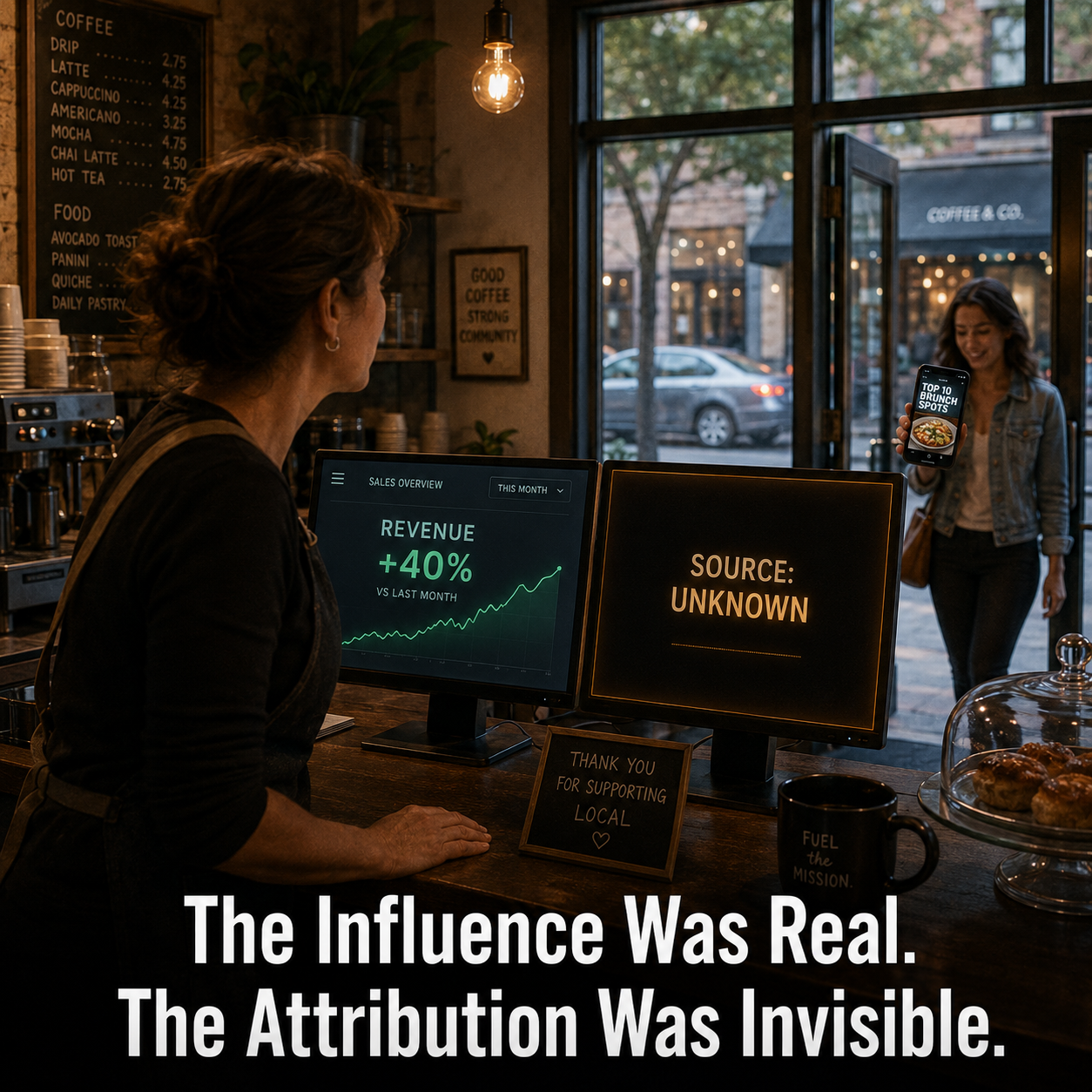
A coffee shop owner I know had a great month in June. Revenue was up 40%. Foot traffic increased. New customers appeared from nowhere.
The owner assumed it was the new seasonal menu. So she doubled down on menu innovation for July.
July was average.
She was confused. The menu was even better. The marketing was stronger. Everything she could measure told her July should have beaten June.
What she could not measure was that in June a local food blogger had mentioned her shop in a video that got 50,000 views. She never knew about it. There was no referral link. No promo code. No trackable campaign. Just people who saw a recommendation and walked in.
The influence was real. The attribution was invisible.
She attributed June's success to the menu because that was the change she could see. The actual cause was a recommendation she could not see.
That is happening right now with AI. Buyers arrive at your website because ChatGPT recommended you. They request a demo because Claude included you on a shortlist. They choose you because Perplexity consistently ranked you above alternatives.
None of that shows up in your marketing dashboard.
The influence is real. The attribution is invisible.
The brands that figure out how to measure the invisible influence layer will understand their pipeline better than the brands still attributing everything to the last click.
Stay steady. ☕ |
|
|
🔔 CLOSING SIGNAL |
|
Traditional attribution measures the path.
AI attribution requires measuring the influence.
The path is visible.
The influence is not.
The brands that learn to diagnose the invisible influence layer will not just measure their marketing better. They will understand why buyers choose them, and why buyers choose someone else, in ways no dashboard has ever been able to show.
*The biggest marketing influence of the next decade may never send a click.* |
|
|
|
|
🛠 Coming Next Week
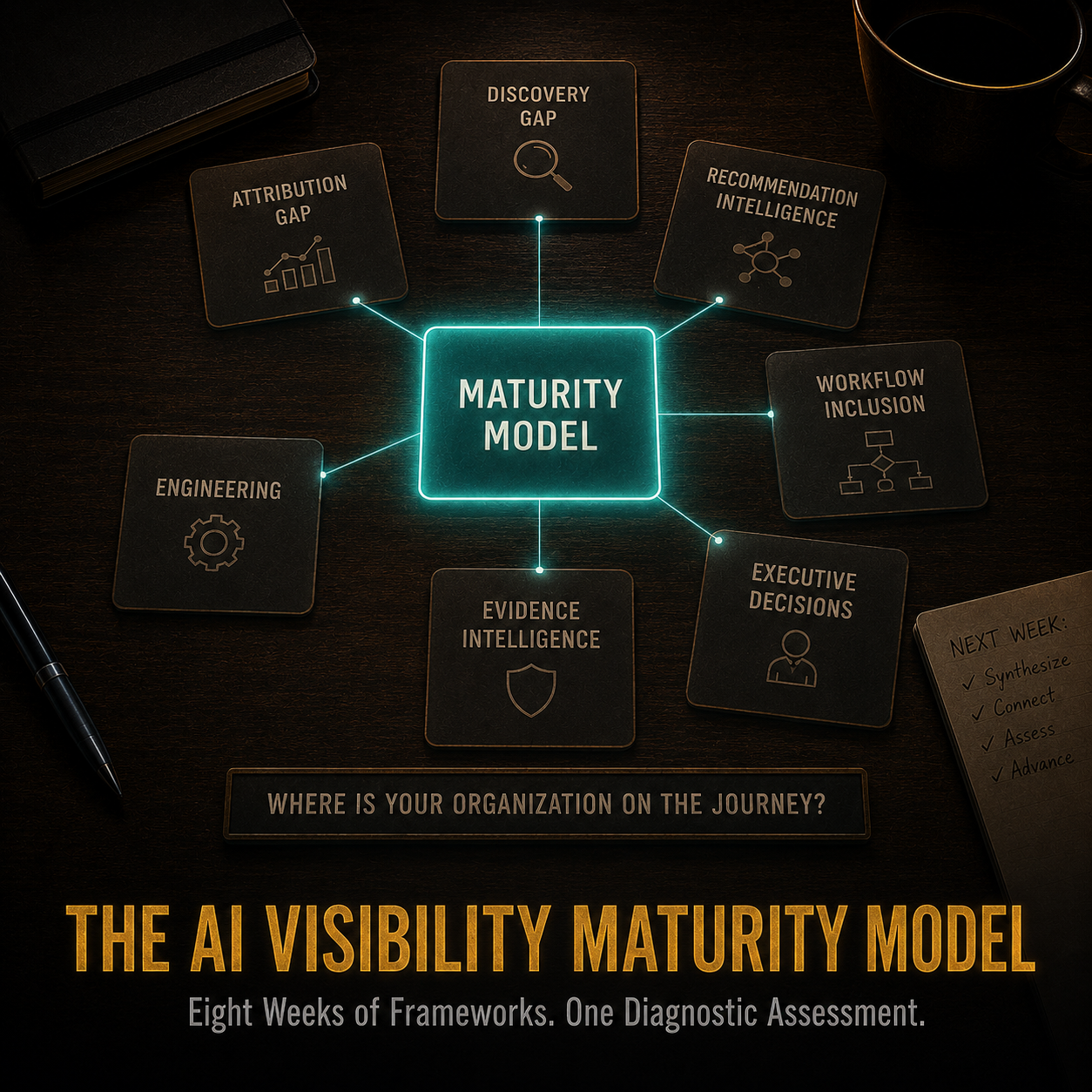
We have spent eight weeks building a progression.
Discovery Gap. Recommendation Intelligence. Workflow Inclusion. Executive Decisions. Evidence Intelligence. Engineering over marketing. The Attribution Gap.
Next week we step back and connect all of them.
The AI Visibility Maturity Model: where is your organization on the journey from invisible to inevitable?
A single diagnostic framework that maps everything we have covered into one assessment your team can run this quarter.
|
 |
|
|
|
|
🚀🤖✨📊🎨
The Axis Suite
AI Recommendation Intelligence. AI Narrative Defense. Agentic Visibility Infrastructure. |
|
"Axis Suite is the independent intelligence layer that explains what AI believes about your brand, why it believes it, and what decision that belief ultimately drives."
👉 Axis Suite
📬 Thank you for being part of this.
Here's to staying visible, staying understood, and becoming the obvious choice.
Stay caffeinated, stay inspired. See you next week! ☕
From the trenches,
The Axis Suite Team 💪
|
|
|
 |
|
© 2026 TrendAxis, LLC™. All rights reserved.
Disclaimer: Affiliate links may be included |
|
|