|
|
|
🚀 The AI Trend Oracle Report
The Next AI Visibility Challenge Is Not Appearing in AI Outputs
It is becoming part of the systems AI uses to make decisions. |
|
Over the past several weeks we have been building a progression.
AI knows your brand but does not recommend it. The Discovery Gap.
AI influences buyer shortlists before your analytics even begin. The Pre-Funnel Revenue Leak.
AI fails brands in four distinct ways that require different diagnoses. The Four Failure Modes.
Each insight has moved the conversation forward.
This week we move into new territory entirely.
Because the conversation in the market is shifting again.
From: How do I appear in AI answers?
To: How do I become part of the workflows AI uses to make decisions?
Those are materially different questions. And they require materially different thinking. |
|
 |
|
|
|
|
|
🚨 This Week’s Market Intelligence |
|
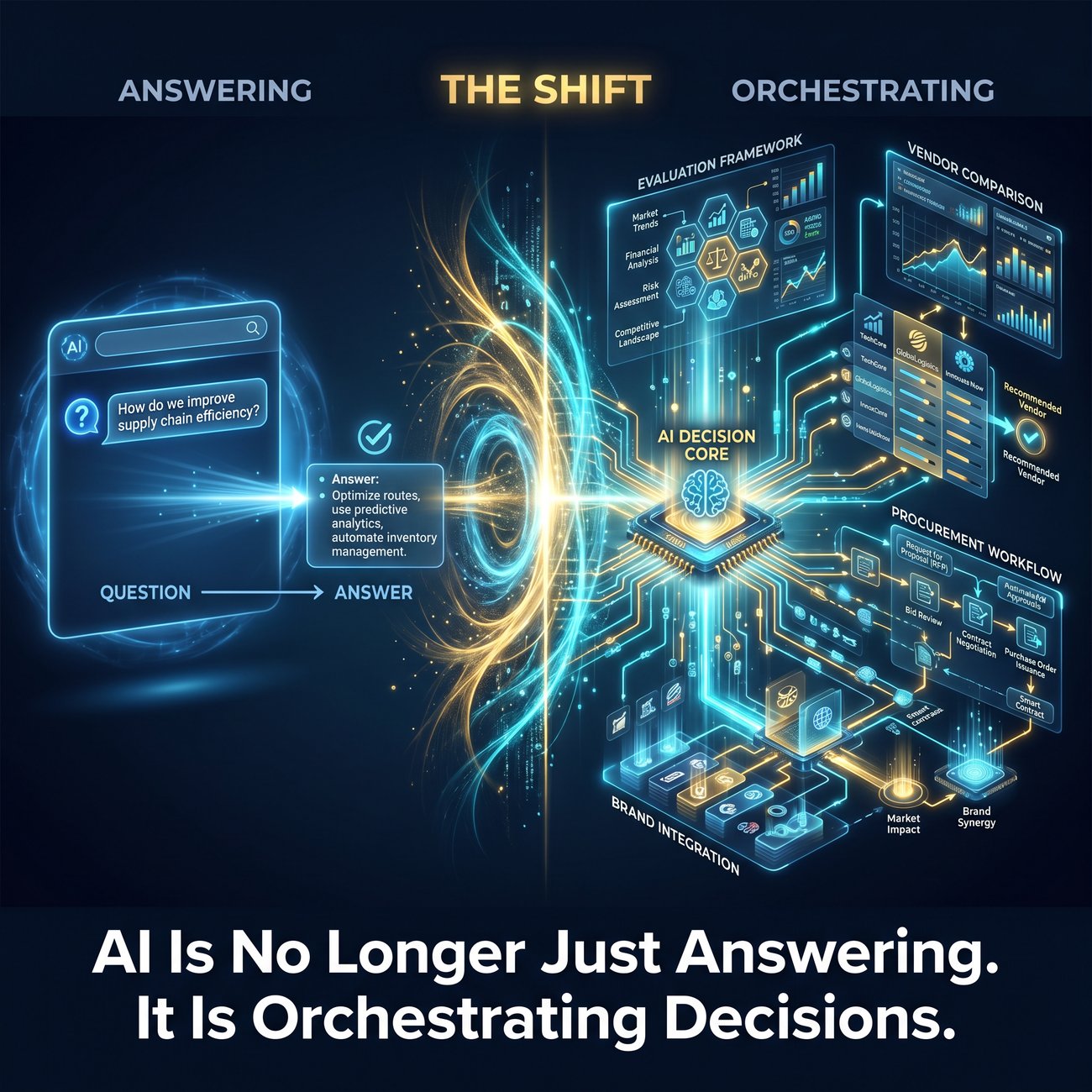
AI Is Moving From Answering Questions to Orchestrating Decisions
Something worth paying close attention to right now. AI systems are increasingly being used not just to answer questions but to coordinate decision-making processes. A buyer does not just ask ChatGPT who to consider.
They ask it to help them build an evaluation framework. To compare leading options. To create a vendor scorecard. To structure a procurement process.
When AI does this it is not just retrieving information and presenting it. It is actively shaping the decision architecture that determines which brands get evaluated, how they get compared, and what criteria matter most.
That is a fundamentally different role than search ever played. Search surfaced options. AI increasingly coordinates the process of choosing between them. And the brands that become part of that coordination layer are at a significant advantage over the brands that only appear in the answers to individual questions.
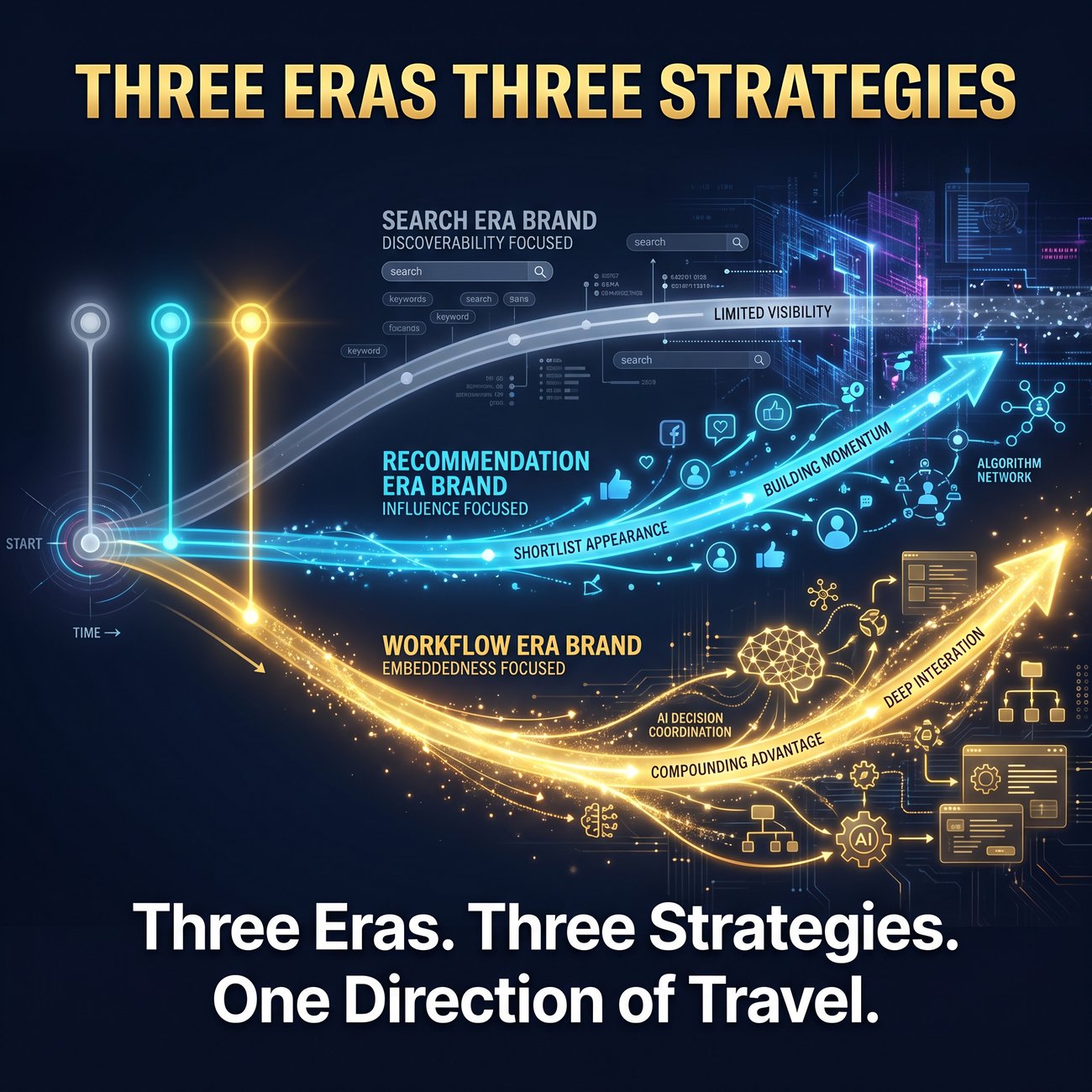
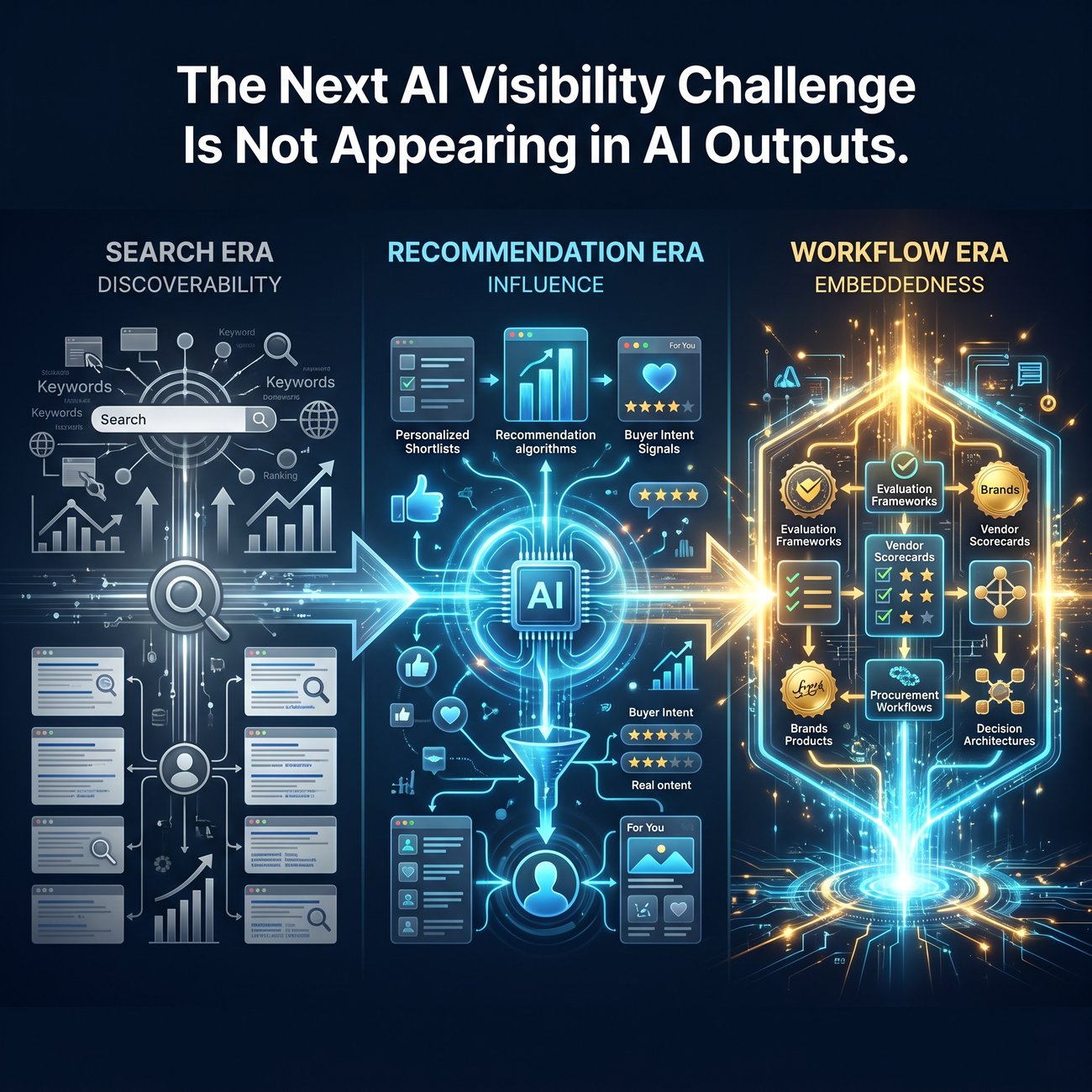
The Three Eras:
Search rewarded discoverability. If buyers could find you, you had a chance.
Recommendations reward influence. If AI included you on the shortlist, you got considered.
Workflows reward inclusion. If AI uses your brand as part of the decision framework it builds, you get selected.
Most businesses are still optimizing for the first era. The most forward-thinking are building for the second. The third era is just beginning to form. |
|
|
🔍 What’s Actually Happening |
|
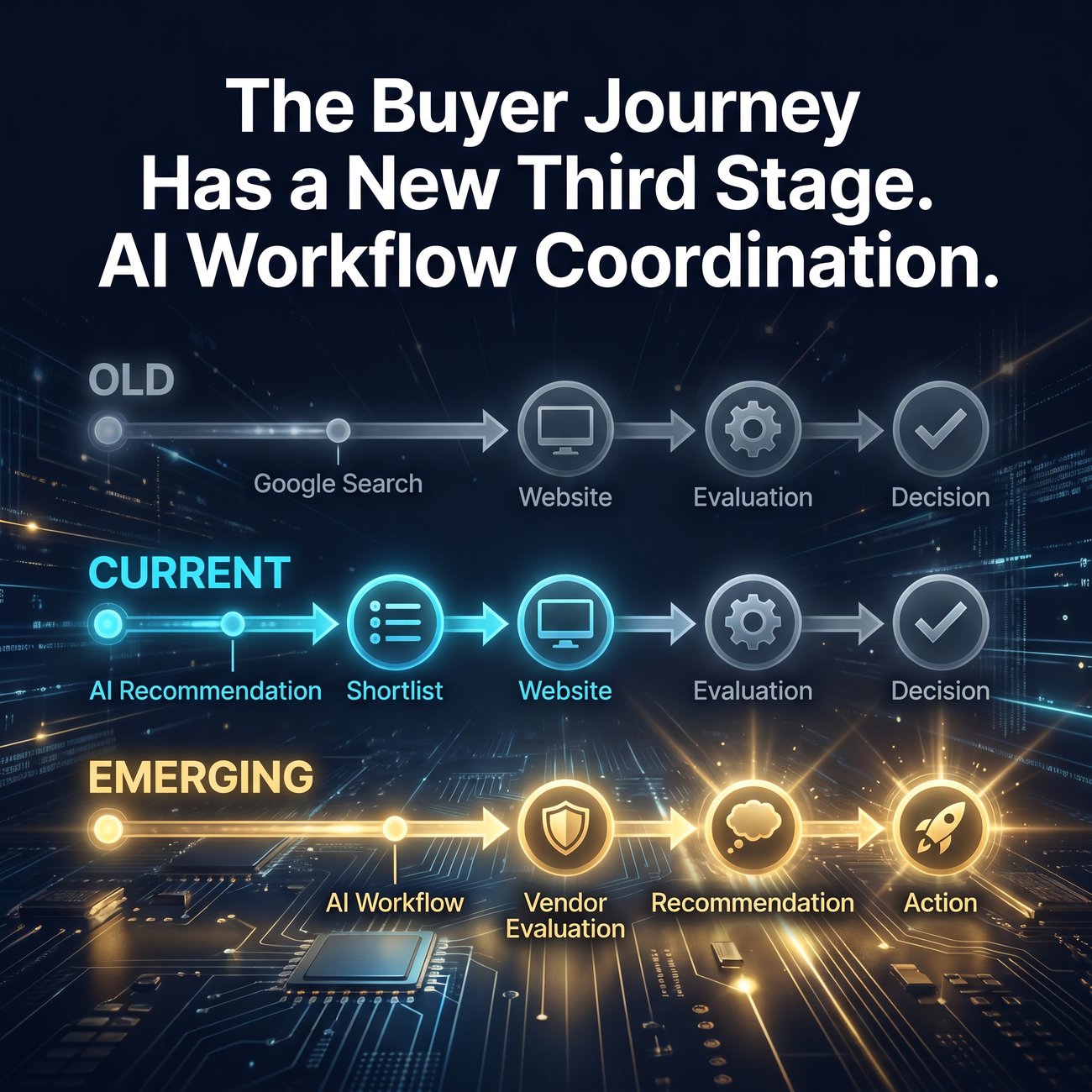
The Emerging Buyer Journey
The buyer journey has been evolving in stages.
Old sequence: Search → Website → Evaluation → Decision.
Current sequence: AI Recommendation → Shortlist → Website → Evaluation → Decision.
Emerging sequence: AI Workflow → Vendor Evaluation → Recommendation → Action.
The shift from the current to the emerging sequence is the one most businesses have not yet mapped.
When a buyer asks AI to help them evaluate vendors for a category, something specific happens. AI builds a decision framework. It populates that framework with brands it knows and trusts. It applies evaluation criteria it has formed from its training. It generates a comparison that the buyer uses as the foundation for their decision process.
Brands included in that workflow are being evaluated.
Brands excluded from it may never enter the decision process at all regardless of how visible they are in individual AI answers.
|
|
|
📉 Featured Insight |
|
Two Markets Are Forming
The AI visibility market is quietly splitting into two.
Market 1: Visibility and Optimization
Measure appearances. Track mentions. Monitor citations. Optimize for retrieval. Improve recommendation frequency. This market is real, valuable, and where most businesses currently are.
Market 2: Decision Influence and Recommendation Governance
Measure recommendation quality. Track recommendation persistence. Monitor memory accuracy. Assess narrative integrity. Understand workflow inclusion. This market is emerging and where the deeper competitive advantages will form.
The businesses that recognize this split early and begin building for Market 2 while others are still competing in Market 1 will have a meaningful head start.
Axis Suite is built for where this market is going. Not just for where it currently is. |
|
|
🧠 This Week’s Strategic Lens |
|
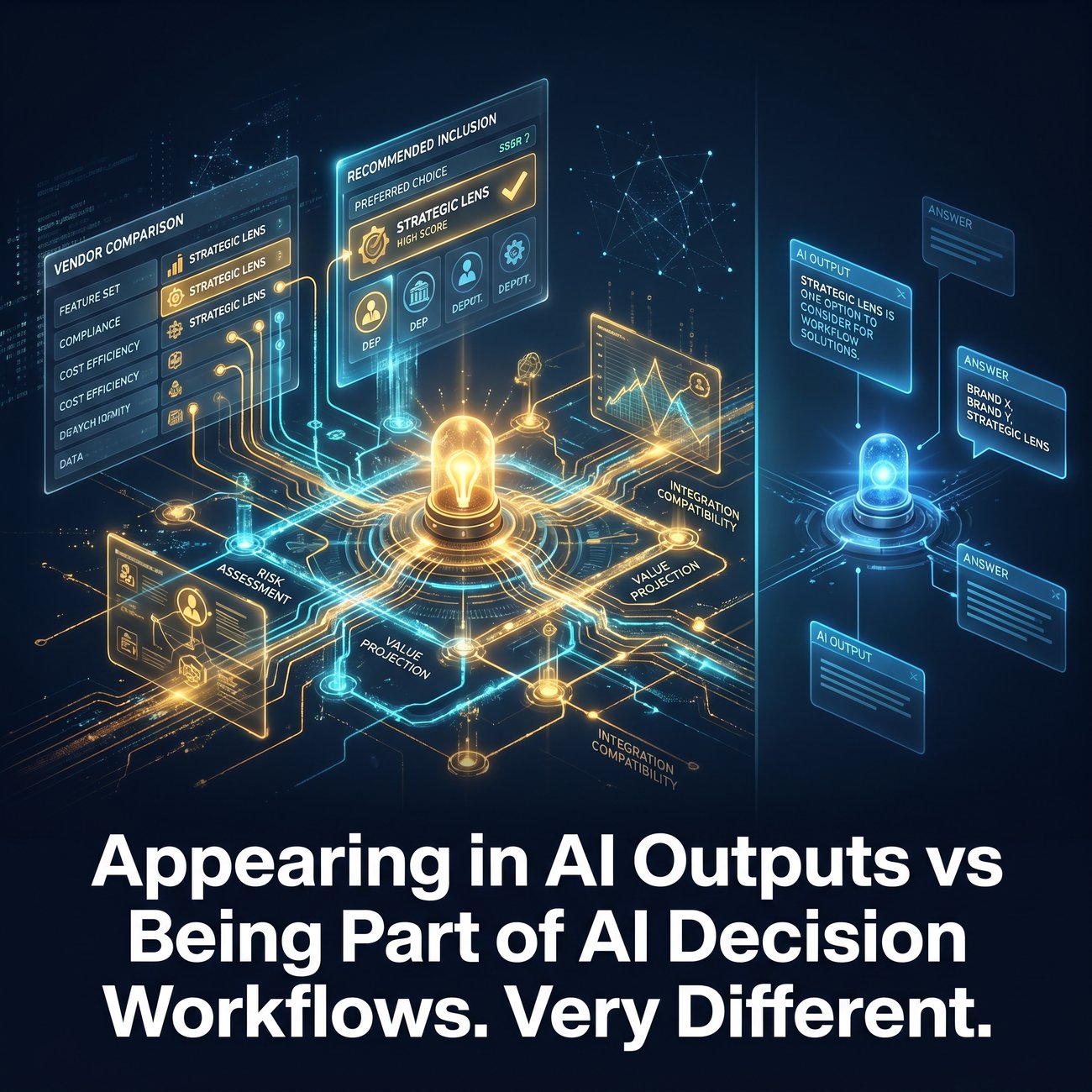
What Workflow Inclusion Actually Means
Workflow inclusion is not a single measurement. It is a state of being embedded in the decision infrastructure AI builds when buyers use it to make complex choices.
A brand with strong workflow inclusion:
Appears when AI is asked to help evaluate vendors in a category. Gets used as a comparison reference point when AI structures alternatives. Is included in the evaluation frameworks AI generates for buyers. Appears with accurate, specific, and confident framing in every workflow context.
A brand without workflow inclusion:
May appear in individual AI answers. But gets excluded when AI moves from answering to coordinating. Becomes invisible at the moment the decision architecture forms.
Most current AI visibility measurements cannot detect workflow inclusion or exclusion. That is the next measurement gap to close. |
|
|
|
👨💻 Founder’s Note |
|
The Question That Changed My Thinking
When I started building Axis Suite I thought the central problem was this:
How do businesses appear in AI answers?
That question led to the measurement infrastructure we built. Scanning for brand mentions. Tracking recommendation frequency. Measuring confidence language.
But somewhere in the scanning work the question shifted. I started noticing that brands could appear in individual AI answers and still be systematically absent from the decision workflows AI built when buyers asked it to help them choose. That gap was not captured by any visibility measurement. And it changed how I think about what Axis Suite is actually measuring.
Not just whether you appear in AI outputs. But whether you are part of the systems AI uses to help buyers make decisions. That is a larger problem. A more important problem. And one that requires a different kind of intelligence infrastructure.
– Dana Billingsley | Founder, Axis Suite |
|
|
🛠 PRACTICAL SECTION |
|
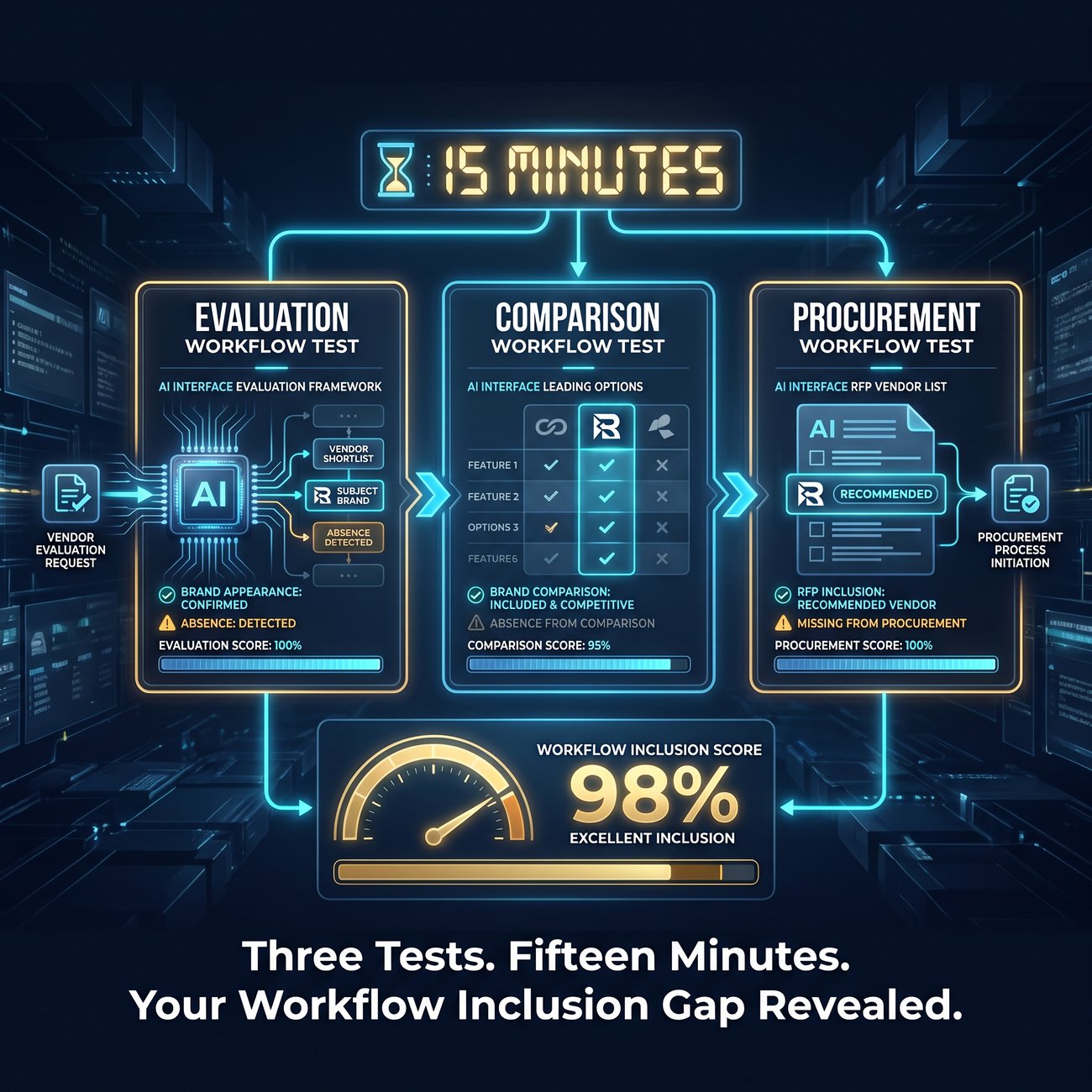
The Workflow Inclusion Audit (15 Minutes)
This audit tests whether your brand appears in AI decision workflows, not just AI answers.
Step 1: Evaluation Workflow Test (5 minutes)
Ask AI: "Help me evaluate vendors for [your category]."
Ask AI: "Create a shortlist of providers for [your specific use case]."
Note: Does your brand appear? At what stage? How is it framed?
Step 2: Comparison Workflow Test (5 minutes)
Ask AI: "Compare the leading options for [your problem]."
Ask AI: "Build a decision framework for choosing [your category]."
Note: Is your brand included in the comparison? What criteria does AI apply? How do you rank against competitors?
Step 3: Procurement Workflow Test (5 minutes)
Ask AI: "What should I consider when running a procurement process for [your category]?"
Ask AI: "Who are the vendors I should include in an RFP for [your use case]?"
Note: Does your brand appear as a recommended inclusion? How does AI frame your value in a procurement context?
If your brand is missing from these workflow responses while competitors appear, you have a workflow inclusion gap. That gap is not solved by the same interventions that address recommendation failure or retrieval failure. It requires a different layer of signal work focused specifically on how AI represents your brand in decision coordination contexts.
👉 Start measuring your workflow presence: Axis Suite |
|
|
☕ AI, Workflows, and the Coffee Shop That Became Part of the System |
|
|
Your Weekly Dose of Caffeinated Wisdom
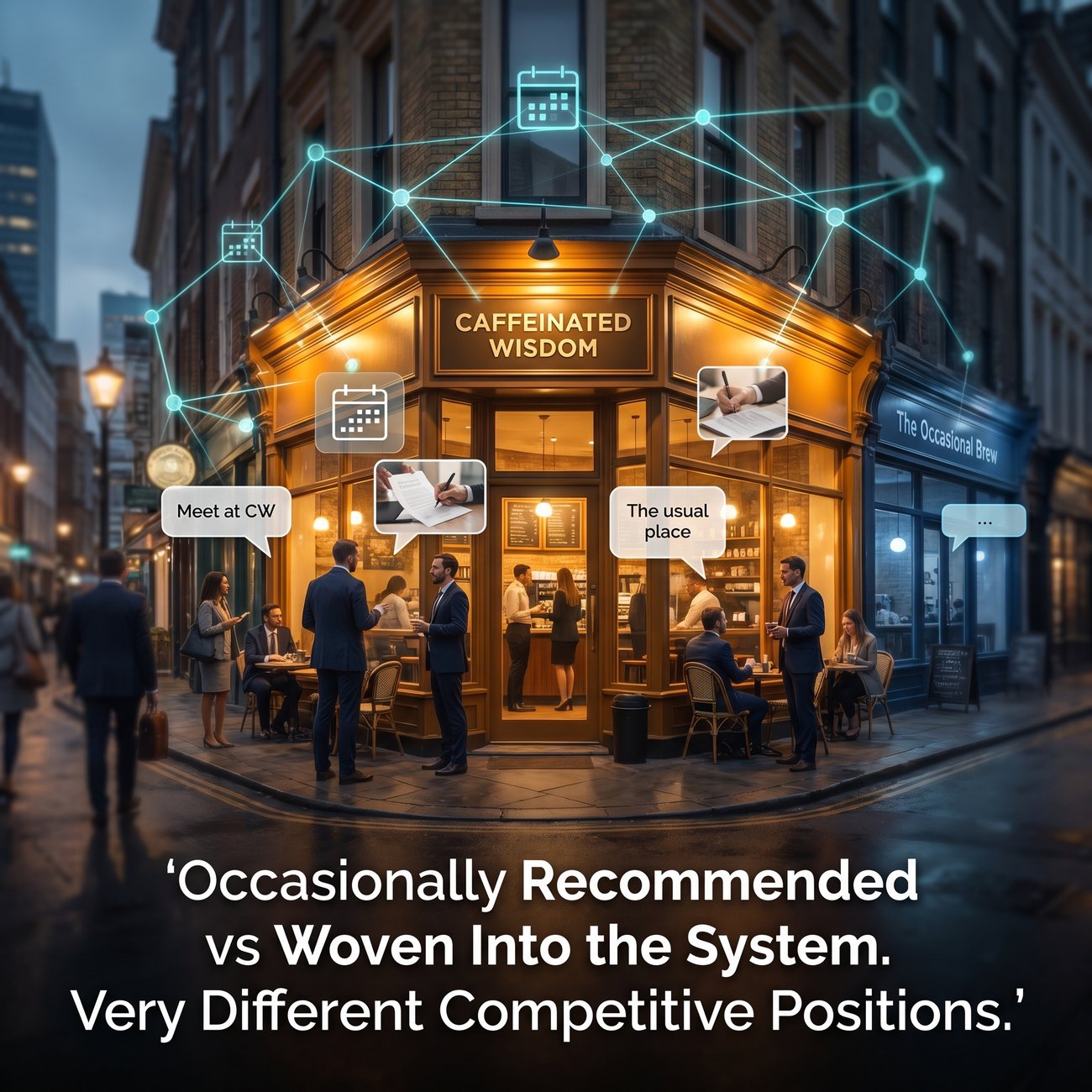
There is a coffee shop in every city that has become part of the infrastructure of business life there. Not just recommended when someone asks where to get coffee. Built into the decision workflow.
"Let us meet at the usual place." "Book the corner room." "First meeting there, then we decide."
It is not just a place people go. It is part of how decisions get made in that city.
AI is building the same kind of infrastructure for vendor selection. The brands that become part of how AI coordinates decision-making will not just get recommended occasionally. They will be woven into the process that determines who gets evaluated at all.
That is a different kind of presence. And it compounds over time in ways that occasional recommendation never does.
Stay steady. ☕ |
|
|
🔔 CLOSING SIGNAL |
|
Three Different Eras. Three Different Strategies.
Search visibility determined who got found.
Recommendation visibility determines who gets considered.
Workflow inclusion may determine who gets selected.
The businesses building for the third era now while most are still competing in the first will have a compounding advantage that becomes very difficult to close later. |
|
|
|
|
🛠 Coming Next Week
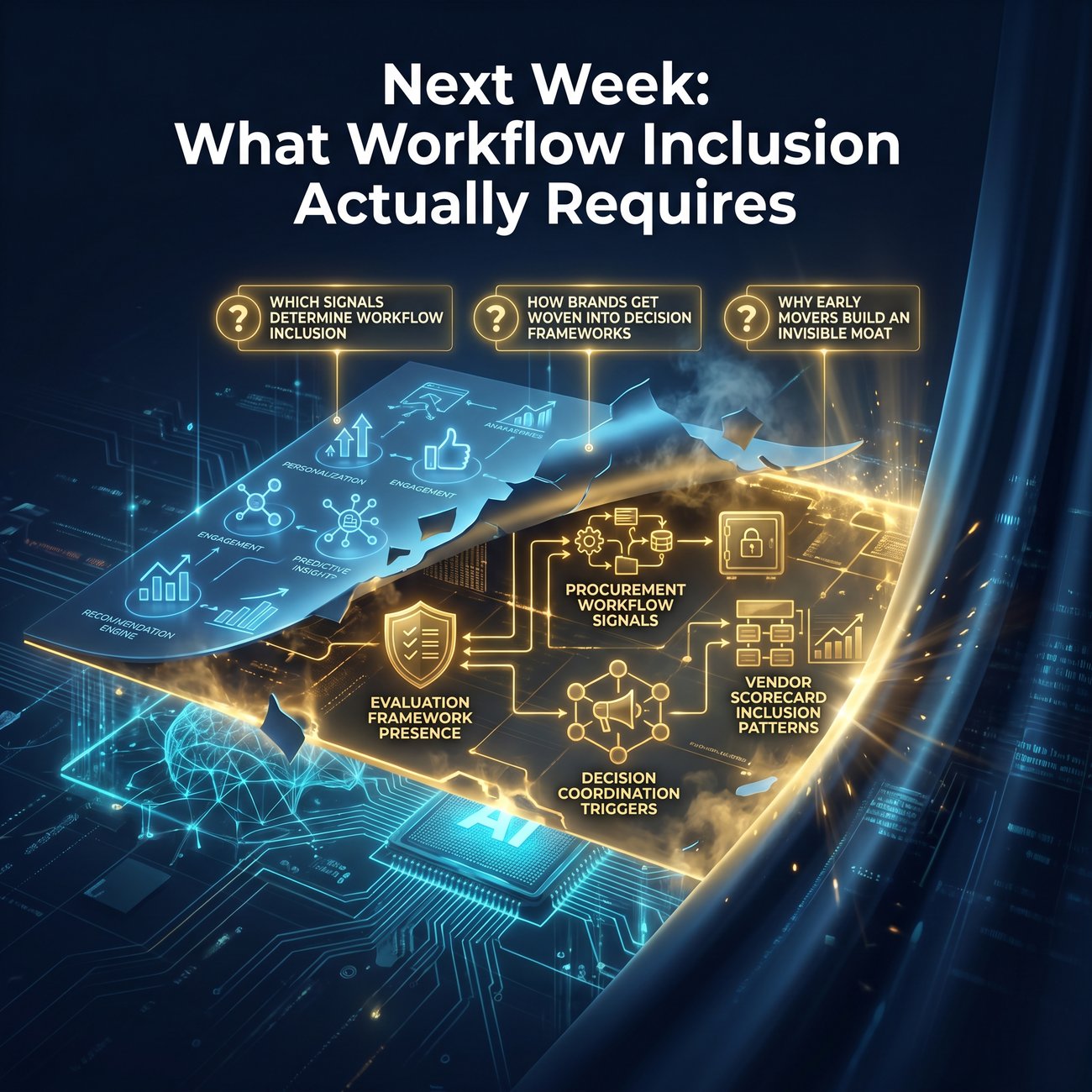
Next week we go deeper into what workflow inclusion actually requires.
The specific signals that determine whether AI uses your brand as part of decision frameworks.
And why the brands already inside these workflows are building a moat that looks invisible from the outside.
|
 |
|
|
|
|
🚀🤖✨📊🎨
The Axis Suite
AI Recommendation Intelligence. AI Narrative Defense. Agentic Visibility Infrastructure. |
|
"Axis Suite helps companies become the brand AI systems recommend, cite, compare accurately, and defend across AI Search, answer engines, and agentic commerce."
👉 Axis Suite
📬 Thank you for being part of this.
Here's to staying visible, staying understood, and becoming the obvious choice.
Stay caffeinated, stay inspired. See you next week! ☕
From the trenches,
The Axis Suite Team 💪
|
|
|
 |
|
© 2026 TrendAxis, LLC™. All rights reserved.
Disclaimer: Affiliate links may be included |
|
|